In fact, over the coming year, the gradual erosion of the norms on which Europe is based will be further compounded by the bloc's weak leadership — especially in the so-called “E3” countries, i.e. Germany, France and the UK.
In the long term, the greatest threat to Europe will come from transatlantic relations. For EU leaders, a key goal for 2025 was to maintain the United States' involvement in the war in Ukraine. The best possible outcome for 2026 will be a continuation of the ad hoc diplomacy and transactionalism that has characterized the last 12 months.
However, if new threats emerge in this relationship – especially regarding Greenland – maintaining this balance may prove impossible.
2026 also begins with no sign of concessions from Russia on its ceasefire demands or willingness to accept the terms of the US-EU-Ukraine 20-point plan. This is due to the fact that Russian President Vladimir Putin hopes that Ukraine's military situation will further deteriorate, forcing Ukrainian President Volodymyr Zelensky to capitulate in terms of territorial demands.
I believe Putin is wrong — with Europe's support, Zelensky will continue to resist U.S. pressure for territorial concessions and instead increasingly attack Russian energy production and exports, in addition to frontline resistance. Of course, this means that Russian air attacks on Ukrainian cities and energy infrastructure will also increase.
However, Europe's rising military spending, US arms purchases, financing for Kiev and sanctions against Russia – which also target energy revenue sources – could help maintain the status quo of last year. However, this is probably the best case scenario.
Meanwhile, European leaders will be forced to publicly ignore Washington's support for far-right parties, which has been made clear in the new US national security strategy, and privately do everything they can to counter any anti-establishment backlash in the elections.
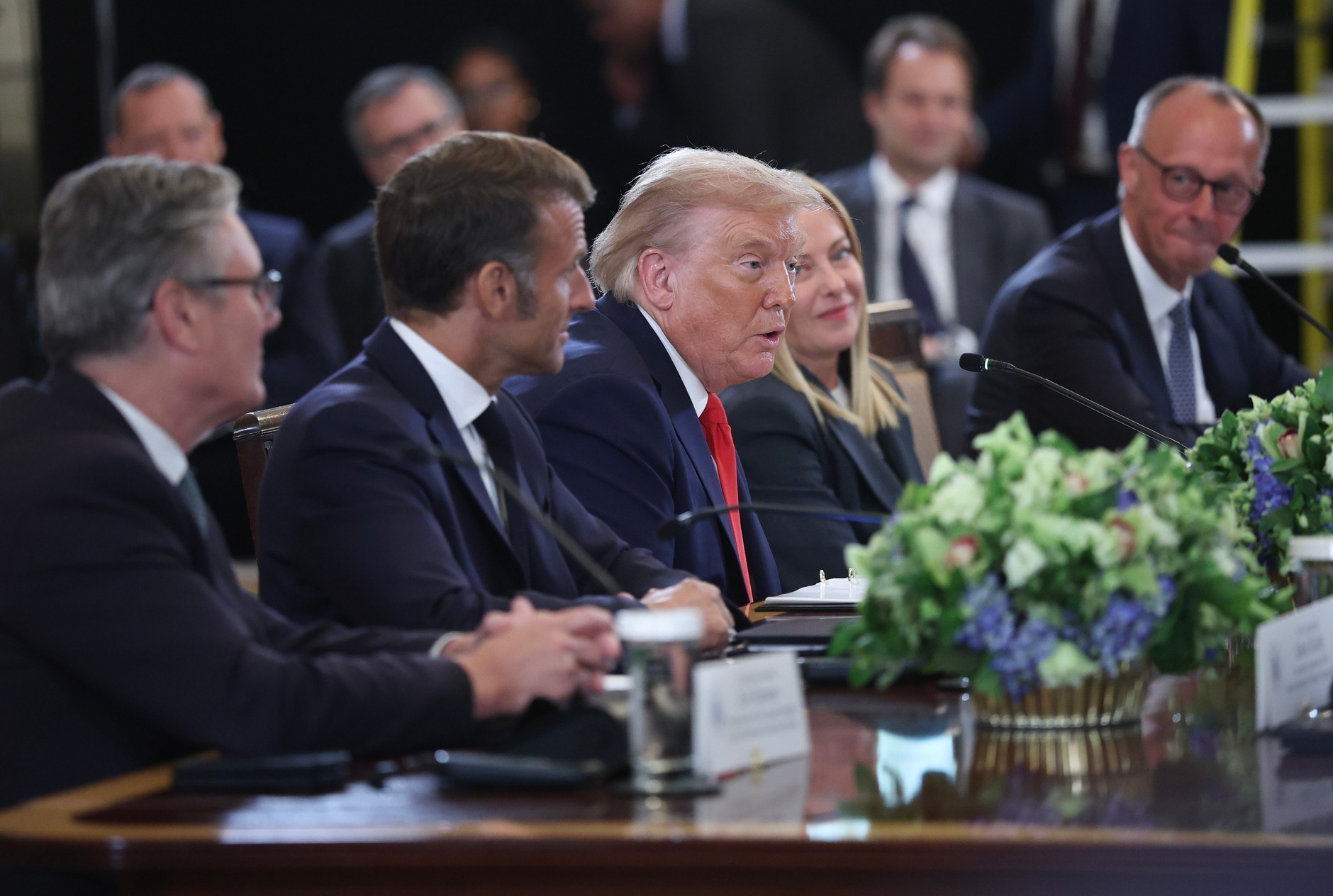
From left: British Prime Minister Keir Starmer, French President Emmanuel Macron, US President Donald Trump, Italian Prime Minister Giorgia Meloni and German Chancellor Friedrich Merz at the White House in Washington, August 18, 2025.Win McNamee/Getty Images/Getty Images
In particular, the upcoming elections in Hungary will be a determinant of whether the MAGA movement can tip the scales in favor of its ideological allies in Europe. Populist, Eurosceptic Prime Minister Viktor Orban is currently in office close to their first defeat in 15 years.
Orban is campaigning feverishly to increase voter support, signaling that he and his inner circle actually consider defeat a possibility. His charismatic rival Peter Magyar, who shares his conservative-nationalist political views but has no corruption scandals on his record, poses a real challenge to him, as does the country's economic stagnation and rising prices.
While traditional electoral strategies — handing out cash, smear campaigns and stoking fear of war — have so far proven ineffective for Orban, the military fallout from the conflict in Ukraine, which directly impacts Hungary, could reignite voter fears and change the dynamic.
European leaders weaker than ever
Moreover, these challenges will be compounded by the weakness of E3.
The process of weakening the European political center has been going on for 10 years. But France, Germany and the UK entered 2026 with weak, unpopular governments beset by populist right and left, and US administrations rooting for their downfall.
Although none of these countries have parliamentary elections scheduled, all three do they risk paralysis at best and destabilization at worst. At least one leader — namely British Prime Minister Keir Starmer — may fall due to internal party revolt.
The article continues below the video
The key event of this year in the UK will be the mid-term elections in May. As it stands, Starmer's Labor Party faces the humiliation of finishing third in the Welsh Parliament, failing to dislodge the Scottish National Party from the Scottish Parliament, and losing seats to the Green and Reform UK Party in local elections. Labor MPs expect a formal challenge to Starmer as party leader, and his chances of survival seem slim.
Meanwhile, France entered 2026 without a budget for the second year in a row. The good news for President Emmanuel Macron is that his Prime Minister Sebastien Lecornu's minority government is likely to reach a budget agreement with a modest deficit reduction by the end of February or March. And because Only 16 months left until the presidential electionsand local elections will be held in March, the opposition's appetite for early parliamentary elections has weakened. But this is the best he can hope for as a divided French parliament maintains an atmosphere of slow crisis until the 2027 elections.
Finally, although the German economy seems to be rebounding somewhat, it still will not overcome its structural problems. The government of Chancellor Friedrich Merz, largely consumed by ideological divisions, will have difficulty implementing far-reaching reforms. And with support for the far-right Alternative for Germany party expected to increase in the five upcoming state elections, the pressure on the government in Berlin will only increase.
In 2026, a historical truth that is often forgotten in peaceful times will once again emerge: freedom, stability, prosperity and peace in Europe are always fragile.
The period of peace provided by Pax Americana and the extraordinary cooperation and integration after World War II has officially ended. In the future, Europe's relevance in the new world order will depend on its response to Russia's escalating hybrid aggression, its influence on diplomacy on the war in Ukraine, and its ability to improve its competitiveness, all while dealing with an increasingly powerful far right and responding to existential threats to its economy and security from Russia, China and the United States.
This is what will determine whether Europe survives.
I’m Ashley Davis as an editor, I’m committed to upholding the highest standards of integrity and accuracy in every piece we publish. My work is driven by curiosity, a passion for truth, and a belief that journalism plays a crucial role in shaping public discourse. I strive to tell stories that not only inform but also inspire action and conversation.