Next year's pool of funds for science has been increased by about half a billion zlotys, but the expenditure is still far from sufficient – said the head of the Ministry of Science, Marcin Kulasek, in an interview with PAP. He added that another PLN 3 billion could be obtained if other ministries allocated 1% to research and development. their budgets.
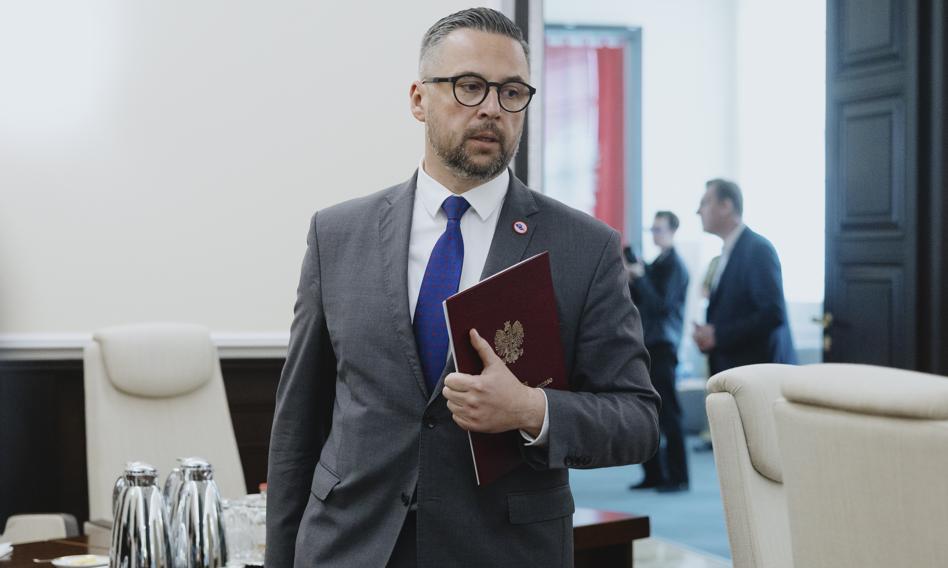
Minister of Science and Higher Education, Ph.D. Eng. Marcin Kulasek noted in an interview with PAP that his ministry is seeking increased funds for science in the planned state budget for 2026. – Thanks to my many conversations with the Minister of Finance and Economy, Andrzej Domański, the originally planned amount of expenditure on higher education and science of PLN 44.38 billion increased by PLN 280 million. This is the result of savings in expenses, among others. Sejm and Senate – said Minister Kulasek.
He added that the pool of funds for science had increased even at the earlier stage of budget work – by an additional PLN 120 million. – Together with the subsidy negotiated with the Ministry of Finance for the National Center for Nuclear Research (PLN 75 million), this amounts to nearly PLN 500 million, which will additionally go to science next year – concluded Minister Kulasek.
He also emphasized that expenditure on higher education and science is still far from sufficient: – I consistently remind Prime Minister Donald Tusk and the head of the Ministry of Finance that this should change, at least in the face of the geopolitical situation, the most dangerous in our region for decades.
Minister Kulasek mentioned that the greatest threat of armed conflict in Europe since 1945 was mentioned, among others, at Tuesday's meeting of the scientific and academic communities with Prime Minister Tusk. It was attended by, among others: representatives of the Conference of Rectors of Polish Academic Schools, the Central Council of Science and Higher Education, the presidium of the Polish Academy of Sciences and the Foundation for Polish Science.
The head of the Ministry of Science emphasized that the effects of this meeting are to be measurable and visible in the perspective of not years, but months. – The Prime Minister committed to appointing a team under his leadership, which will develop a plan for the development of science and higher education as well as the principles of financial support. It is about the involvement of many ministries, because while cooperation between, for example, the Ministry of Defense and the scientific community is good, in the case of other ministries it is weak or non-existent. We want to closely link science with business, thereby obtain additional funds and ensure that Polish enterprises use domestic technologies – explained Dr. Kulasek, who is also to be a member of this body.
He mentioned the example of quick-change powerpack drive units purchased abroad for Borsuk infantry fighting vehicles or Krab self-propelled gun howitzers. – Meanwhile, a more efficient and, above all, four times cheaper solution was prepared by researchers and engineers from three Polish universities of technology: Lublin, Rzeszów and Świętokrzyska – he informed.
PLN 3 billion is still missing, Kulasek mentions the Ministry of National Defense's money
The minister recalled that his ministry requested an increase in the amount for science in 2026 by PLN 3.6 billion. – We have already managed to raise half a billion. I hope that we could obtain the still missing PLN 3 billion if there were provisions according to which individual ministries would allocate one percent of their budget to science. Then We could obtain PLN 2 billion from the Ministry of National Defense alone. All ministries must invest in research and development; The Prime Minister is willing to accept this idea, so I am optimistic, he said.
He specified that investing in science is particularly important not only in the Ministry of Defense, but, for example, in the Ministries of Energy, Agriculture, Infrastructure or Health.
The Minister of Science also talked about tightening cooperation with the Ministry of State Assets (MAP). He recalled that during the times of Minister of Education and Science Przemysław Czarnek, the Polish Science Fund (FPN) was established, which operates within the Bank Gospodarstwa Krajowego. – This fund should operate like existing foundations supporting sports or culture. The largest State Treasury companies, such as Orlen or PGNiG, could support science. Not for free – they could commission the research they need to universities or institutes – argued Dr. Kulasek and noted that arrangements for this model of cooperation with the Ministry of State Assets are underway.
He added that a few days ago, the government's list of legislative works included a draft amendment to the Act on supporting scientific activities from the FPN, which will allow the full costs of commercialization of research results or know-how of research teams to be financed from this source.
The minister also mentioned the 1st National Congress “Science for Business”, which the Ministry of Science and Higher Education organized in November. He concluded that the basic goal of the event, i.e. bringing entrepreneurs and researchers together, had been achieved. – We will not reach the EU average of 2%. GDP for science without the contribution of private capital. Meanwhile, as shown by various sources, each zloty invested in science gives a return not between PLN 4 and 7, but even between PLN 8 and 13. This is the result of what is happening in the European industry, not only in the arms industry, in connection with the war in Ukraine – explained Kulasek.
Route “IGNIS – Poland reaches for the stars”
He pointed out, among others: to the very rapidly growing Polish space sector, subordinated to the Ministry of Development and Technology. In his opinion, Dr. Sławosz Uznański-Wiśniewski, who is traveling around Polish universities as part of the “IGNIS – Poland Reaches for the Stars” tour organized by the Ministry of Science and Higher Education, is doing a “great job” in promoting our space capabilities. – I would not hesitate to finance such an initiative again. Honestly, if we hadn't come up with this route, nothing would have happened when our astronaut returned from the International Space Station. There was no idea how to use the potential of Dr. Uznański-Wiśniewski and his mission – admitted Marcin Kulasek.
In his opinion, the Polish astronaut's IGNIS mission is already paying off. As he mentioned, the Warsaw University of Technology recorded the “Sławosz effect”: applications for space-related fields of study were 30 percent higher. more candidates than a year ago. – They will create the staff who will develop our space industry in the future – announced the Minister of Science.
He assessed that European funds are an excellent source of financing scientific research, but Poles use them too rarely. – We pay more to the EU for this purpose than we use – he explained.
Therefore, he was very pleased with the information that the director of the National Center for Research and Development announced the simplification of procedures for submitting grant applications in the Horizon Europe program. – This is a step in the right direction; from my conversations with prof. Jerzy Małachowski shows that many people fail at the stage of submitting applications because they probably do not know how to write them – he noted.
He recalled that the extension of the Horizon Europe program is due to activities under the Polish Presidency of the Council of the European Union. – In March this year, 27 member states supported the Warsaw Declaration proposed by the Polish Presidency. This document calls for increased funds for research and innovation in the new EU budget perspective, emphasized the Minister of Science.
Anna Bugajska (PAP)
abu/bar/mhr/