Trump repeats that Ukraine “has no cards left” and insists that Kiev will accept any conditions proposed by Putin. This is not only wrong, but also a deliberate distortion of reality. Only one person benefits from this, and that person is in the Kremlin.
Ukraine's strongest card has been on the table since the first day of the Russian invasion: international law. The rules-based order prevented major wars between great powers for almost 80 years.
It matters. This is not an abstract diplomatic trivial – it is the foundation on which American prosperity and security have been built since 1945.
Ukraine has many advantages: the involvement of its citizens in the fight for freedom and determination to defend it; support from most democratic countries; and the resilience and creativity of residents.
Eventually, they managed to shift the defensive fight to Russia itself, even as the United States and other allies held off on providing long-range weapons and encouraged them to accept the status quo imposed by Russian military forces.
The article continues below the video
Here's what Trump actually did: he distorted the rules of the game. Instead of standing on the side of the victim of aggression and defending the principles that protect all nations, he supports a fraud and a tyrant. Delays military aid. He questions Ukraine's right to defend itself. He publicly undermines Zelensky's authority. He treats Putin's demands as a reasonable starting point.
You can call it whatever you want, but it is not diplomacy. It's surrender dressed in a suit and hiding behind a fake tan.
And Ukraine? Ukraine is trapped in a vice. On the one hand, we have Russian imperialism in its most brutal form, with war crimes, mass graves and attempts to erase Ukrainian identity.
On the other hand, we have Trump's cynical inaction, his concessions to Putin and increasingly explicit demands that Ukraine relinquish its sovereignty to satisfy his ego and end a war that has become inconvenient to his political narrative. He puts pressure on Ukraine's allies and friends to let him make all the poor decisions.
The real loser in this whole situation is Trump
The “peace” that Trump offers is not a peace based on justice. It is a peace based on exhaustion and abandonment. Accept Putin's conditions. Give up your land. Forget about the tens of thousands of deaths. Keep going. Advocates of appeasement to Hitler and Stalin once celebrated this kind of peace. We know how it ended.
Trump's condescending disregard for America's allies — not just Ukraine, but all countries that have relied on American leadership — is contemptible. The consequences of this will last beyond his presidency.
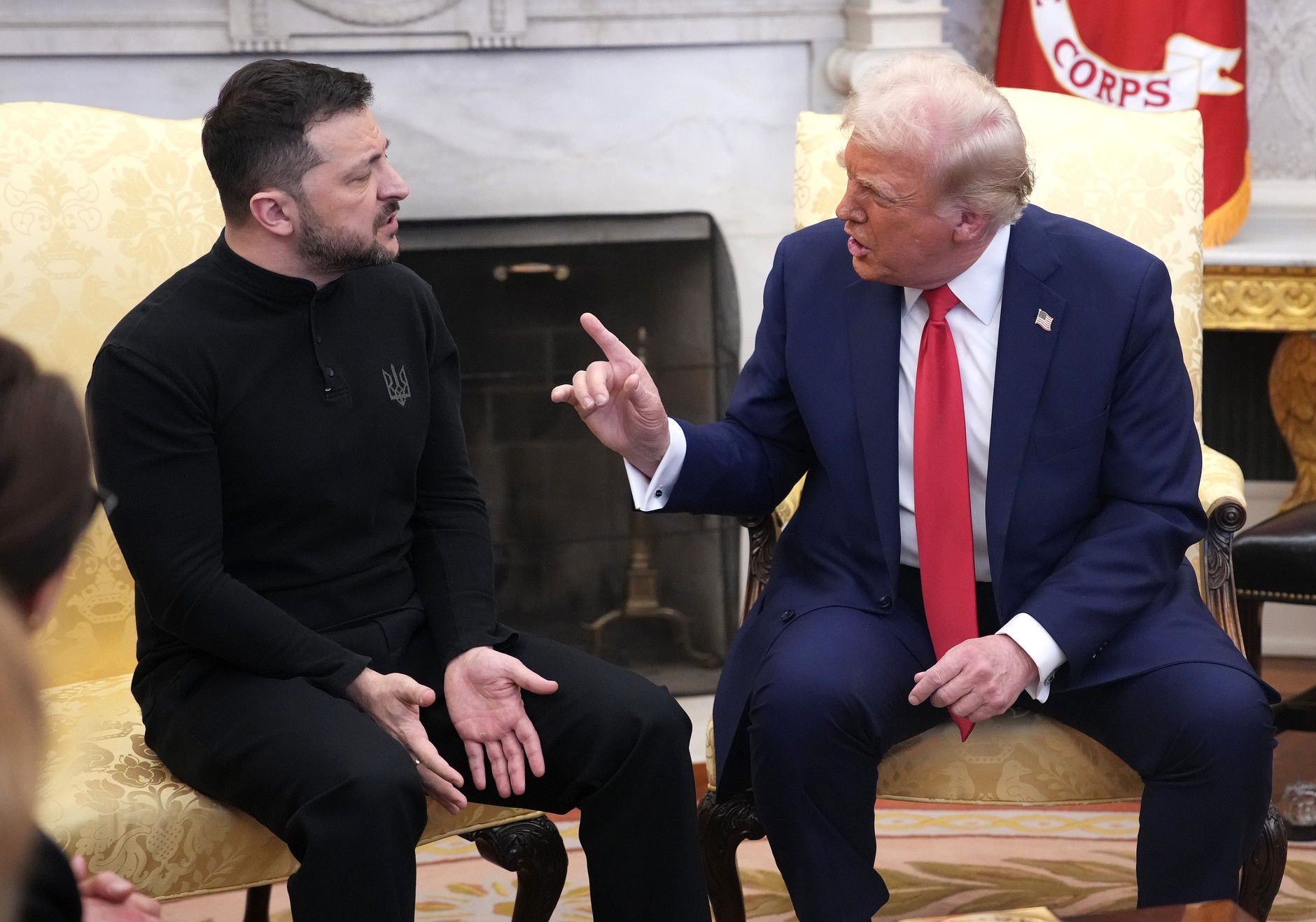
US President Donald Trump and Ukrainian President Volodymyr Zelensky in the Oval Office of the White House, February 28, 2025.Andrew Harnik/Getty Images/Getty Images
America's allies see a U.S. president who treats commitments as suggestions, views alliances as transactions and believes that loyalty flows only in one direction.
And who is the real loser in this situation? Trump.
Ukraine may be battered, but it has shown extraordinary courage and resilience that has surprised even its supporters. Putin may gain territory, but he exposed Russia as a paper tiger whose army was unable to defeat its neighbor many times smaller than itself, and yet it still flaunts hostility towards the entire democratic world.
In all this, Trump showed himself as the president of the United States who he failed the most basic test of leadership: standing up for what's right, even if it costs you money.
This is his legacy on Ukraine. He is not a negotiator who ended a war, but a president who betrayed America's allies, empowered its opponents and sacrificed the American interest.
Why? Because he couldn't look beyond his own reflection. This betrayal will define Trump long after he is gone.
I’m Ashley Davis as an editor, I’m committed to upholding the highest standards of integrity and accuracy in every piece we publish. My work is driven by curiosity, a passion for truth, and a belief that journalism plays a crucial role in shaping public discourse. I strive to tell stories that not only inform but also inspire action and conversation.