South Korea is abandoning the measure that brought it waves of tourists eager for cosmetic surgery


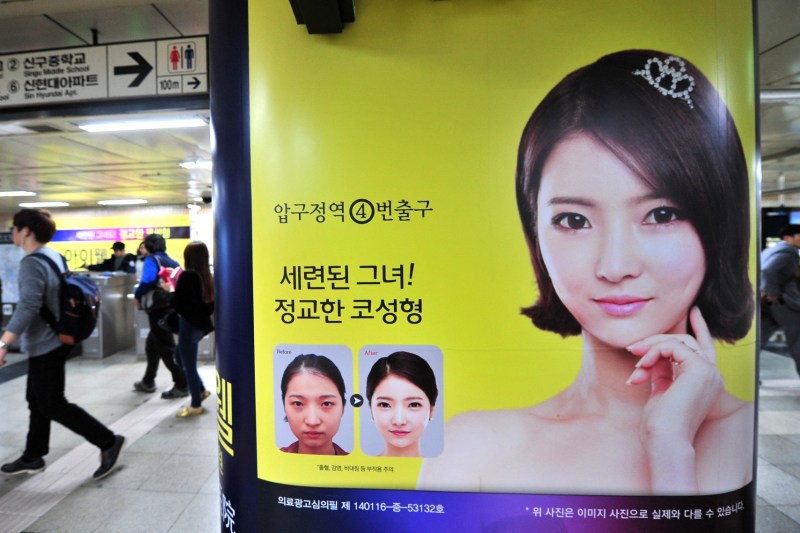
Advertisement at a cosmetic surgery clinic in the Seoul Metro, PHOTO: Jung Yeon-JE / AFP / Profimedia Images
South Korea has announced it will stop offering tax incentives to foreign patients undergoing cosmetic surgery, ending a facility that helped turn Seoul into one of the world's busiest medical tourism hubs, The Independent reports.
The special 10% Value Added Tax (VAT) rebate, introduced in 2016, was designed to attract international patients to approved clinics for aesthetic and dermatological procedures.
The facility has become a defining element of the Asian country's booming plastic surgery and skin care industry, particularly for travelers from China, Southeast Asia and the Middle East.
The tax facility was part of a system that allowed non-residents to recover 10% of the costs of treatments by presenting the necessary documentation at reimbursement counters in airports or city centres. This only applies to procedures performed in medical facilities officially registered with the Korean Ministry of Health.
Eligible treatments included blepharoplasty, rhinoplasty, facial contouring, anti-aging and skin resurfacing therapies.
East Asian blepharoplasty, more commonly known as double eyelid surgery, is a cosmetic procedure that reshapes the skin around the eye to create a crease on the upper eyelid that naturally does not have one. The percentage of East Asian women who naturally have an upper eyelid crease varies across studies, with reported values ranging from 41% in Koreans to 70–83% in Chinese and Japanese women.
Seoul's Ministry of Economy and Finance has confirmed that the VAT refund system will expire on December 31, 2025, after the Korea Herald newspaper exclusively learned that it has been excluded from the government's tax plan for next year.
More than one million foreigners visited South Korea for medical services last year
Reimbursements paid to foreign patients reached a record 95.5 billion won ($64.3 million) in 2024, and government data shows that total medical spending by foreign patients rose from about 400 billion won ($270.9 million) in 2019 to about 1.24 trillion won (£839.7 million) in 2024, surgery plastic and dermatology accounting for approximately 77% of this growth.
According to data from the Ministry of Health and Welfare, the number of foreign patients visiting Korea for medical services reached a record 1.17 million in 2024, up significantly from 610,000 in 2023.
The capital Seoul alone accounted for about 85% of international patient medical spending in 2024, with nearly one million foreign medical tourists receiving treatment here.
Data from Seoul authorities shows that 999,642 foreign medical tourists received treatment in Seoul in 2024, and 85.7 percent of international medical expenses were made with foreign credit cards used in the city.
Cosmetic surgeons in South Korea have warned against the measure
The roots of South Korea's medical tourism boom date back to 2009, when the Medical Services Act was amended to allow hospitals to officially promote their services to international patients.
The Korea Health Industry Development Institute (KHIDI), a government-affiliated body, created the “Medical Korea” brand soon after, promoting combined treatment and tourism packages abroad.
KHIDI records show that the annual number of foreign patients increased from about 60,000 in 2009 to nearly 2.8 million by 2019 cumulatively, before the disruptions caused by the pandemic.
Industry groups have expressed concern over the impending end of the VAT refund, warning that it could affect price transparency and competitiveness.
The Korean Association of Plastic Surgeons said the reimbursement “was a significant incentive for the price-sensitive,” and its elimination could weaken South Korea's ability to attract cost-conscious foreign patients.
It warned: “As other countries offer aggressive incentives, more people may turn to rival medical tourism destinations.”