New research by a leading German scientific institution has found that Ukraine's mostly European allies are unable to compensate for the financial gapj arising after the United States' decision to discontinue military and financial assistance.
According to data from the Kiel Institute [think tanku zajmującego się śledzeniem pomocy finansowej] published in the latest report, all new aid commitments from the EU and NATO countries outside the US with important support from Australia, Canada and Japan for 2025 are heading to their lowest levels since Russia invaded Ukraine in 2022.
Europe is losing momentum and the gap left by the US withdrawal remains unbridged. If the current trend continues, Ukraine will face dramatic financial choices and its ability to continue to defend itself against Russia could be seriously weakened. And the price of this omission may turn out to be much higher than the cost of further support.
According to the latest data covering the situation until the end of October 2025, since the US ended its military and financial support in February 2025, Europe has allocated only approximately EUR 4 billion for new aid to Ukraine [ok. 17 mld zł] — this amount in no way offsets the funds withdrawn by the Americans.
Worse still, support from outside the U.S. has plummeted since the White House changed policy to favor the Kremlin over Europe, from a wartime high of €20 billion. [ok. 85 mld zł] in the period April–June 2025, up to EUR 11 billion 500 million [ok. 49 mld zł] in the period July–September 2025
— Europe failed to maintain momentum from the first half of 2025. The recent slowdown makes it difficult for the continent to fully compensate for the lack of US military aid in 2025.
If this decline continues, 2025 will be the year in which the level of new aid to Ukraine will be the lowest since the beginning of a full-scale invasion in 2022.
— commented economics professor Christoph Trebesch, head of the Ukraine Support Tracker project.
Some carry the burden, others shirk
The report also found that disparities in support across Europe are widening. Although France, Germany and the UK have significantly increased their commitments, they still lag far behind the Nordic countries in relative proportions.
In terms of population, Denmark, Estonia and Lithuania spend the most on Ukraine's defense, allocating between 2.8 percent and 3.3 percent of its GDP for aid. Meanwhile, large European economies with resources that could significantly support Ukraine – Spain (approx. 0.62 percent of GDP) and Italy (approx. 0.74 percent of GDP) – were practically not in the game.
— More funds from France, Germany and Great Britain are significant. But these three countries still lag behind the Nordic countries in relative terms. The decline in support from Spain and Italy is a serious step back, which only highlights the need for a more balanced burden-sharing in Europe, emphasized Taro Nishikawa, co-author of the Ukraine Support Tracker.
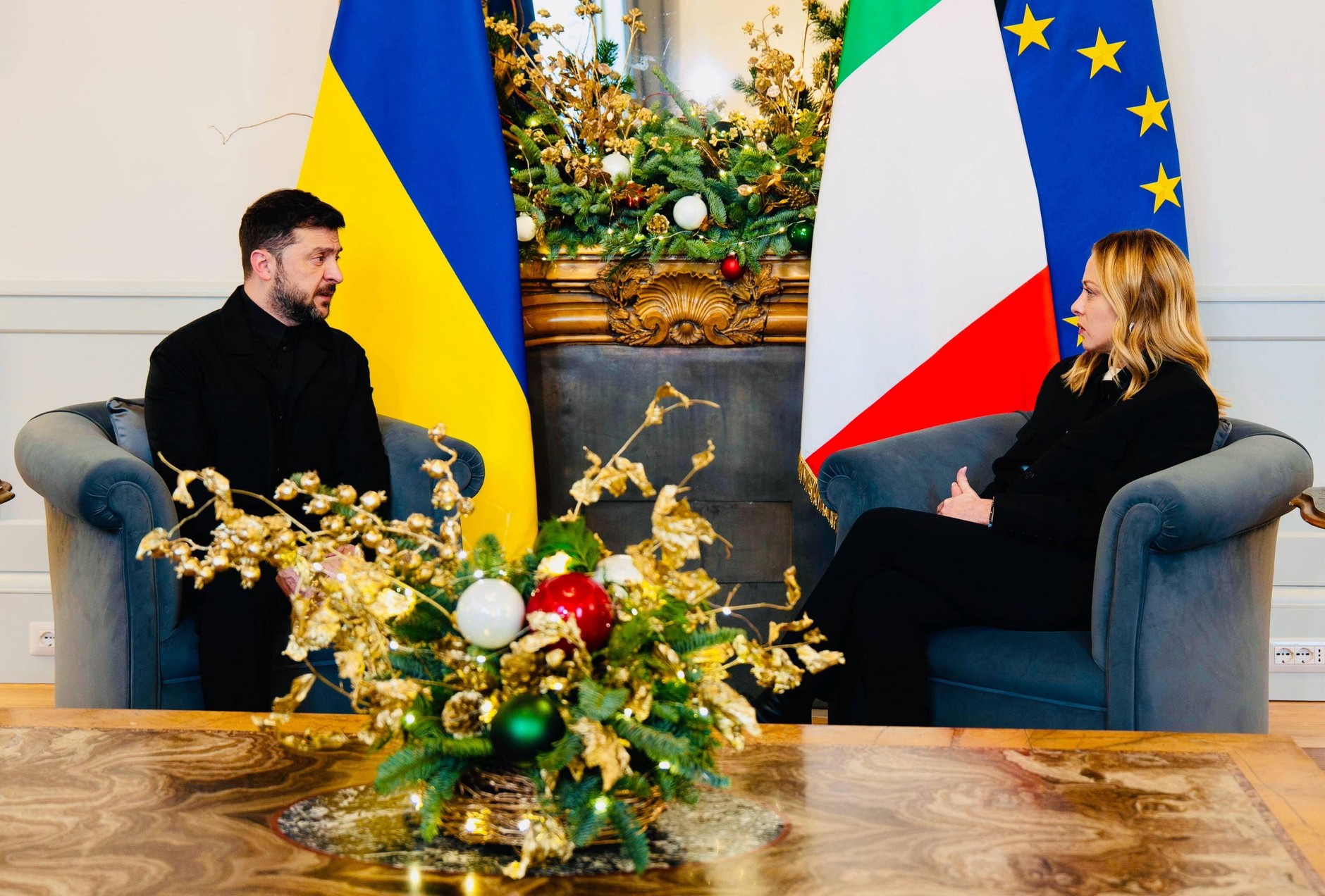
President of Ukraine Volodymyr Zelensky and Prime Minister of Italy Giorgia Meloni during a meeting at the Chigi Palace in Rome, Italy, December 9, 2025.FILIPPO ATTILI/CHIGI PALACE PRESS OFFICE HANDOUT / PAP
According to the Institute's March report, in order to fill the gap left by America's withdrawal from obligations that were once described by US President Joe Biden as aid “for as long as necessary”, countries supporting Ukraine would have to increase the tax burden on their societies from approximately 0.1 percent. average GDP to approx. 0.21 percent GDP.
At the bilateral level, to replace the lost US aid, the EU would have to increase annual support from approximately EUR 6 billion [ok. 25 mld 400 mln zł] up to EUR 9 billion [ok. 38 mld zł]. For France, Italy, Spain and other countries, this would mean a multiple increase in funds.
To put it simply, such an increase in support would mean that the average Italian taxpayer would have to pay approximately $105-106 annually. [ok. 380–384 zł]and the average British taxpayer approx. 37-39 pounds [ok. 180–185 zł] more per year.
Lack of money is not the only problem
Apart from the problem of lack of financial resources, the report showed that the American withdrawal from access to technologically advanced weapons systems (e.g. HIMARS/M270 and Patriot missile artillery systems) cuts Ukraine off from equipment that has inflicted the greatest losses on Russians in the past. The European arms industry is not able to produce these systems on a large scale as their replacements.
Ukrainian President Volodymyr Zelensky announced that his government expects to receive between $15 and $16 billion. [ok. 54–58 mld zł] via the PURL program [Prioritized Ukraine Requirements List, czyli lista priorytetowych wymagań Ukrainy] — NATO-US agreement, which allows Ukraine to receive American equipment if NATO countries will pay for deliveries with an additional 10 percent fee.
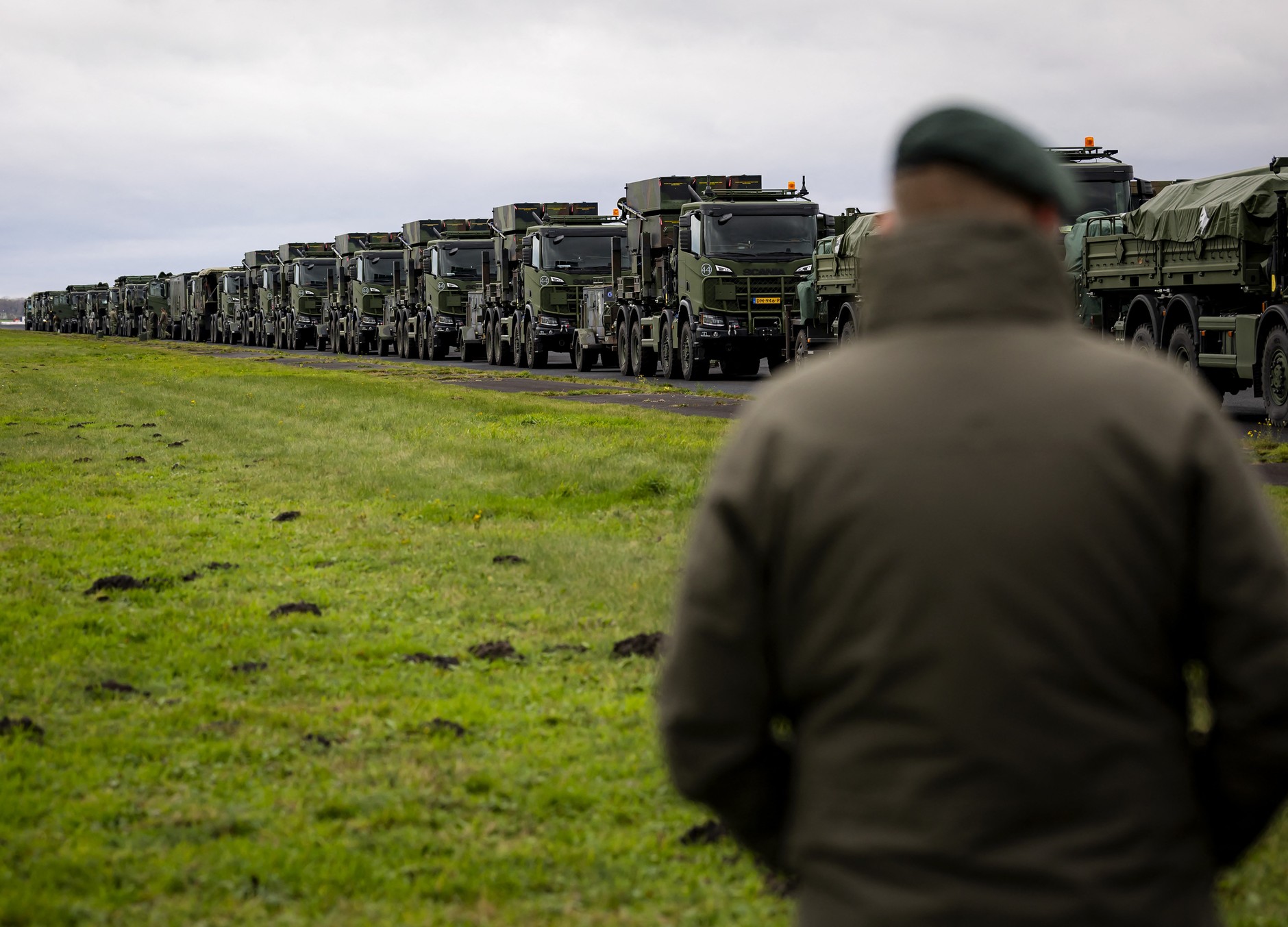
Patriot systems belonging to the Dutch Air Defense Command (DGAC) are preparing to depart for Poland, where they will secure the airspace of NATO's eastern border for six months, November 19, 2025.Sem van der Wal / ANP / AFP / AFP
NATO Secretary General Mark Rutte told German media that the PURL program provided 75 percent this year. Patriot missiles and 90 percent other air defense missiles for Ukraine, and called on other allies to increase their contributions.
The PURL program is to deliver equipment worth approximately USD 5 billion by the end of 2025. [ok. 18 mld zł]and the amount suggested by Zelensky is $15–16 billion. [ok. 54–58 mld zł] it's a forecast for the future.
Year 2026: money or sacrifice
For these deliveries to be realized to the proposed extent in 2026, Ukraine's allies must either significantly increase future support or Ukraine will have to reduce domestic spending, which is currently partially financed by foreign aid.
According to current data from the Ukrainian government, the state budget of Ukraine is approximately $95 billion. [ok. 345 mld zł]with domestic revenues of USD 50–57 billion. [ok. 180–206 mld zł]and a deficit of approximately USD 39 billion. [ok. 140 mld zł] is being filled with donations and loans from allies.
In previous budget crises, Zelensky's government reduced social spending such as pensions, education and health care in favor of increasing defense spending. In the military sector, the key financial problem was the timely and full payment of salaries to approximately one million servicemen of the Ukrainian forces.
I’m Ashley Davis as an editor, I’m committed to upholding the highest standards of integrity and accuracy in every piece we publish. My work is driven by curiosity, a passion for truth, and a belief that journalism plays a crucial role in shaping public discourse. I strive to tell stories that not only inform but also inspire action and conversation.