Donald Trump wants the US to increasingly prioritize itself over global conflicts. A radical change compared to the last decades. But things are not quite so simple with this America First.
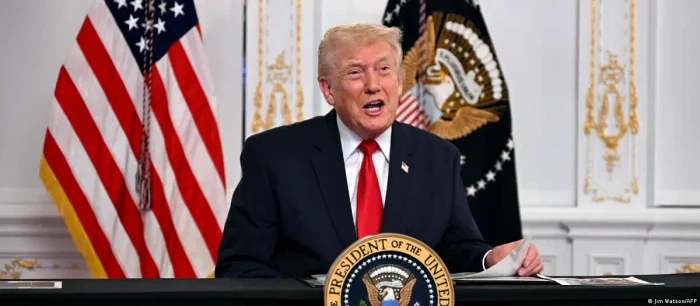
Donald Trump presented the updated version of America First
It has long been a key slogan for Donald Trump. America First, meanwhile, seems closer to reality than ever with the release of a major US strategic document outlining the administration's foreign policy.
“In everything we do, we put America first”, says an introductory letter signed by the president in the 29-page document, recently published and entitled “National Security Strategy of the United States of America”.
The preamble describes US strategy as “pragmatic without dogmatic pragmatism, realistic without doctrinal realism, principled without being idealistic, firm without being bellicose, and restrained without pacifism”.
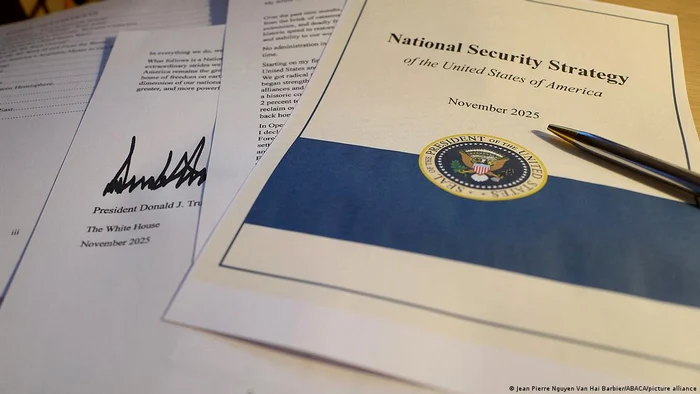
The document that explains the America First doctrine
What is Trump's new strategy?
The National Security Strategy (NSS) does not set policies per se, but outlines the government's foreign policy vision. Of course, it can be overtaken by world events. For example, as US foreign policy expert Andrew Payne points out, the 2022 version, released during Joe Biden's tenure, did not significantly mention the Middle East.
But the NSS clearly impacts how government resources are allocated and gives foreign chancelleries a sense of US intentions.
“Whether or not the administration itself follows the principles and priorities set out here, this is about the best tool available to policymakers abroad looking for clarity on the direction of an administration that has so far been inconsistent and unpredictable,” Andrew Payne, director of research at the international affairs think tank Chatham House, told DW.
What does the National Security Strategy document say?
In addition to much self-aggrandizement and rejection of traditional US foreign policy, Trump presents a much stronger America First plan than in the strategy formulated during his first term in 2017.
“After the end of the Cold War, American foreign policy elites became convinced that America's permanent dominance of the entire world was in our country's interest,” the introduction states. “However, the affairs of other countries are our concern only if their activities directly threaten our interests.”
Thus, the broad outlines of the strategy represent a move away from American interventions abroad, multilateralism, and participation in international bodies. Instead, an orientation toward national self-determination is emerging, at least where it serves US interests.
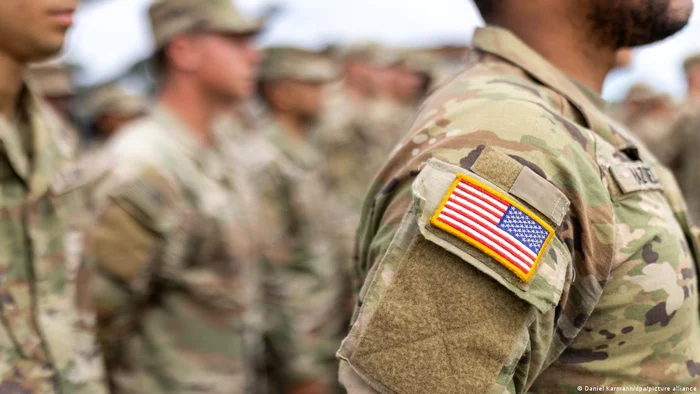
The Trump administration is planning major changes in US foreign and security policy
The NSS requires the US to have:
● total control over its borders,
● “the most powerful, lethal and technologically advanced army in the world”,
● “the most dynamic, innovative and advanced economy” and
● a “soft power” influence at the global level for one's own benefit.
Globally, the document calls for a “Trump Corollary” to the Monroe Doctrine, a reconfirmation of the American principle of 1823 that required European powers not to intervene in the Western Hemisphere. He refers to preventing “a hostile power from dominating the Middle East” and notes that ending the war between Russia and Ukraine is a key goal, along with fighting drug trafficking in the Caribbean and the eastern Pacific Ocean, while calling on other nations to shoulder more of the burden in global affairs.
Statregia also says that Europe faces “the prospect of a civilizational erasure”, that some European countries will be “unrecognizable in 20 years or less” and raises the question of whether they are “strong enough to remain reliable allies”.
The overarching message of American isolationism is not always applied consistently. The NSS calls for US “dominant position” in the Western Hemisphere, and particularly in Latin America, stating: “We will reward and encourage governments, political parties and movements in the region broadly aligned with our principles and strategy.”
A new foreign policy direction for the US?
While these strategic goals won't necessarily become applied policy, their explicit wording marks a major shift from the strategy published by the Biden administration in 2022. Payne notes “a fundamental and explicit rejection of national security strategies that have been developed since at least the end of the Cold War,” and adds, “It's clearest in what it is not: the traditional orthodoxy of liberal internationalism that has underpinned U.S. global strategy for decades.”
It is naturally closer to Trump's previous attempt in 2017. But for Rubrick Biegon, a lecturer in international relations at the University of Kent in England, it is consistent with the broader changes of his second term.
“He seems to agree with the kind of changes from Trump to Trump 2.0. I think the strategic document is closer to Trump's unconventional vision than the one from 2017,” Biegon commented to DW. That's partly because “Trump is more comfortable in his position this time around and is surrounded by more people from his own team rather than establishment figures.”
European reactions: “To the right of the extreme right”
In Russia, Kremlin spokesman Dmitry Peskov hailed the document as “largely in line with our vision” and “a positive step”. Others in Europe were considerably more troubled. Former Swedish Prime Minister Carl Bildt said the document “positions itself to the right of the extreme right”.
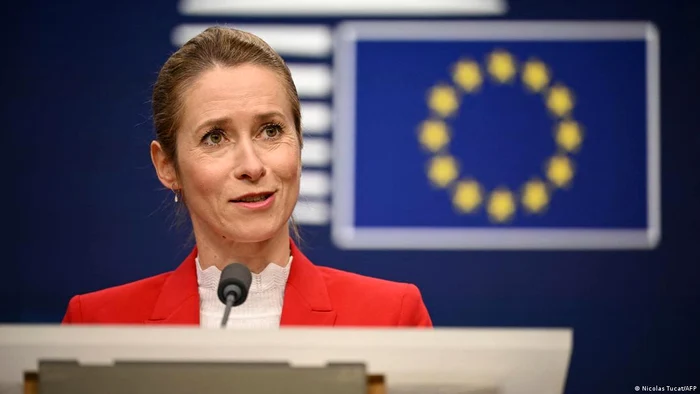
Kaja Kallas: “We are the greatest allies and we should stay united”
The reaction of active European politicians was generally to downplay the document. This despite the fact that the act repeats Trump's attacks on Europe from his speech at the UN. “Europe,” said the American president at the time, “is in great trouble. It has been invaded by a force of illegal immigrants the likes of which has never been seen before.”
After the NSS was published, German Foreign Minister Johann Wadephul said his country did not need “outside advice”. But he added that the US remains “our most important ally” in NATO and that “issues regarding freedom of expression or the organization of our free societies have no place (in the strategy – ed.), in any case at least when it comes to Germany.”
EU foreign policy chief Kaja Kallas took a similar tone. “We have not always been of the same opinion on various subjects, but I think the general principle remains valid. We are the greatest allies and should remain united.”
Matt Pearson – DW