The Holiday Gift Trap. Psychologist: “Expensive gifts should be borne by parents, not Santa”

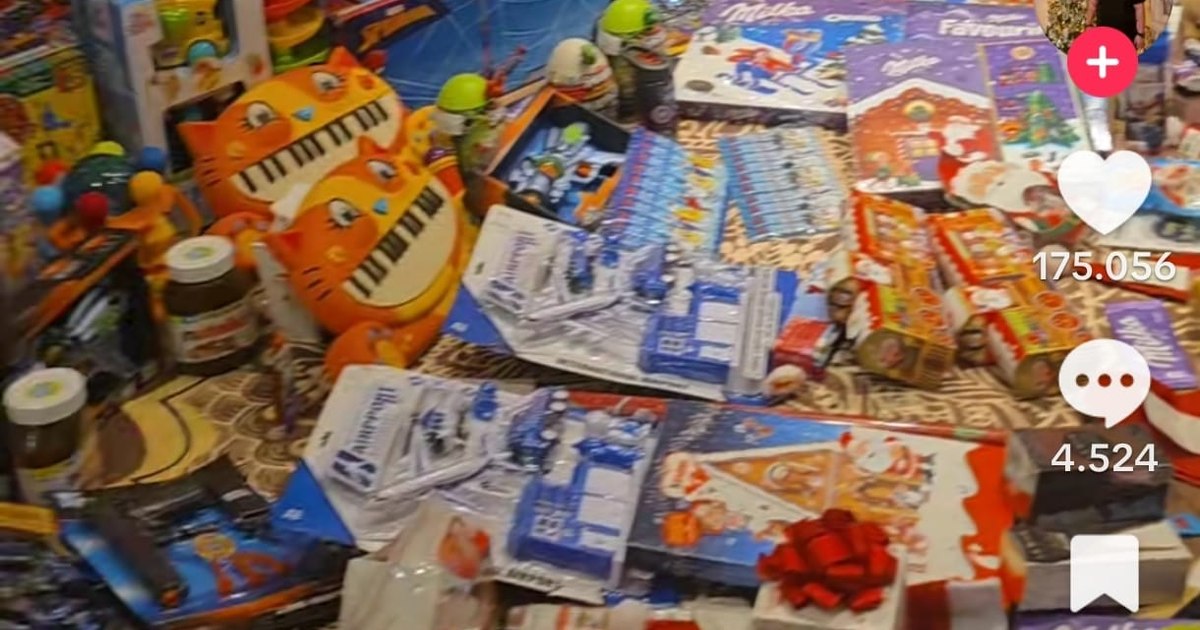
After Santa, Tik Tik was peppered with videos of parents showing off what their kids got. In many cases, the boots became unwieldy, so the multitude of toys, clothes and sweets were put under the tree.
In other situations, the children received an expensive, state-of-the-art phone as a gift. The clips have sparked many discussions. Is it healthy to attribute expensive gifts to magical beings? How can parents handle situations where the little ones are discussing what they got from Santa, and the gifts are so different? Psychologists say that it is best that expensive gifts are not given on this occasion, and that children know that valuable things come from their parents
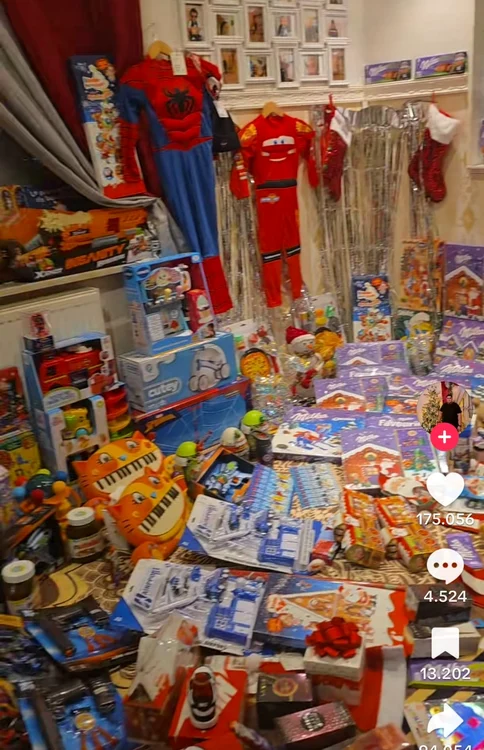
PHOTO Tik Tok video capture
The gifts presented on social networks and the reactions they provoked
In recent years, after the night of December 5, the Tik Tok network is full of images like the one above. In the clips posted, the living rooms end up looking more like candy and toy stores, so many products are spread out on the floor. And this year, a new phone model stars in many of the shots. Everything happens on a night when, until recently, Santa Claus brought small gifts, in the form of sweets and fruits.
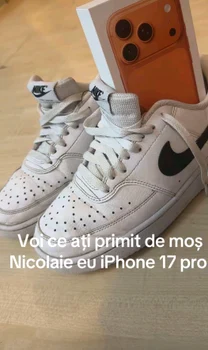
Image 1/4:
PHOTO Capture Tik Tok
Why the Temptation to Buy Expensive Holiday Gifts Appears
There are several reasons why some parents decide to replace small gifts with many and expensive things. Dorina Stamate, psychotherapist, explains:
“The temptation to buy many and very expensive gifts for Santa Claus or Santa Claus often arises from the desire of some parents to compensate for the lack of time spent with the child, from social pressure and comparisons with other parents or from the need to give the child everything they did not have in their own childhood. Thus, gifts sometimes become a way of saying “I'm sorry” or “I love you”, sometimes an attempt to keep up with others or a projection of one's own emotional needs. Parents who feel guilty, anxious or perfectionist, those who grew up with lack, parents who are influenced by the social environment and those who wrongly associate love with giving material things, without realizing that, in fact, the emotional connection and the time spent together are worth much more to the child, are more prone to this behavior.
“Without realizing it, parents end up turning the celebration into a social competition”
In other situations, gifts can become more of a form of social status validation, a way for parents to show that they are successful. Social networks make everything much easier.
“Behind this behavior can be hidden personal insecurities, the fear of judgment, the pressure not to be inferior to others or the need to compensate for a fragile self-esteem. The problem is that, without realizing it, parents end up turning the holiday into a social competition instead of keeping it as a moment of closeness, simplicity and connection with the child. I have seen videos on social media of children receiving entire shelves of toys and sweets. There is now a culture of 'unboxing' and spectacular filming. Many parents enter this game without realizing that they are not giving a gift to the child, but producing content for the networks.” emphasizes the psychotherapist.
What we tell children when they ask about inequities
Although the Holidays and gifts are supposed to mean joy, this very desire to impress can give them a different turn. At a young age, those who believe in Santa Claus and Santa Claus find it hard to understand why the gifts they receive can be so different, even though the two magical Santas are said to love all children.
For parents who are faced with such questions, the psychotherapist recommends:
“You can say that Santa brings each child what he thinks suits him best, not necessarily the most expensive. You can help him see what is beautiful in the gift he received: >. It is important to shift the focus from material to emotional value: the gift is a symbol of care and joy, not a measure of personal value. Thus, the child learns to appreciate what he receives and develop gratitude, instead of feeling less valuable”.
Expensive gifts can also lead to a distortion of values
Psychopedagogue Roxana Rusu believes that expensive gifts received “from Santa” can also lead to a distortion of values.
“Gifts from Santa represent, in the child's perception, a form of moral reward. That's how kids find out, right? That Santa rewards those who have been good. When this reward takes on extravagant dimensions, such as a high-end phone in a shoebox, the implicit message sent to the child is distorted. The child learns that happiness and personal worth are associated with very expensive objects and a certain material status. You are good and appreciated if you have the latest smartphone model. Thus, a fertile ground is created for an extrinsic, fragile self-esteem, dependent on social comparisons, material objects, appearances”. says Roxana Rusu.
The competition of the parents can be transferred to the school, among the children
As the children grow, the gifts received can also lead to an unhealthy competition, draws the attention of the psychopedagogue.
“A very expensive, high performance phone model is functionally useless for a child. Instead, it feeds the unhealthy competition between children that can arise over time. Who has the expensive and cool phones today? Who will have tomorrow? This unhealthy competition generates frustration, anger, devaluation, hierarchies based on possessions, even hatred. And the places where the effects are best manifested are the educational units, where children meet daily, discuss, compare each other, tease each other, transforming over time these very expensive objects into criteria for belonging to social groups: >, >. In order to be part of the gang, you must have certain very expensive items, otherwise you are rejected. There are children who go through such situations reaching depressive states or put immense pressure on the parents, who, out of the desire to see their child happy, take out loans to buy the latest phone model that they cannot afford, entering this spiral of competition. The drama is amplified if, after all this, a colleague tells their child the next day that his phone he has >”.
How instead of joy gifts can bring frustration
From the experience she had as a teacher, she remembers diametrically opposite situations regarding gifts.
“I once had a primary school student who received a pair of very expensive sports shoes from Santa Nicolae. He really wanted a certain brand, and the social pressure didn't come from school, but from another group of kids he was part of, formed around a class he was attending. The parents made efforts and fulfilled his wish. Everything took a dramatic turn when one of the colleagues there allegedly told him that they were not original, causing the amusement of the others. The child's happiness turned into an emotional crisis with frustrations, despair, depressive states and contempt for his own person. Fortunately, the parents, overwhelmed by the situation, asked for help and together with the specialists they corrected the situation, understanding how important it is to strengthen the child's emotional balance and form a correct vision over time.
I also want to mention the case of a middle school student, from a very wealthy family, who pleasantly surprised me with the balanced and healthy way he was raised. When there were discussions where children were bragging about certain personal items, if he was asked why he doesn't have the latest phone model or why he doesn't wear clothes from a certain brand, the child would most certainly answer it: > or >. Not only was he able to face social challenges, but he also influenced others in a positive way”says Roxana Rusu.
To whom do we attribute the expensive gifts?
In support of expensive gifts, parents often use the argument that they have worked hard during the year and want to reward their children. Psychotherapist Dorina Stamate says that it is best for everyone to accept this type of gifts:
“From the perspective of emotional and financial development, it is healthier for very expensive gifts to be assumed by the parents, not attributed to a magical being. Thus, the child gradually learns the value of money, the effort behind it and the connection between wants and resources, without believing that Santa “gives everything to anyone”, which can cause frustrations or painful comparisons. At the same time, the magic of the holidays can be preserved through symbolic gifts from Santa, and the meaningful ones can be explained as the result of the work and care of the parents.
PHOTO Shutterstock
Recommendations for memorable Holidays
So that the Holidays are no longer a competition or a validation, Dorina Stamate comes up with some practical and easy-to-implement advice.
“It is useful for parents to establish a realistic budget and a simple rule ahead of time – for example, a symbolic gift from Santa and the rest from the parents – so that the child receives joy without excess. It is also good for adults to reflect on their own emotions: are they buying out of joy or guilt? From the desire to make the child happy or from social pressure? Honest communication, moderation and avoiding competition with other parents helps enormously. Gifts do not have to be many or expensive to be memorable; experiences, time spent together and family rituals have a much more lasting emotional impact”she says.
For her part, psychopedagogue Roxana Rusu recommends to parents:
“Let the little ones be aware that, when they are adults, they will remember more the moments spent with the family during the Holidays, the atmosphere in the house on special evenings, the scent of cakes and home-cooked food, than the material objects received.
To add to Santa's gift, in addition to sweets, fruit, clothes, toys and a book or a ticket to a children's theater performance. Don't try to compensate for the lack of time and attention given to the child with expensive material objects offered by the Holidays. Last but not least, to disconnect from the worries and daily routine in these special evenings and not only, to be truly present in the children's life and world, to enjoy and play with them, do activities together, tell them about all the symbols of traditions and laugh together as much as possible. (…)
When choosing gifts for children, we must not forget that Santa Claus and Santa Claus are part of an educational tradition: they symbolize generosity, kindness, community spirit, simplicity, joy. Let's choose balanced gifts that will really help them develop harmoniously. The extravagantly expensive gifts received on these occasions can turn everything into a race of “who has more”. Let's explain the tradition and the story behind these beautiful customs. Let's give them a complete experience.”