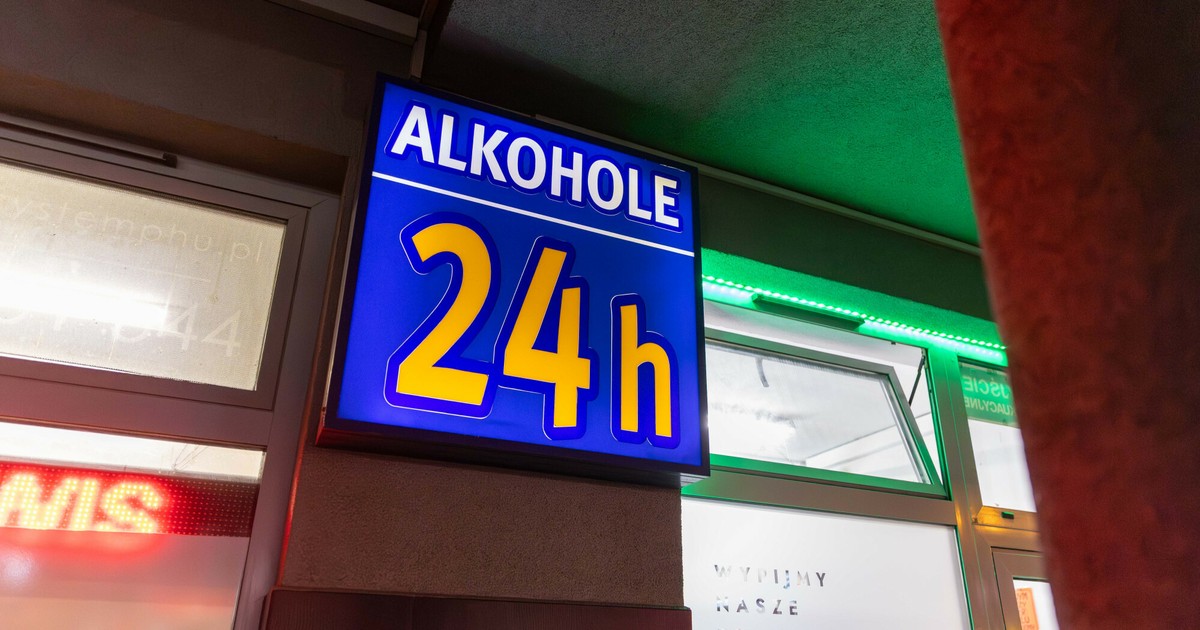
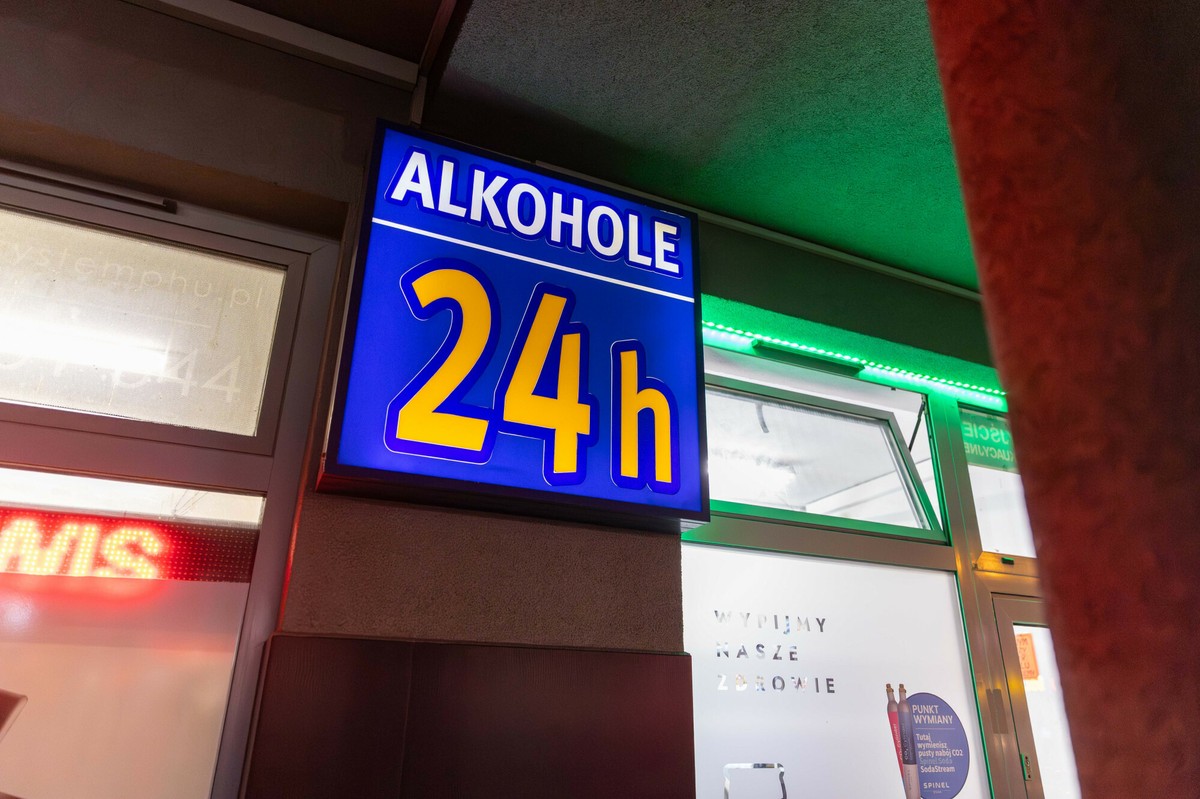
Last year, Warsaw conducted public consultations, asking residents what they thought about the night prohibition in the city. Almost 9,000 people took part in the consultations. people. The vast majority, almost 81 percent. supported the introduction of night restrictions on alcohol sales. Of them, almost 97 percent she wanted it throughout Warsaw. The results were turned into a bill. The issue of prohibition was discussed by councilors at the session on September 18.
They took up two projects: one by the mayor of Warsaw, Rafał Trzaskowski, and the other, prepared by councilors of the Left and the Miasto Jest Nasze association. Both concerned the introduction of night prohibition throughout the capital. Unexpectedly, during the session, President Trzaskowski withdrew his project and instead asked councilors to express their opinion on the introduction of a pilot ban on night sales of alcohol in two districts: Śródmieście and Praga Północ. With the votes of KO councilors, who constitute the majority, the presidential project was canceled and a pilot project was adopted in two districts.
See also: “You have to pour it down” turns into “vodka is a bummer”. NoLo replaces alcohol among “Warsaw”
Full ban in Gdańsk, Kraków, Bydgoszcz
Explaining his decision, President Trzaskowski said he wanted to see how the ban would work in practice. So far, about 10 percent municipalities in Poland, including some large cities, took advantage of the opportunity to limit night sales of alcohol. From 2018, when municipalities have such an option, until 2024, approximately 180 out of 2,479 municipalities in Poland introduced night prohibition. In 30 cases, the restriction applies only to part of the municipality or city. Among large cities, night bans have been introduced throughout the entire area, including: Kraków, Bydgoszcz and Biała Podlaska, and from September 1 also Gdańsk. Prohibition applies only in the city center, including: in Poznań, Wrocław, Rzeszów, Katowice, Bielsko-Biała and Kielce. Giżycko, Słupsk and Szczecin introduced night prohibition during the tourist season.
Not all over Warsaw, but all over Poland
The disappointment with the decision in Warsaw triggered a broader discussion about the need to introduce night prohibition throughout the country. Two projects have been submitted to the Sejm on this matter: the Left and Poland 2050. The Left wants to ban the sale of alcohol throughout the country from 10 p.m. to 6 a.m. Municipalities will be able to decide to extend the hours of the ban on the sale of alcohol – from 9:00 p.m. to 9:00 a.m. The party demands a complete ban on alcohol advertising and selling it at gas stations, as well as regulation of online sales. High-proof drinks will still be able to be sold in bars, clubs and catering establishments.
— KO councilors at the last session of the Warsaw Council voted against the will of the residents and their interests. A systemic solution at the national level will ensure that such a situation will not happen again, notes Agata Diduszko-Zyglewska, chairwoman of the Lewica-Miasto Jest Nasze club of councilors in Warsaw.
The Poland 2050 project is very similar. An increase in license fees was added to it. This would be the first time in 23 years.
(Un)lost costs
Opponents of night prohibition give one argument – loss of revenue. Both those from the excise tax and entrepreneurs who sell at night. The Warsaw Enterprise Institute and the Civic Development Forum have repeatedly drawn attention to this financial aspect, stating that in cities that introduced a night ban on the sale of alcohol, crime did not decrease, but the pockets of local entrepreneurs were impoverished, and there was less money in the city budget because there was a decline in revenues from fees for the use of permits for the sale of alcoholic beverages. (FOR and WEI refer to data from, among others, the Krakow City Guard, which shows that in 2023 the number of reports regarding alcohol consumption in prohibited places increased by 21.2% – from 8,043 in 2022 to 9,749 in 2023. However, it is worth noting that these data are for a full year, and the resolution introducing a ban on night sales came into force only from its half – ed.).
The state budget also loses because revenues from excise duty are lower. As an example, the Warsaw Enterprise Institute and the Civic Development Forum cite Biała Podlaska, which withdrew from the night prohibition. According to the city authorities, suchThe solution did not reduce the problem of alcohol sales, but it was negatively felt by city retailers.
“In practice, the night prohibition means not only losses for entrepreneurs and the city budget, but also for the citizens themselves. Residents forced to move their purchases to restaurants will ultimately pay more — whether through higher prices in bars and pubs, or through limited competition in retail trade,” says FOR and the Warsaw Enterprise Institute in a position paper.
And they add: “Alcohol consumption in Poland is decreasing, so local authorities should not resort to radical solutions, but focus on enforcing existing laws and better health prevention.“.
Economic costs less important
Karol Madoń, an economist from the Institute for Structural Research, notes, however, that there should be health and public safety benefits treated as a priority over financial ones.
— According to the report of the Polish Agency for Solving Alcohol Problems, currently the National Center for Addiction Prevention, budget revenues from excise tax cover only approximately 25-30 percent. total socio-economic costs of alcohol consumption in Poland. These are data for 2020. The annual costs related to alcohol consumption were estimated at nearly PLN 90 billion, with the vast majority of costs resulting from premature mortality. The disproportion between revenues and costs is therefore huge – from a purely economic point of view, restrictions on alcohol consumption, including through night prohibition, are justified – says the expert.
He emphasizes that this is only an economic calculation. — Further arguments should be added to it: improved safety in public spaces, fewer interventions by services, reduction of violence and disturbances at night, and a general improvement in the quality of life of residents, says Karol Madoń.
He also notes that most products – even basic necessities such as food and hygiene products – cannot be purchased at night in most places in Poland. – There is therefore no reason why alcohol should be treated as a product requiring special privileges in this respect – emphasizes the expert.
When asked about the benefits of nationwide night prohibition, the Ministry of Health refers to the research of the National Center for Addiction Prevention. They show that the introduction of restrictions on the night sale of alcoholic beverages translates most into improved safety in the local community. But the municipalities admit that they feel pressure from residents who expect prohibition to be introduced on the one hand, and from entrepreneurs who want to make money by selling alcohol on the other.