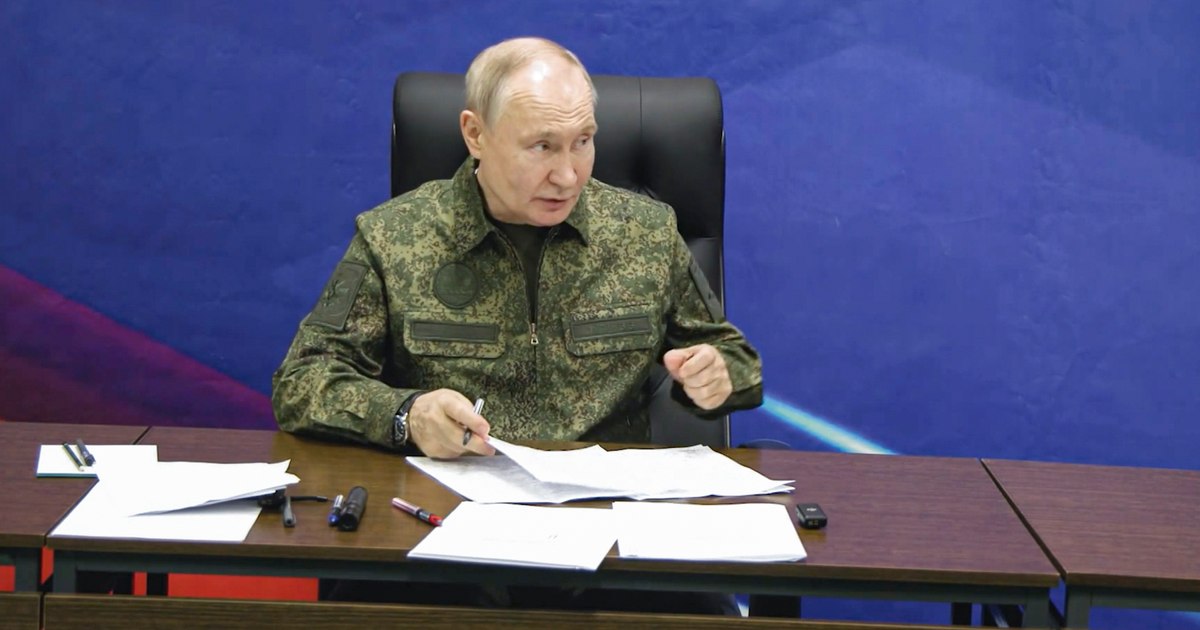
Russian President Vladimir Putin signed a decree on Monday ordering the military training of reservists in 2026.
PHOTO EPA-EFE
Dated December 8, the decree stipulates that soldiers from the reserve troops will be called up for training alongside the Armed Forces, the National Guard, the military units of the Ministry of Emergency Situations, as well as state protection agencies and the FSB.
According to Meduza, which cites Russian state media, Putin ordered the government and regional authorities to ensure that all stages for calling up reservists and organizing training are completed.
Two of the four sections of the decree remain classified and marked “for official use only”.
These are servicemen who are in the reserve and have voluntarily signed contracts to join the mobilization reserve. In 2021, Russia had about 100,000 reservists, according to official figures.
According to government rules, the president decides how many reservists will be called into the army, based on the needs of the army and proposals from the government.
Training periods cannot last more than two months.
In October, the State Duma passed a law allowing reservists to be sent for “special training,” including missions to protect critical infrastructure. The move is seen as another way to get more people into military service without announcing formal mobilization.
Use of reservists to protect critical infrastructure
The new decree signed by Putin follows earlier measures expanding the military's ability to use reservists. On November 4, Putin signed another decree allowing the deployment of reservists to protect critical infrastructure across the country.
Six days later, the Kommersant newspaper reported that at least 19 Russian regions had begun recruiting reservists into units tasked with guarding key installations, a move linked to Russia's ongoing war in Ukraine.
The report stated that these reservists – primarily intended to combat enemy drones – would be given legal status as active duty military for the duration of such missions.
They can be called in “special training sessions”, the procedures to be determined by the government. Vice Admiral Vladimir Tsimliansky, a senior official in Russia's General Staff, said these reservists would not be sent to fight in Ukraine or deployed outside of Russia.
However, the decree signed by Putin does not include such restrictions.
Year-round conscription law
On November 4, Putin also signed another law: this allows Russia to carry out mandatory conscription throughout the year, from January 1 to December 31. As of January 1, 2026, recruitment offices will be able to send electronic subpoenas daily, schedule medical check-ups and hold recruitment committee meetings at any time of the year.
The deadline for a recruit to appear after receiving an electronic subpoena will be limited to 30 days from the time it appears in the state registry.
Currently, such subpoenas have no expiration date. Actual deployments to military units will still take place twice a year – between April 1 and July 15 and between October 1 and December 31.
Winter training remains uncommon in Russia. Last year, Putin ordered it to begin in January, for the first time in two decades. In previous years, similar decrees were usually issued between late February and early June.