Pentagon chief Pete Hegseth focuses on the “hard realism” of the US. He also praises Poland


As Pete Hegseth said, for decades American leaders “moralized, intervened, and tried to build democracies,” often without clear results and with unnecessary burdens on the armed forces.
Read also: Karol Nawrocki appeared on Kanał Zero. He commented on the veto of the Cryptocurrency Act
The rest of the text below the video
Hegseth firmly announced an end to the era of unlimited stabilization missions and attempts to impose Western values by force. — America will no longer be distracted by democracy building, interventionism, indefinite wars, regime changes, climate change and moralizing – he declared. He emphasized that defense policy will focus solely on “practical, concrete interests” of the US.
A hard line on the US border, a softer tone towards China and an operation in the Caribbean
The head of the Pentagon also referred to the anti-drug operations conducted by the United States in the Caribbean. As he revealed, over 20 smugglers' boats were destroyed there and about 80 people died. Hegseth also defended the controversial second attack on survivors on the grounds that it was necessary to counter the flow of drugs into the US. — If you bring drugs into this country by boat, we will find you and sink you – he warned.
He also announced the strengthening of military operations on the border with Mexico, including the training of units intended to protect land, sea and air transfer routes.
Read also: Donald Trump is considering attacking Venezuela. Pentagon presents scenarios
At the same time, Hegseth signaled a more balanced approach towards China. He emphasized that the current administration seeks “stable peace, fair trade and respectful relations,” and the development of Beijing's military potential is – as he said – a “historic process” that Washington is carefully analyzing. The United States is expected to maintain a “sober understanding” of China's growing power while avoiding direct confrontation.
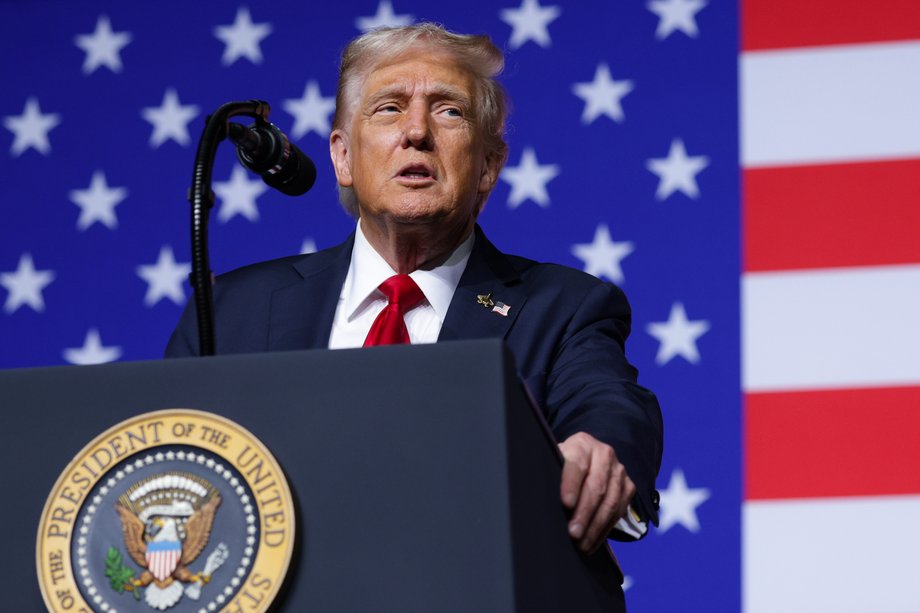
US President Donald Trump
|
GettyImages
Praise for Poland and a signal of changes in global obligations
One of the key topics of the speech was the issue of burdens within international alliances. Hegseth pointed out that The United States expects a much greater share from its partners in financing common security. He praised countries that have recently significantly increased their defense spending – including South Korea, Germany, and especially Poland. He described Warsaw's investments as a model of a responsible approach to alliance obligations, referring to Donald Trump's repeatedly repeated demand for equal distribution of costs.
— Allies are not children. We can and should expect them to do their part – said the head of the Pentagon. He emphasized that the U.S.'s focus will remain “the homeland and the Western Hemisphere,” and threats in other regions should be addressed first by their own people. He also indicated that American combat power would be concentrated “in our own neighborhood,” and the administration did not intend to interfere in the domestic policies of allies.
Hegseth announced further development of the American industrial base in the defense sector. He recalled growing investments in the navy, drone technologies, air defense systems and key projects such as the Golden Dome initiative – a new air and missile defense program. All this is to be financed from the Pentagon's record budget, which has reached the value of $1 trillion and was additionally expanded by $150 billion by Congress.
The Politico website pointed out that Hegseth's speech clearly outlined a world based on spheres of influence: with China dominating in the Pacific region and the USA in Europe and the Western Hemisphere. The head of the Pentagon mentioned Russia only peripherally, which – as commentators point out – is also part of the new, selective course of the American security strategy focused on national interests.