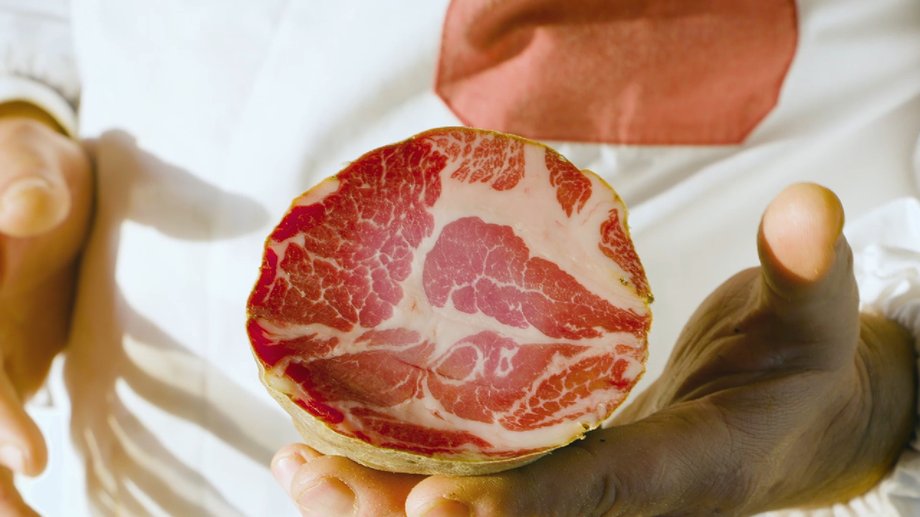
You may know it as capocollo, coppa, capicola, gabagool. Dozens of names describe one Italian delicacy: the characteristic pork neck meat. It is easy to spot due to its bright red color and beautiful marbling. Unlike ham, the fat in the pork neck makes capocollo soft, delicate and extremely tasty.
We're in the countryside of Martina Franca, Italy, and today we're going to talk about one of the best capocollo in the country – capocollo di Martina Franca. This type of capocollo is unique because it is made from pigs that feed exclusively on acorns from the local fragno tree.
But that's not the end. This tree is also very important in the production process. Let's find out more.
Read more: Internet users are demanding price reductions. What's going on with this piece of meat?
This is one of the rarest Italian cold cuts. It is made from pigs eating acorns
|
Business Insider
How capocollo di Martina Franca is made
The piece of meat we will be working with comes from the section from the head to the seventh rib. The meat is deboned and processed. We only get two capocollo from one pig
– explains Giuseppe Carvellera, owner of Salumi Carvellera.
The piece Giuseppe is working with is large. It weighs about 3 or 4 kg, but will lose half its weight at the end of the curing process.
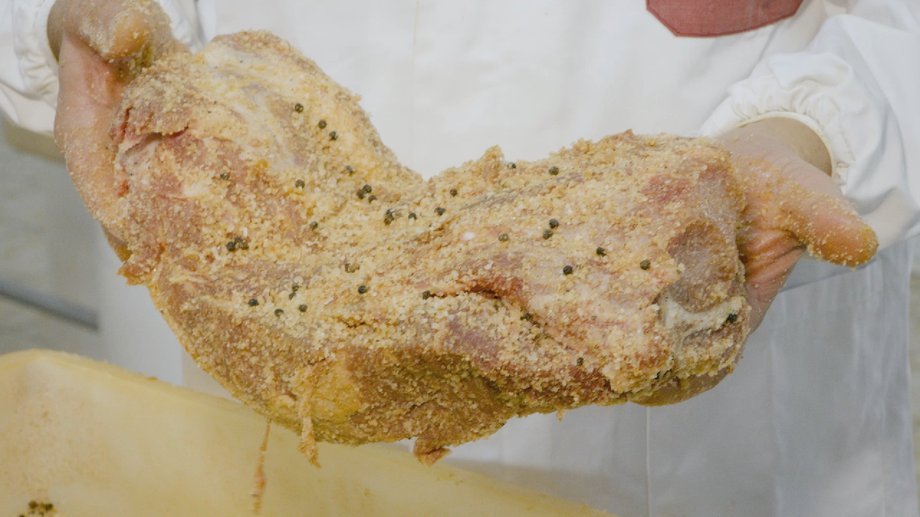
The meat is then seasoned with salt, pepper and a dash of Senise chili pepper, a variety of chili pepper from the neighboring Basilicata region that gives the meat a sweet, smoky scent.
The capocollo is then cured for 15 days and hand-rubbed every few days to absorb all the flavors of the spices.
Unlike other types of capocollo, which are dry-cured, this one is also soaked in brine for six hours. This brine is not just water and salt.
It's vincotto, boiled grape must. Grape must is the thick, fresh juice obtained when grapes are crushed to produce wine. It is an ideal sweetener, but also a drink.
Martina Franca was born in a city of vine growers who made wine. The grapes were cooked during the harvest seasons
– explains Giuseppe.
Now the meat will be bathed.
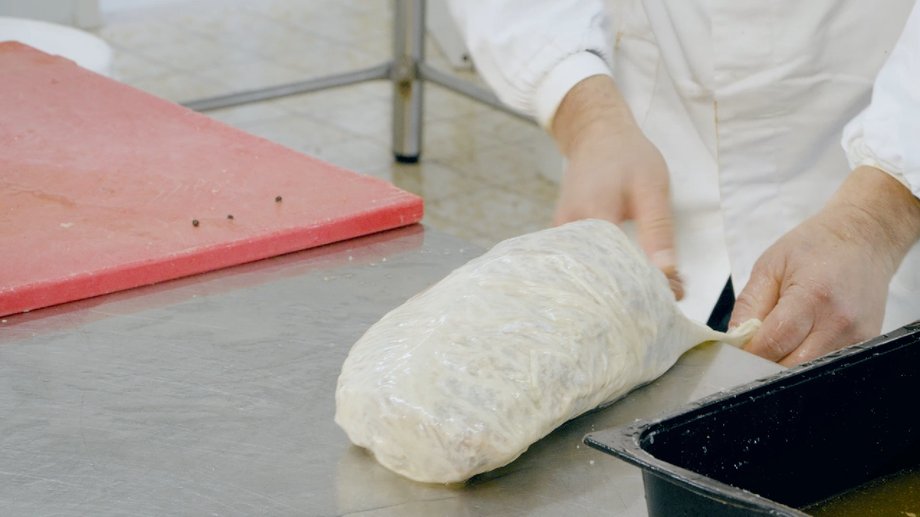
Giuseppe: What happens when the meat is in the marinade? If there is too much salt, it will be neutralized. Now the wine has to do the same to give it its unique flavor. After marinating, we place the meat in a casing, which is the pig's intestine. We use natural, not artificial casings, says Giuseppe.
The smell of grape must is really strong. Once placed in the casing, Giuseppe pierces the capocollo to remove excess air. He ties the meat tightly with string so that it can be hung during the curing process.
To make sure the capocollo has a perfect cylindrical shape, he first wraps it in a sock and then squeezes it through a specially made funnel. It looks like a hand luggage measure at the airport.
Read more: They make the largest mozzarella in the world. It's not cheese, it's a legend
The most unusual pork neck in the world? Italians claim that this is their culinary gold
|
Business Insider
Italian pork neck meat has a long tradition
— We wrap the meat again to compact it and to make sure that we get rid of moisture or excess water. We want to make sure that we get rid of the blood or must, says Andrea Carvellera, sales manager at Salumi Carvellera.
Now the goal is to remove excess fluid from the meat. The drying stage will take place gradually in three different temperature-controlled places.
- The first one is dryerin which the meat will spend seven days and lose all fluids, such as grape must and blood.
- Second, preliminary curing roomis a place with high humidity levels, where a bit of moisture is introduced into the meat.
— In our previous place of work it was 20 degrees Celsius and the humidity was 50%. Now everything is the other way around. It's 17 degrees Celsius here. We will lower the temperature and increase the humidity, which will be around 70%. We give the meat moisture, explains Giuseppe.
- After another seven days spent in the primary curing room, the meat reaches the destination of the curing process, i.e curing plant. He will stay here for 150 days.
— This is where the real curing takes place. The temperature here is 15 degrees Celsius and the humidity is 80-85%. says Giuseppe.
After 150 days, it's time to take off the socks and finally reveal the capocollo hiding inside. Why are you doing it outside?
Thanks to our families, our company was able to make capocollo in an oak forest, in an ideal climate for cold meats. Nature gives it additional value. By working outdoors, we can obtain a truly excellent product
– explains Giuseppe.
Read also: Global obsession with weight loss. Ozempic changed everything
This Italian cold meat is conquering the world. Its taste begins in the oak forest
|
Business Insider
It all starts with pigs walking free and eating acorns
Giuseppe deceived me by saying that the capocollo was calling us to try it. There is one more stage ahead of us: smoking.
To better understand how much this step affects the final product, we need to return to the forest that is so dear to Giuseppe. As he takes off all his socks, his son Andrea tells me more about the local fragno oak.
We are located in Corte dei Fragni – a large forest bathed in nature. Fragno is a very important tree in the production of Martina, because our capocollo is smoked thanks to it. This tree allows us to obtain a very nice aroma. Fragno is important because our pigs roam free and eat its acorns. This is what acorns look like
says Andrea.
The Itria Valley, stretching from the Balkans to Turkey, is the only place in Italy where this type of oak can be found.
The fertile soils of these hilly farmlands, along with the Italian practice of curing pork necks, make capocollo from Martina Franca a truly unique product.
After breathing in the crisp air in Corte dei Fragni, I join Giuseppe in the smoking room or “black room.”
We'll light a fire soon. We will use fragno for this. We'll take a few twigs and start a fire. This is a typical recipe. 50 years ago our grandparents couldn't add any preservatives. To stop flies from getting to the meat, it was smoked
– explains Giuseppe.
The meat is nice and tender, not dry. It has a bright red color. There is not much fat in this cut.
— Capocollo has 15 percent. fat content, i.e. enough to keep it moist, says Giuseppe.
Time for a tasting. You can smell the must, salt, pepper and spices. I also really like that the flavor of the meat is strong.
“That's because our pigs roam free and eat acorns. The meat is tasty and aromatic, he explains.
— You can also feel the fresh taste of acorns. The taste on the palate is amazing. How many days does it take to make a capocollo? – I'm asking.
— 150-160 days — replies Giuseppe.
Author: Claudia Romeo, Insider journalist