A unique natural wonder that forms under exceptionally rare conditions is on the verge of extinction

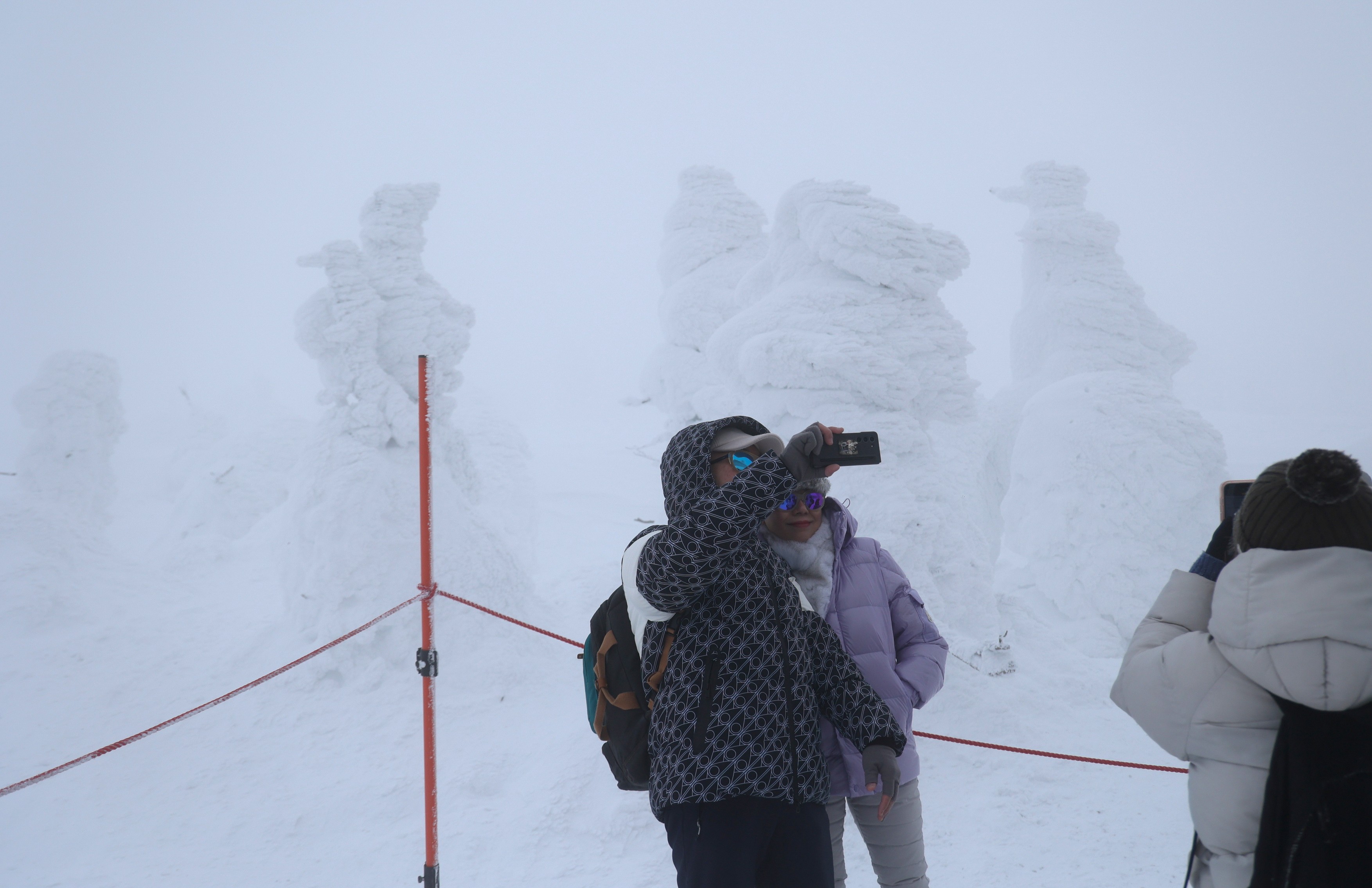
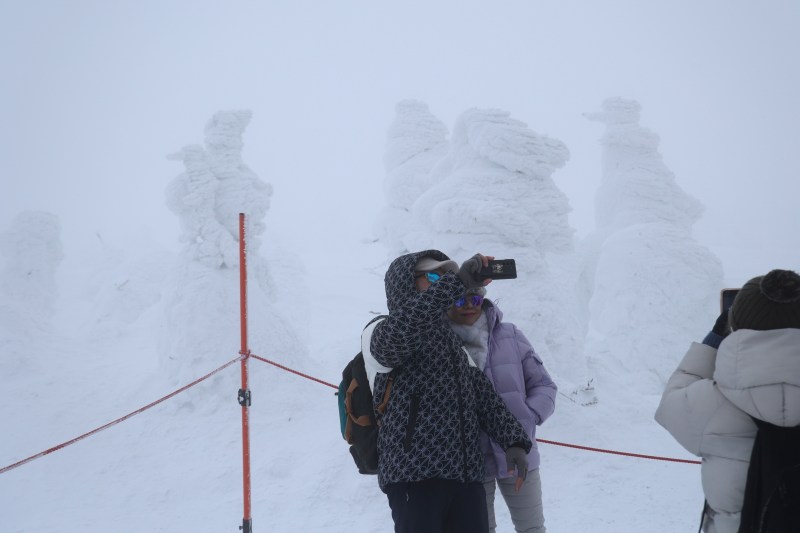
“Snow Monsters”. Credit line: Haruna Masumoto / Jiji Press Photo / Profimedia
Every winter, the slopes of Mount Zao in northern Japan, one of the country's most famous ski areas, are transformed. Fir trees covered in ice and snow become ghostly figures known as “juhyo” or “snow monsters,” reports the BBC.
Juhyo forms only under exceptionally rare atmospheric conditions, appearing when strong and persistent winter winds carry water droplets that freeze on contact with Aomori todomatsu trees, gradually layering into ice.
On Mount Zao, these formations appear during strong westerly winds, with surface air temperatures between -6.3 degrees Celsius and -0.1 degrees Celsius, and unusually high cloud water content.
Under these precise conditions, the knot thickens on the windward side of the trees, forming overlapping layers called “shrimp tails”—the distinct shapes that cluster together to create the impressive juhyo figures.
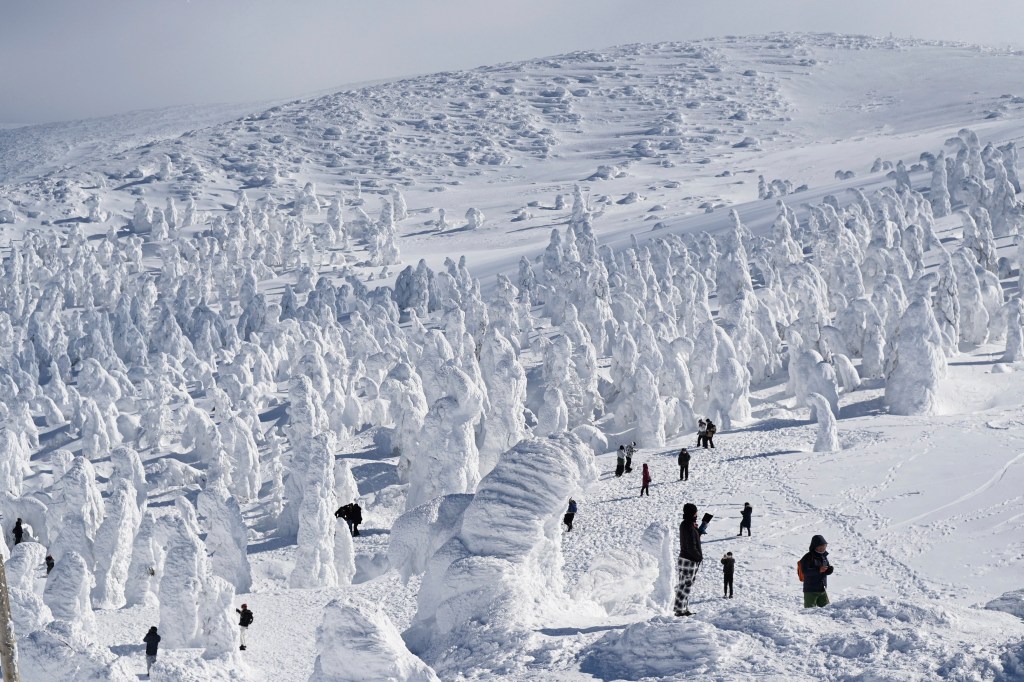
They are the biggest winter attraction in the Zao area, a mountain range that lies between Japan's Yamagata and Miyagi prefectures and attracts tens of thousands of visitors each year. They are not only a natural spectacle, but also a mainstay of the local economy.
These “snow monsters” are now in danger. The famous shapes are starting to get slimmer.
“In the 1930s, we would see juhyo five to six meters in diameter. In the post-war decades, they were often two to three meters. As of 2019, many are half a meter or less. Some are barely columnar,” says Fumitaka Yanagisawa, an emeritus professor of geochemistry who studies juhyo at Yamagata University.
What are the causes
There are two causes, claims researcher Yamagata: a warming climate and an attacked forest.
The host tree, Aomori todomatsu, suffered a moth epidemic in 2013 that left it without needles. In 2015, the bark beetles came, burrowing into the weakened trunks. Yamagata officials report that about 23,000 fir trees, about a fifth of the prefecture's trees, have died. With fewer branches and leaves, there is less surface area for snow and ice to form.
Another 2019 study found that in the nearby city of Yamagata, average temperatures from December to March have risen by about 2 degrees Celsius over the past 120 years.
“Unique landscapes are already being lost to climate change,” says Akihiko Ito, an ecologist specializing in forests and climate change at the University of Tokyo.
Research shows that climate warming and extreme weather events in Japan are already damaging many of its high mountain forests.
“Seasonal changes in spring and fall can damage leaves, and insect infestations expand. These stressors can reduce forest growth and density,” says Ito.