A German weekly assessed the security strategy of Trump's people. Strong words were said about the USA


Read also: Donald Tusk reacts to the US security strategy. He turned to the Americans
The rest of the text below the video
The Trump administration accuses it of limiting “political freedom” and even creating space for “censorship and persecution of political opponents.”. As the weekly notes ironically, these indications apply to “Berlin, Rome and Paris, but not Moscow.”
The US security strategy is marked by interference in European politics
“Spiegel” writes that one of the key conclusions from the document is the announcement of “resistance to the current course of European countries”. The weekly asks whether the United States is considering direct interference in the politics of individual countries – and if so, what this would look like in practice.
Read also: US strategy towards Europe. Kaja Kallas comments on criticism and warnings
At the same time, the document moves Europe further down the US priorities. The chapter devoted to it is marked with the letter C – only after the issues Western Hemisphere and Asia. This is where the interests of the United States are to be “most intensively defended.” Hence such strong emphasis on the fight against drug business, illegal migration and references to the 19th-century Monroe Doctrine, which perceived the Western Hemisphere as Washington's natural sphere of influence.
According to the authors of the analysis, the document paints an “apocalyptic, almost caricatured image of Europe”and its tone is reminiscent of Vice President JD Vance's famous speech during this year's Munich Security Conference. Then – as commentators emphasize – instead of the expected position on global conflicts, the US administration presented a tough, ideologically charged diagnosis of the condition of the West.
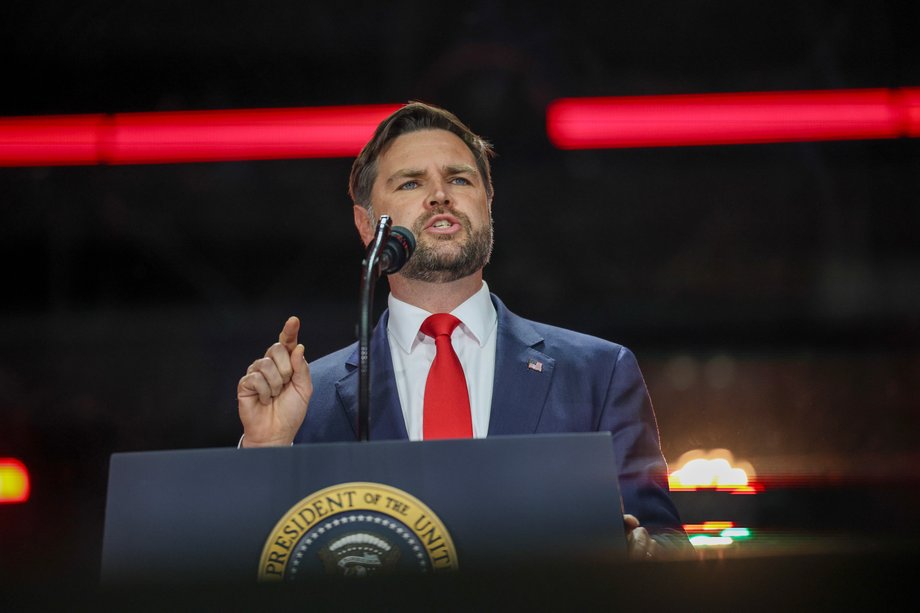
US Vice President JD Vance
|
GettyImages
China, Taiwan and global tensions
The part of the document regarding Asia follows the tone known from Trump's previous speeches: The US reiterates that years of trade with China have mainly benefited Beijing. “State subsidies” and “intellectual property theft” are cited as key strategic challenges.
Simultaneously the strategy clearly emphasizes the importance of Taiwanconsidering it an area of strategic importance and emphasizing the need to prevent an armed conflict with China.
Germans react: no one will lecture us
In Germany, the document caused mixed reactions. Foreign Minister Johann Wadephul emphasized that The US remains Germany's “most important ally” within NATObut at the same time he pointed out that Germany does not need “outside advice” on freedom of speech or the principles of a democratic society.