Violence in Sweden. They are teenagers and join gangs. “Like Sharks”


According to the latest police report 17.5 thousand people in Sweden are active members of criminal gangsand another 50 thousand belongs to their immediate environment – that's 5,500 more than last year. Gangs are responsible for most shootings and bombings in the country. In 2023 alone, 53 people died from firearms (45 last year). On a per capita basis, this is it one of the highest mortality rates in all of Europe.
What is particularly disturbing is that gangs are increasingly recruiting youth and children even to committing serious crimes. According to the Swedish prosecutor's office, last year in 176 cases of murder, including aiding and abetting murder, the suspects were under 15 years old. — This trend makes Sweden stand out from other Scandinavian and European countries, says Anders Nilsson, professor at the Institute of Criminology at Stockholm University.
The problem is not new. For 15 years, gangs in Swedish cities have been fighting for control of territories and participation in the lucrative drug trade. Sweden is one of the largest transit countries for cocaine from Latin America on its way to Europe. However, in recent years, rising firearms smuggling, the spread of digital communications and escalating hostility between rival gangs have created new dynamics, explains Nilsson.
The conservative Swedish government led by Prime Minister Ulf Kristersson, which is tolerated by the right-wing populist Sweden Democrats party due to the lack of its own majority, took power in 2022 with a promise to solve this problem.
Since then, it has toughened penalties for young adults and expanded police powers, including: in the field of suspicion-free inspection and monitoring of digital communications, and allocated more resources to preventive activities.
According to the police report, 19 percent gang members are foreigners or dual nationals, and some gang leaders operate from abroad. This is the government's way of justifying further tightening of already strict migration rules. It is planned, among others: depriving dual nationals of Swedish citizenship if they are active in gangs, and allowing deportation for even minor crimes, regardless of residence status.
Juvenile offenders
The hard-handed strategy brings results first effects: Murders and shootings have decreased slightly this year. However, at the same time, the number of attacks using explosives and arson has increased. Moreover, due to harsher penalties, gangs began to hire youth under 15 years of age who are not subject to criminal liability under applicable law. Such people are recruited via social media or instant messaging applications such as Telegram and are often lured by quick money or luxury clothes.
Until now, juvenile offenders were usually placed in special places youth centers. However, they are not equipped to care for minors who have committed serious crimes, and for a long time they did not even have the authority to take away smartphones from children. Nowadays, the facilities are even considered places of recruitment and networking by criminal gangs. Almost 90 percent young offenders who stayed in such facilities committed a crime again within two and a half years.
That's why the Swedish government now wants to take more decisive action and is planning to a drastic step. In the case of particularly serious crimes, the age of criminal responsibility is to be lowered from 15 to 13 years, and in extreme cases it will even be possible to be sentenced to imprisonment from the age of 13. For this purpose, special units are to be created in prisons, and the Ministry of Justice says there will be 100 to 150 places in six prisons. Initially, the measure will be valid for five years.
“In the serious situation we find ourselves in, we must follow new paths” – this is how Kristersson and three of his ministers justify the decision in an article for the Swedish newspaper “Expressen”.
“If we continue as before, nothing will change.”
Spiral of violence
Suspects in fatal shootings are getting younger, we read further. “This trend must be stopped.” The earlier remedial measures are taken, the greater the chance that young people will be able to break addiction – in extreme cases also through imprisonment.
The study commissioned by the government recommended lowering the age of criminal responsibility for serious crimes to 14 years and imprisonment from 15 years. The fact that the authorities went even further was criticized by the Swedish opposition and experts.
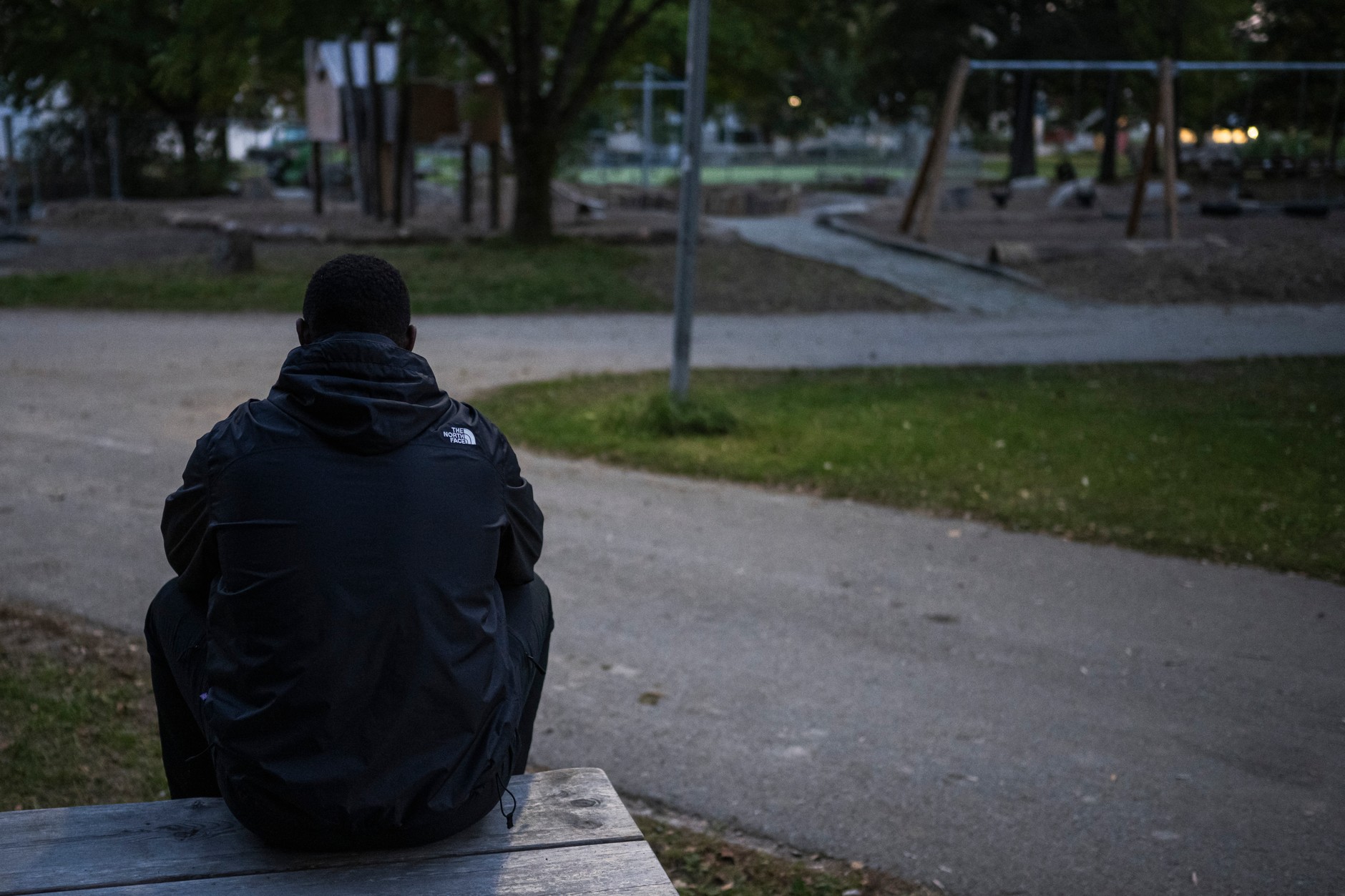
A teenager in Orebro, Sweden, September 2024.Jonathan Nackstrand / AFP
On the one hand, there is a fear that gangs will be able to recruit even younger children. On the other hand, studies have shown that the deterrent effect of such measures is very low, says Nilsson. — Children's ability to perceive and assessing consequences their actions are limited by their cognitive and emotional maturity. They lack long-term thinking and impulse control, says the criminologist.
Therefore, as Nilsson explains, children are more susceptible to the influence of people around them than to knowledge about criminal responsibility. Moreover, there is a proven link between imprisonment in adolescence and problems later in life. “It's more often a negative turning point than a positive one,” says the expert.
Instead, you need to be even more consistent pursue contractorswho use children for their own purposes. — Youth are not the driving force behind these conflicts. It is important to counteract those responsible for this spiral of violence, says the criminologist. Moreover, according to Nilsson, more resources should be allocated to preventive actions and reduce known risk factors.
Almost all juvenile delinquents grew up in difficult socio-economic conditions, have problems at school, often suffer from mental disorders or experienced violence in childhood. This makes them particularly susceptible to gang temptations.
“They're like sharks”
There, they are first given smaller tasks to gain trust, and then they fall into a spiral of increasingly dangerous crimes. Those who oppose are sometimes themselves at risk. “They are like sharks. As soon as they smell even the slightest trace of blood, they grab you and don't let go,” a former gang member who was recruited by a criminal network as a child recently told the Svenska Dagbladet newspaper. If you are not ready to “walk the whole spectrum, you run the risk of falling victim to other criminals yourself.”
According to Nilsson, migration also plays a role in this issue. — People with a migrant background are over-represented among criminals – especially in the case of more serious crimes – says the expert. This can partly be explained by the sociodemographic component of this group, which often lives in troubled neighborhoods and faces poverty.
The head of the social welfare office in Uppsala, Tomas Odin, also sees a cultural problem. Many people living in particularly violent neighborhoods are still alive outside Swedish society – he says in an interview for “Svenska Dagbladet”.
However, he also believes that youth prisons are a bad solution. Instead, families should intervene as early as possible.
But such actions take years — time the government doesn't have. The next parliamentary elections will take place in September 2026, when Swedes will evaluate the coalition in terms of its great election promises. Interestingly, new reforms regarding criminal liability and prison sentences as well as stricter deportation rules are scheduled to enter into force in July 2026.