Europe's pensions are collapsing under their own weight. The only country that changed the rules of the game

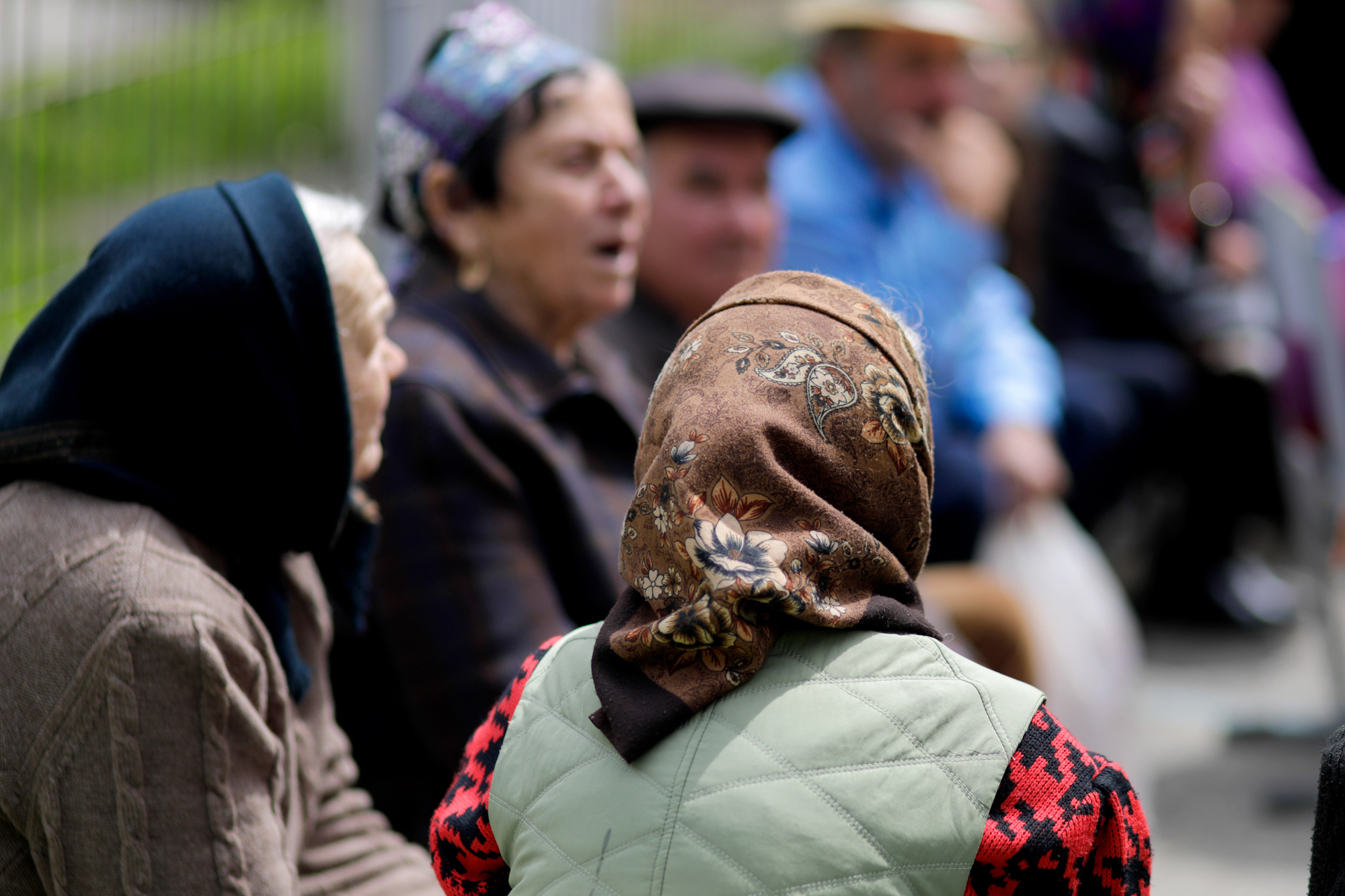
Caught between the demographic problem and the need to limit fiscal spending, coupled with modest economic growth, EU governments see an urgent need to reform pension systems. The problem is, however, that they have difficulty fixing these problems because of the political costs.
With the exception of the Netherlands, which has embarked on large-scale reform, efforts in most European countries have been stymied by political weakness, partisan backlash and fragmented parliaments.
What a reform of the pension system the Netherlands has made
The Netherlands has adopted one of the largest and most profound reforms of the pension system in Europe. The new law is called Future Pensions Act and entered into force on 1 July 2023.
Jjournalist Dan Popa sends the “EconoMix” newsletter every Thursday morning. If you are interested in personal finances and want to receive economic recommendations, you can subscribe here:
What has changed concretely?
The occupational pension system (Pillar II) is gradually moving from defined benefit pensions to defined contribution pensions. This means that pension funds no longer promise a fixed pension at the end. Each person will have an individual pension account/pot, in which contributions and investment returns accumulate.
Contributions become uniform for all ages, they no longer increase with the employee's age.
Management is still collective: funds invest money together, share some risks and may have common reserves.
The transition must be completed by January 1, 2028.
Why pension reform was needed in the Netherlands
The old system promised fixed pensions, but the promises were becoming hard to keep due to an aging population and lower returns.
The Dutch are living longer, the wage/pensioner ratio is falling, and costs are steadily rising. The new system makes pensions more sustainable as it links benefits to actual contributions and investment performance.
The labor market is more mobile and the new system is more flexible and transparent.
What changes for people (employees and future retirees)
Everyone sees the exact value of their retirement account, in real time. The final pension will vary based on returns, it is no longer guaranteed. Young people could benefit more because their money stays invested for longer.
Funds can invest differently depending on age: riskier for young people, more prudent for those close to retirement.
In France, the new government of Sébastien Lecorni was forced to postpone plans to raise one of the lowest retirement ages in the EU, currently at 62, Reuters writes. Similar initiatives to raise the retirement age or cut benefits have failed or even been canceled in neighboring countries such as Germany, Spain and Italy.
Pension reforms have only been made under extreme pressure from financial markets or international creditors
The reason is simple, Reuters notes: Given that the average European voter is now over 45, governments have too much to lose by imposing costs on the older generation in favor of the younger, even if it simply means postponing “doomsday”.
An academic study looking at the EU's main pension reforms between 2006 and 2015 found that governments tend to overhaul their pension systems only when faced with market pressure.
Where pension reforms have been implemented, such as in Greece, Portugal, Italy and Spain in the last decade or in Sweden in the 1990s, this has often been done under extreme pressure from financial markets or international creditors.
In a sign of the emotional weight behind such reforms, Elsa Fornero, then Italy's labor minister, broke down in tears in 2011 when she raised the minimum retirement age and scrapped annual inflation-indexed pension adjustments.
Today, she says she had no choice as the sharp drop in Italian government bond yields put her in a difficult situation.
“It's like asking a fireman if he regrets destroying something with the water he used to put out a fire. We didn't do the reform to punish anyone, but because the financial world, on which Italy depended, wanted to see serious and immediate reform,” she said.
However, even the pension reforms in the countries mentioned at the time do not guarantee that they will remain permanently in place.
Italy and Spain have suspended or partially relaxed pension system reforms, Reuters also says. Even Portugal and Greece, which cut pensions as a result of bailouts imposed by international financiers, have since increased benefits and are considering further increases.
For João Silva, the author of a report on pensions by the non-profit organization European Youth Parliament, this was inevitable, as consensus on the political and economic formula failed to be reached.
The impetus for reform has also weakened in Germany, Ireland and Great Britain, which have not dared to change the generosity of the mechanism for calculating pension increases.
Italy introduced the Cota 103 system, which allows pensioners to retire at 62, provided they have 41 years of contributions
Some countries, however, seem to have found a solution – see the case of the Netherlands, which I wrote about above. Their reform offers greater flexibility, transparency and personal pension monitoring
In Italy, the Meloni government recently introduced the Cota 103 system, which allows pensioners to retire at 62, provided they have 41 years of contributions. The long-term target is 67 years, based on increasing life expectancy. However, if the link to life expectancy is removed or “frozen”, it is estimated that there will be a large fiscal burden: According to an independent estimate, pension costs will increase by 0.4% of GDP per year until 2040, according to Reuters. The “normal” retirement age (for full pension) in Italy is 67.
In Germanythe so-called active pension will take effect from 1 January 2026, meaning that those who have reached the legal retirement age of 67 and choose to continue working will be able to earn up to €2,000 tax-free. The aim is twofold: to keep experienced workers in the labor market to address labor shortages and to reduce pressure from early retirements.
In addition to incentives for the elderly, the new reform package promoted by Germany's coalition government (CDU/CSU – SPD) also calls for maintaining the current pension-to-income ratio (48% before retirement) until 2031. However, a significant faction within the ruling coalition, the CDU/CSU youth wing (Junge Union), is vehemently opposed as it believes the package places a disproportionate burden on younger generations and does not ensure long-term sustainability.
Czech Republic and Slovenia have legislated to raise the legal retirement age by two years, according to the OECD. In the Czech Republic, the legal retirement age was already rising by two months a year to 65 in 2030. Under the 2024 legislation, the retirement age will continue to rise, but at a slower pace after 2030 – by one month a year to 67 in 2056. At the same time, eligibility conditions have been relaxed for some people, and a new system of early retirement for hard work and dangerous came into effect.
Slovenia decided in September 2025 to raise the age limit by two years; the legal retirement age will be increased from 65 to 67, provided there are at least 15 years of contributions. If you have at least 40 years of contributions, retirement will be possible from the age of 62.
In France, the Court of Auditors has issued a warning that the country's growing elderly population will push public spending to levels comparable to those of the coronavirus pandemic in the coming decades.
By 2070, almost one in three French citizens will be over 65, while the working population will decrease by more than 3 million, said the president of the Court of Auditors, Pierre Moscovici.
The change will test the foundations of the French welfare state, where spending on healthcare and pensions already accounts for more than 40% of public spending. France's public spending is among the highest in the world at 57.3% of GDP, but if pensions and social benefits per person remain unchanged, it could exceed 60% by mid-century, a threshold that has only been exceeded during the pandemic.
Bruegel institute warning
A key problem, according to the Bruegel institute, is that in all major EU countries, private pension savings remain a tiny percentage of GDP, with the exception of Denmark and the Netherlands. This makes it clear that any meaningful integration of European retirement savings tools will only be possible when several EU countries make joint efforts in this regard.
And even then it will take time to build up private national retirement savings to macroeconomically meaningful levels. The EU's previous attempt to create and promote a cross-border pan-European personal pension product (PEPP) contributed very little to the growth of private pension savings in the European Union. “If EU leaders want more private pension savings, they must first reform their national pension systems,” Bruegel points out.