In a world where women divide their energy between career, family and everyday worries, bone health and hormonal balance are often put last. “Osteoporosis does not hurt. Loss of bone mass does not cause pain or other symptoms, so the patient does not seek medical help until a fracture occurs“, warns Dr. Andreea Siriteanu, endocrinologist specialist at MedLife.
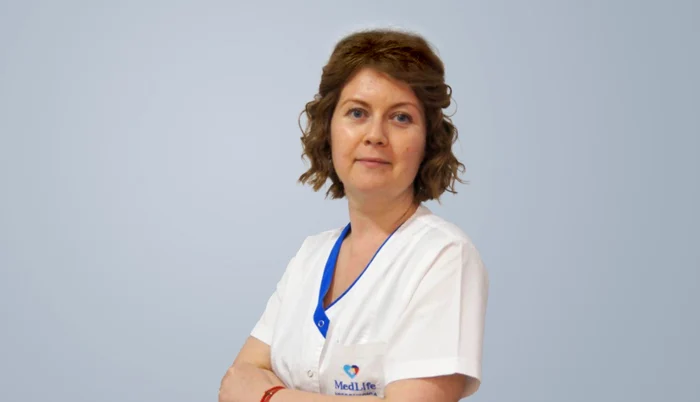
Dr. Andreea Siriteanu
According to international statistics, more than 500 million people worldwide suffer from osteoporosis. “One in three women and one in five men over the age of 50 will suffer at least one osteoporotic fracture during their lifetime. It is a silent disease that does not show clear manifestations until the fractures appear,” said Dr. Siriteanu, warning that in the case of people with multiple chronic diseases, osteoporosis can be considered less urgent so that treatment is neglected.
An invisible enemy with visible risk factors
“In daily practice we encounter new cases of osteoporosis“, the endocrinologist testified. “It is a very common pathology, especially in postmenopausal women, but also in elderly men. The prevalence of osteoporosis among postmenopausal women is 14.05%, compared to only 2.62% among premenopausal women, according to a recent study of 7,493 women and published in JMIR Public Health (2023). This is due to a rapid loss of bone mass, mainly due to falling estrogen levels, changes that can lead to an increased risk of fractures, especially in the spine and hips“, explained the doctor.
Falling estrogen accelerates bone loss and increases the risk of fractures, especially at the hip and spine. The risk factors are multiple:
· Age: The risk increases with age, due to the natural decrease in bone density.
· Female sex: Women are at greater risk, especially after menopause, due to the decrease in bone-protecting estrogen levels.
· Family history: If parents or close relatives have had osteoporosis or fractures, the risk is higher.
· Diet low in calcium and vitamin D: These substances are essential for bone health.
· Sedentarism: Lack of physical activity leads to decreased bone mass.
· Smoking and excessive alcohol consumption.
· Certain conditions and medications: Diseases such as rheumatoid arthritis, hyperthyroidism, hypercortisolism, digestive diseases with malabsorption, but also corticosteroids and other medications can promote bone loss.
· Early menopause or premature ovarian failure.
“Osteoporosis is a silent disease. In the early stages, it does not give obvious symptoms, and the first sign is often a fracture caused by a minor trauma“, said the doctor.
From lifestyle to DEXA
The good news is that loss of bone mineral density can be prevented or at least significantly slowed by a healthy lifestyle. “We are talking about a diet rich in calcium and vitamin D, regular physical exercise, quitting smoking and limiting alcohol, regular medical evaluation and BMD – DEXA screening, as well as managing chronic conditions that can destabilize health.”, said Dr. Andreea Siriteanu.
BMD is short for Bone Mineral Density and measures the amount of minerals (mainly calcium and phosphorus) contained in a specific portion of bone—usually in the spine, hip, or forearm.
This measurement is done by the DEXA test (Dual-Energy X-ray Absorptiometry) and is the gold standard for diagnosing osteoporosis. DEXA is a quick and non-invasive investigation that measures bone mineral density in the spine, hip and forearm.
DEXA is indicated for women over 50 or younger if they have risk factors (early menopause, family fractures, corticosteroid treatment, etc.), as well as men over 70 or who have similar risk factors.
Dr. Siriteanu recommends moderate-impact activities—walking, dancing, light jogging—that stimulate bone formation, as well as balance and muscle strength exercises to reduce the risk of falls. “Calcium is essential for bone health, and vitamin D helps with calcium absorption and bone health. It is synthesized in the skin under the influence of UVB rays, so a moderate exposure to the sun (10-15 minutes a day, depending on the season and phototype) is very important“, the doctor also said.
When estrogen drops, your entire metabolism changes
Estrogen plays an essential role in maintaining the balance between bone formation and breakdown. “When the level of estrogen decreases – naturally, during menopause, or due to medical reasons – bone mass is lost, the risk of osteopenia and osteoporosis increases, but also of type 2 diabetes, metabolic syndrome and cardiovascular diseases“, warned Dr. Siriteanu.
Estrogen levels drop significantly at menopause, and this is one of the main biological mechanisms that explain many of the changes at this stage of a woman's life, including the loss of bone mineral density that leads to osteopenia and osteoporosis. The endocrinologist urges women to view menopause as a transformation, not a loss: “In women, the rate of bone loss increases significantly in the first 5–10 years after menopause. But menopause is not an end, but a recalibration of female power – from biological fertility to emotional and spiritual fertility. Discussions about menopause in the family, at work, in the public space can change the way women relate to their own bodies. It's a time to redefine priorities and reconnect with yourself.”
Modern treatments and safe options for osteoporosis
Management of menopause symptoms is done through several approaches – with or without hormones. “Hormone replacement therapy remains the most effective option, but must be individualized. There are local or systemic forms, with clear benefits, but also risks that must be evaluated medically“, said the doctor.
For women who cannot resort to hormonal treatments, natural and herbal alternatives can bring moderate benefit. Isoflavones from soy, red clover or black cohosh have been studied as complementary solutions.
“Some plants contain phytoestrogens, plant compounds that weakly mimic the action of estrogen. The most studied are soy isoflavones – they can reduce the frequency of hot flashes; but they have a modest effect. Be aware, however, that not all natural supplements are safe or regulated; some may interact with medications or affect the liver; it is important that they are bought from safe sources and discussed with the previous doctor“, the endocrinologist pointed out.
The power of genetic testing: personalized prevention
In recent years, genetics has changed the approach to endocrine diseases. “Genetic tests can identify the predisposition to osteoporosis or premature ovarian failure before symptoms appear. This allows us personalized prevention,” specified Dr. Siriteanu.
Among the most frequently analyzed genes are VDR (vitamin D receptor), COL1A1 (collagen type I) and ESR1/ESR2 (estrogen receptors). “The results do not make the diagnosis, but they show the direction – if a person has an increased genetic risk, they can start monitoring earlier, adjust their diet, supplements and level of physical activity,” explained Dr. Siriteanu. Research published in Frontiers in Endocrinology (2024) supports the importance of genetic testing in osteoporosis risk assessment, showing a significant correlation between VDR variants and bone mineral density.
Types of tests available
· Genetic tests dedicated to bone health
Examples: “Osteoporosis DNA Test”, “Bone Health Genetic Panel”. Analyzes 10–50 genes involved in bone mineral density. Provides a combined genetic risk score for osteoporosis.
Nutrition/metabolism genetic tests (“nutrigenetic”)
It does not directly assess the risk of osteoporosis, but provides information on: vitamin D and calcium absorption, estrogen metabolism, the effectiveness of physical exercise on bone mass. Examples: MyDNA, 3×4 Genetics, DNAfit, Nutrigenomix Bone Health module.
· Complex multifactorial risk tests (polygenic risk score)
It analyzes hundreds of genetic markers to estimate the overall likelihood of osteoporosis. They are mostly used in research or advanced genetics centers.
“Genetic tests do not diagnose osteoporosis, but show predisposition, and the results must be interpreted together with clinical assessment: DEXA test (bone densitometry), serum levels of vitamin D, calcium, hormones, lifestyle factors (smoking, diet, activity). A person at high genetic risk won't necessarily develop osteoporosis—but they know they need to actively prevent it through diet, supplements, and exercise“, added the doctor, who recommends these tests to women with a family history of osteoporosis or fragility fractures, premenopausal or perimenopausal women who want to prevent bone loss, people with chronic vitamin D deficiencies or reduced calcium absorption, men or women with early osteoporosis (under 50).
Premature ovarian failure – a life-changing diagnosis
One of the most delicate conditions addressed by Dr. Siriteanu is premature ovarian insufficiency (IOP), which can appear before the age of 40. “It is not a normal premature menopause, but a complex endocrine condition that requires correct diagnosis, hormonal treatment and emotional support.”
Women diagnosed early may benefit from hormone replacement therapy, fertility counseling and bone monitoring. “The goal of treatment is not only fertility, but also protecting general health – bone, heart, metabolism,” the doctor clarified.
A case that remained close to the doctor's heart is that of a woman diagnosed at the age of 27 with the FMR1 mutation, who, through genetic testing and early intervention, managed to preserve her fertility and become a mother. “Genetic testing is not a technical detail – it's the moment that can completely change a patient's course.”
Sources: https://www.osteoporosis.foundation/sites/iofbonehealth/files/2025-06/wod25toolkit_final2.pdf
https://publichealth.jmir.org/2024/1/e48947
https://www.frontiersin.org/journals/endocrinology/articles/10.3389/fendo.2022.1063762/full