In China, it's storming beneath the surface. This could be a prelude to an attack on Taiwan. “They will obey any order”


Nikolai Pershin: The Central Military Commission (CMC), which usually consists of seven people, now has only two left, including Xi Jinping himself. Who will replace the deposed generals in the Chinese army?
Alexei Chigalayev: These will be people with a nationalist attitude, sharing Xi Jinping's ideology – the idea of the “Chinese dream”, the rebirth of the Chinese nation, overcoming the “age of humiliation”.
Recently, The Wall Street Journal, citing a number of analysts, wrote that the Chinese authorities are currently focusing on the gradual exhaustion of Taiwan, achieving their goals without a single shot. What is the significance of changes in the army in this context and how effective can such tactics be? What are the measures to put pressure on Taiwan?
There are three elements here: military, political and economic. Let's start with the military element.
When it is said that China is preparing to invade Taiwan and is training its army for this operation, it should be clarified: Beijing is indeed preparing an army, but the most important thing it takes into account is the risk of confrontation with the United States.
I am not a military expert, but it seems to me that the Chinese army is still able to occupy Taiwan and, thanks to a naval blockade, annex the island to mainland China. It has sufficient capabilities for this.
The problem lies elsewhere: the Chinese military must take into account the possibility of US intervention. In such a scenario, completely different forces, a different level of preparation and different resources would be needed. Therefore, when talking about the military's readiness to invade Taiwan, the Taiwanese armed forces alone cannot be taken into account. They exist and are well prepared, but the Chinese military is judged by the level of its ability to counter American forces.
The second element is political. The Chinese Communist Party tries to maintain contacts with the Kuomintang. Representatives of this party periodically come to the continent to maintain political contacts.
The campaign last year in Taiwan to have the 2024 election results reconsidered in some districts was significant. The Democratic Party tried to challenge the vote results and take back the seats won by the Kuomintang. However, everyone stuck to their positions: the Kuomintang maintained its positions and public sentiment was confirmed. People voted the same way the second time as they did the first time. You could say that they have shown that they are not ready to die for Taiwan.
The third dimension is the economic dimension.
Yes, there have traditionally been very close economic ties between Taiwan and the mainland. If you imagine that economic relations come to a halt, for example if the People's Republic of China introduces sanctions against Taiwan, it will be very painful for the island. Combined with a naval blockade, this is one of the most likely ways to put pressure on Taiwan.
There is also the issue of bribes. The mainland Chinese are willing to actively bribe the Taiwanese. There have been many scandals in the past when a Taiwanese general received large bribes or ran side businesses on the mainland. The Chinese understood that open war was risky. No matter how large the bribe is to the leaders of the opposing side, it is still cheaper than opening an armed conflict.
According to The New York Times, only seven of 30 high-ranking Chinese generals and admirals have retained their positions over the past three years. And the Central Military Commission (CMC), which usually consists of seven people, now has only two left, including Xi Jinping himself. Is it really about fighting corruption, as it is officially claimed?
I propose to go back to Xi Jinping's first term. Then [pod koniec 2012 — na początku 2013 r.] he appeared as a reformer – both from a political and economic point of view. His first term in office was received with great optimism, among other things, because he talked about fighting corruption. This was an important part of Xi's domestic politics, although many saw it as populism.
If you look at the statistics, you will find that Xi Jinping has indeed kept his promise. According to unofficial data, in the years 2013–2023 approximately 200 thousand people were, in one way or another, subject to corruption-related proceedings. These are not just military officials, but the entire apparatus of the Chinese Communist Party and the state bureaucracy as a whole.
The Central Military Council and the entire army are an area particularly susceptible to corruption. In fact, the CEC reports to almost no one: no other ministry or agency can fully control it.
There is no social control or open, independent media. In such a system, corruption schemes can be created with virtually no limits.
Is corruption really rampant in the Chinese military?
The army is traditionally considered one of the most corrupt structures. Corruption is no secret there. Generally speaking, when a general or official is fired on corruption charges, it is not seen as a shock. Social mood often comes down to a simple belief: “everyone steals there.” Therefore, the fight against corruption is really a very important issue for China.
The people dismissed from their jobs also include figures of political importance. For example, Zhang Yuxia is the so-called “red prince”, the son of a general who fought alongside his father Xi Jinping. Zhang Yuxia and Xi Jinping have known each other since childhood.
Therefore, what is important here is not so much the corruption scandal itself, but the scale and political significance of this figure. Zhang Youxia was one of the last influential Chinese generals in the Central Military Council. Currently, only Chairman Xi and his deputy Zhang Shengmin remain on the Central Military Council – the head of the discipline inspection commission, responsible for fighting corruption in the armed forces. This means that it is currently a body with significantly limited political and administrative importance.
China is entering a difficult period of internal political “settlements” and redistribution of influence. Overall, Beijing will be less interested in what is happening abroad in the near future. This year will still be related to the international agenda in some way, but from the beginning of 2027, China will probably focus on internal processes.
Is the Taiwan factor important from the point of view of the situation with the generals?
Probably yes. The Central Military Council must obey Xi Jinping's orders – this is essential. In the context of the Taiwan issue, a situation could have arisen in which Xi was putting pressure on the military leadership, pushing them either to accelerate preparations for a possible operation against Taiwan or to make some kind of show of military force to confirm the army's combat capability.
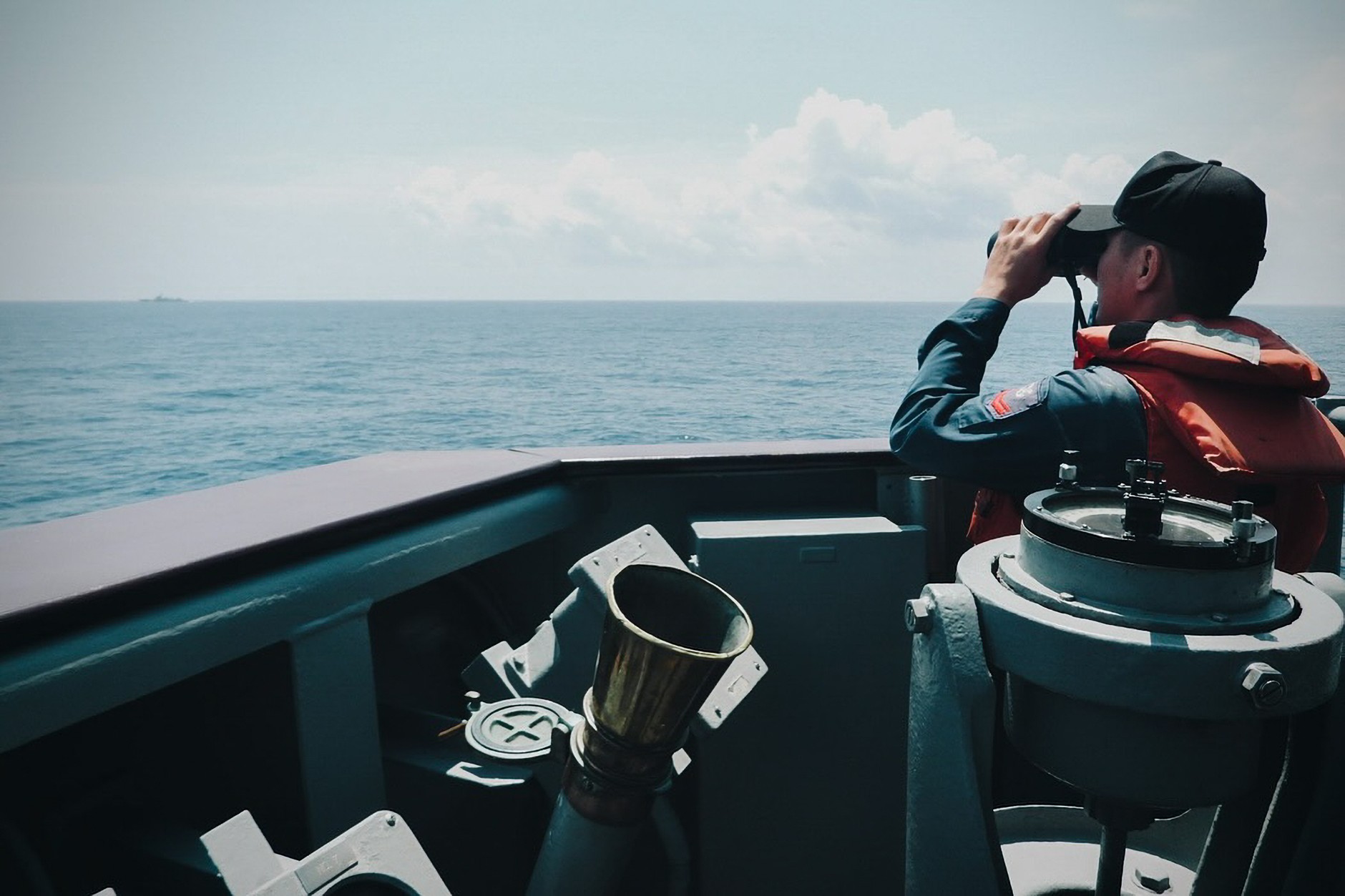
The Taiwanese military observes the Chinese ship (illustrative photo)Taiwan's Military News Agency/Anadolu via Getty Images / Contributor / Getty Images
Meanwhile, the scale of corruption in the CWK may have reached such a level that the country's leadership is simply not fully aware of the actual condition of the Chinese army. And if we talk about “political disloyalty”, it could be expressed not in direct opposition, but in the fact that some generals did not agree with Xi Jinping's orders, discussed them, pointed to risks and limitations, saying that “it is impossible at this time”, “it will not work here”, “it is contrary to military logic”.
In an authoritarian system, such behavior is not welcome. If you are a general, you are expected to raise your hand to your forehead and obey an order, not to argue about its validity.
It should not be forgotten that many generals' ideas about war are not based on beautiful presentations, but on real combat experience. For example, General Liu Zhenli once fought in the Vietnam War.
Now, he and Zhang Yux have been placed under investigation for “violation of discipline and law.” Therefore, when we talk about political disloyalty, the Taiwanese factor may be one of the key ones.
When will Xi Jinping look for replacements for generals excluded from the Central Military Council?
The official rotation is scheduled to take place in October this year, then we will see permanent members. By then, an extraordinary or ordinary plenum may be held and people will be appointed to temporarily fill the positions. Another thing is that they will not be very functional, because they themselves will be aware of the temporary nature of such work.
As for speculations about the names of future generals, here everything is much more complicated. American sources say that the new list will include representatives of the air force – Xi Jinping considers them particularly loyal. These will be representatives of the younger generation.
I've seen two different interpretations of how these purges might impact the Taiwan issue. Some write that this is a deterrent: chaos in the military command and officers' fear of reprisals make an invasion unlikely in the coming years. Others, however, believe that this is a factor of escalation: young officers may show excessive aggression to prove their loyalty to Xi Jinping. Which version is closer to the truth?
In the short term, the situation is more unfavorable for mainland China (and favorable for Taiwan). Because currently, the investigation is not only against Zhang Yuxi, but also against the Chief of the Joint Chiefs of Staff of the CEC, Liu Zhenli. And he was the one who had experience in developing operations against Taiwan in the past. He is one of the key strategists who worked in this direction. If anyone were to spearhead a possible military campaign against Taiwan, it would be Liu Zhenli.
Currently, the Chinese army must wait for new leadership. The commanders who receive the positions will have to acclimatize to their places, deal with accumulated problems, and establish cooperation with the apparatus that will be finally formed in the fall of this year. Therefore, by 2028, according to this logic, it is quite strange to expect something serious regarding Taiwan.
However, we have some important dates. 2027 marks the centenary of the Chinese People's Liberation Army. This is a significant moment when you have to show something. Although perhaps it will be limited to a parade: they will show beautiful machines, rockets, planes.
In 2028, there will be presidential elections in the United States. This is a traditionally unstable period for China's domestic and foreign policy. Each time, Beijing prepares for a new, potentially unpredictable president of the United States. The Chinese authorities are holding back and wondering what to expect next from Washington.
In addition, there are parliamentary and presidential elections in Taiwan – also in 2028. This is another factor that should be taken into account. The Kuomintang Party, which is now in opposition, is currently focused on cooperation with the continent.