The last few months have been fraught with turmoil, with meetings in Moscow, Anchorage, New York, Washington, Miami, Kiev and Geneva, and countless informal conversations between many players.
One reason for this diplomatic rollercoaster is US President Donald Trump he set an almost impossible task for his camp: ending a war between two countries that are determined to continue fighting for diametrically opposed goals. In the case of Russia, it is the subordination of Ukraine, and in the case of Ukraine, it is the defense of its sovereignty and independence.
But there is another reason for the chaotic scenes we have witnessed over the past few months – summits announced and then canceled, deadlines set and then abandoned, plans set and then changed, all while the composition of those leading the negotiations is constantly changing – and that is the lack of a formalized process for developing policy, providing guidance, engaging with foreign governments and setting a clear course of action within the Trump administration.
The lack of a formal process is a unique feature — or flaw — of this presidency. Of course, Trump is not the first U.S. leader to rely on a small circle of advisers to discuss key foreign policy issues. Former President George H. W. Bush waged the Gulf War with seven top officials, and Trump's predecessor, Joe Biden, made many national security decisions in daily intelligence briefings attended by only a few top advisers.
The difference is that top advisers in other administrations have relied on a collaborative process among agencies, led by their staff, to discuss issues, develop strategies, and oversee their implementation.
Meanwhile, Trump runs the U.S. government like he ran the family business — from behind a desk in the Oval Office, where he meets with everyone, calls everyone, and then decides policy as he sees fit. His advisors operate almost entirely on their own.
As for Ukraine and Russia, there are literally only a few people in the president's circle: Vice President JD Vance, Secretary of State and National Security Advisor Marco Rubio, White House Chief of Staff Susie Wiles, Presidential Peace Envoy Steve Witkoff and, as of October, Trump's son-in-law Jared Kushner. They do not include the secretary of defense, the chairman of the joint staff, or the heads of the CIA and national intelligence.
Of these key players, only Rubio has significant staffing at the State Department and the National Security Council, but there is little indication that he relies on them in the same way as his predecessors. Regardless of what inter-agency conversations take place, their influence on policymaking at the highest levels is negligible — if it exists at all. According to foreign interlocutors, including diplomats in Washington, officials in both departments are largely unaware of what is happening.
Chaos and lack of procedures
Even more problematic is the fact that there are other key players in the Ukraine case besides Rubio they operate without staff or procedures.
Witkoff, for example, attends meetings with Russian President Vladimir Putin and other Russian officials without a note-taker and is known to rely on Putin's translator. Kushner is deeply involved in the talks but has no formal position in the administration. And Army Secretary Daniel Driscoll, who was unexpectedly brought into talks with Ukraine last month, had only a weekend to learn about the war, its history and negotiations before he was sent to Kiev to present the latest plan.
This lack of procedure goes a long way to explaining the extremely chaotic nature of the talks over the past few weeks and the way things have unfolded.
Initially, in mid-October, Russian Foreign Minister Sergei Lavrov sent Rubio a memorandum containing ideas for ending the war. The plan was that Putin and Trump could agree on these points during a meeting in Budapest, which was scheduled for the end of the month.
The memorandum contained all the typical Russian demands: territorial concessions, severe restrictions on Ukraine's armed forces, and the absence of the presence of NATO troops on the territory of Ukraine and its membership in the alliance. But when Rubio called Lavrov to discuss the issue, he found Moscow's position unchanged and advised Trump not to go to Budapest. The US president then canceled the talks, saying he did not want to “waste time on a meeting”.
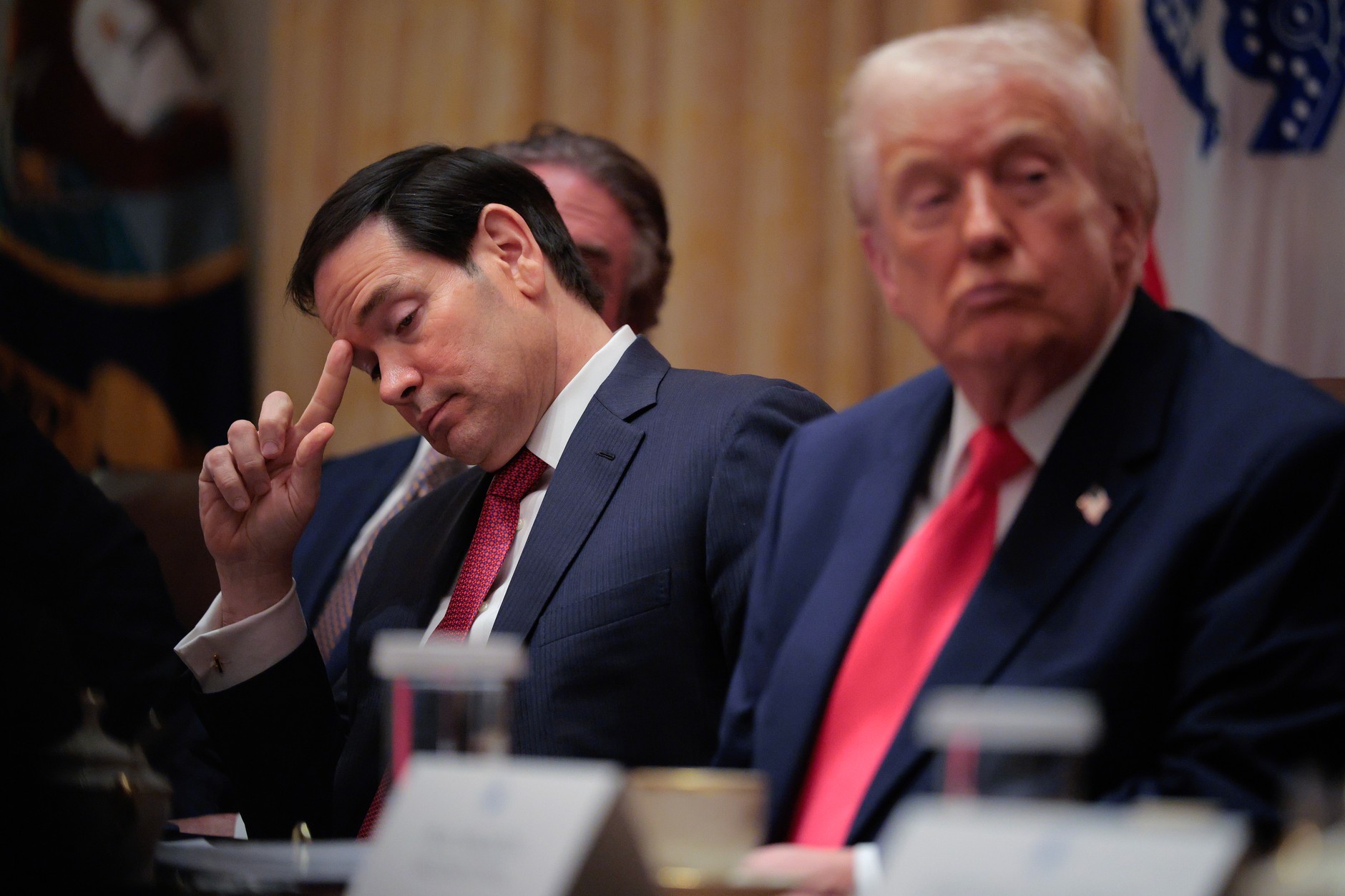
U.S. Secretary of State Marco Rubio (left) and U.S. President Donald Trump during a cabinet meeting in the Cabinet Room of the White House, December 2, 2025.Chip Somodevilla / Getty Images
But while Rubio and Trump focused on increasing pressure on Russia — including announcing the first new sanctions since Trump returned to office — Witkoff engaged other Russian interlocutors to get talks back on track. During a telephone conversation with Yuri Ushakov, Putin's chief foreign policy adviser, Witkoff reportedly said: “the president will give me a lot of freedom and discretion to reach an agreement.”
Two weeks later, Witkoff and Kushner met in Miami with Kirill Dmitriev, another close Putin envoy, to outline a more than 20-point plan to end the war, much like they had done with Gaza a few weeks earlier. But unlike Rubio just days earlier, Witkoff and Kushner largely accepted Russia's position and adopted it as their own. As Dmitriev told Ushakov after the meeting, according to another leaked transcript of the conversation, he provided the informal document as a basis for the final plan to ensure it would be “as close as possible to [rosyjskiego]”.
When Rubio first reviewed the 28-point plan developed by Witkoff and Kushner, he called it merely a “list of potential ideas” and reportedly told U.S. senators that “it is not our recommendation [ani] peace plan.” However, Trump liked the plan and told Ukraine to sign it before Thanksgiving or fend for itself. This prompted Rubio to quickly change his position and announce that “the peace proposal was developed by the United States.”
Ultimately, what is driving all of these American players is not a formal process or even a coherent assessment of what it will actually take to end the war in Ukraine.
Rather, it is a relentless pursuit to satisfy Trump's persistent demand to be recognized as a global peacemaker.
As long as this continues, chaos and confusion will continue. And none of this will bring the war any closer to actually ending.
I’m Ashley Davis as an editor, I’m committed to upholding the highest standards of integrity and accuracy in every piece we publish. My work is driven by curiosity, a passion for truth, and a belief that journalism plays a crucial role in shaping public discourse. I strive to tell stories that not only inform but also inspire action and conversation.