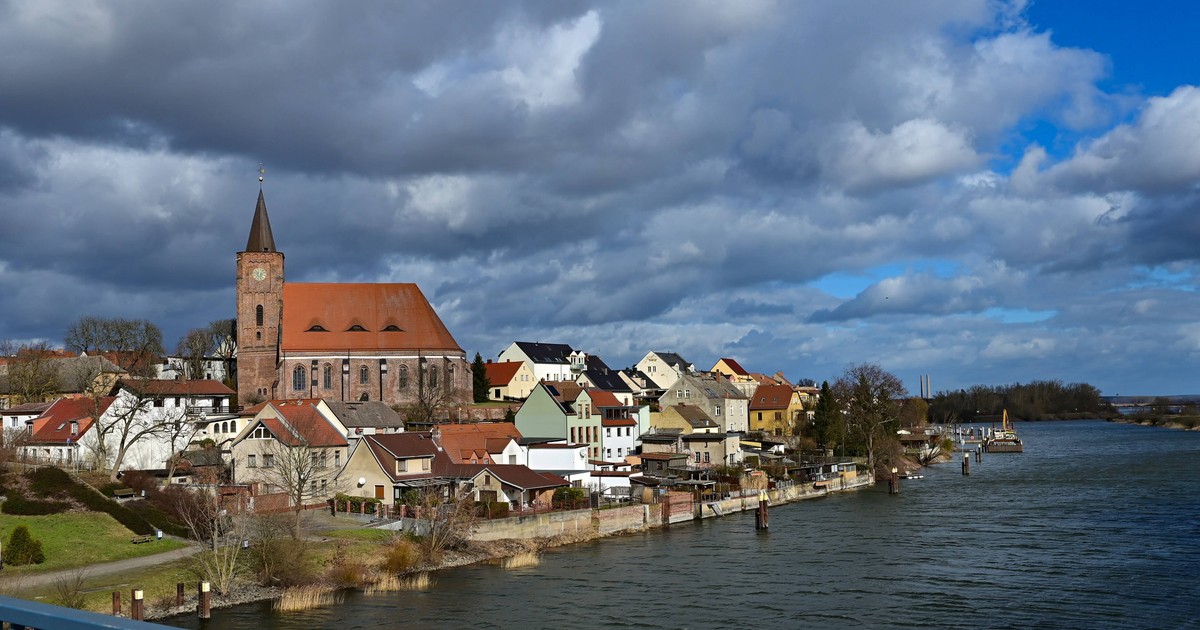
At the end of 2024, approximately 865,000 people lived in Germany. Polish citizens – it was the fifth largest group of foreigners, after Turks, Ukrainians, Syrians and Romanians. These include people such as Fr. Buttermilk. A Pole found happiness in Upper Swabia and preaches there in two languages - for the German and the local Polish community. So far, he only knows about the return of his compatriots from stories.
However, current data from the Federal Statistical Office, accessed by “Bild”, leave no doubt: in the first nine months of the year, 47,954 Poles came to Germany, 55,193 Polish citizens left it.
“Why doesn't anyone notice when Poles say 'goodbye'?” – asks “Bild”.
To put it simply: migration is reversed – instead of going from east to west, many people are now heading back east. The Polish community in this country is perceived as extremely inconspicuous in the urban landscape.
We don't have our own Polish store here. If we need something from our homeland, we bring it from there or find it in a Russian store
— yes, Fr. Maślanka describes her life in exile.
However, over the years and decades, Poles came to Germany in droves. “Bild” is looking for an answer to the question of what causes the rediscovered attractiveness of the old homeland.
— I spent 13 years in Germany, I found friends here and I fell in love with the German language. I still listen to German songs, for example Silbermond and Christina Stuermer. However, at some point it was important for me to return to my parents and continue to develop professionally. I couldn't find a job as an engineer in Germany, and in Poland it was easier as a single mother. Everything is more family-oriented, people help each other. The economy is also developing better and opening up new job opportunities. That's why fewer and fewer people are looking for happiness abroad, explains Anna Vitullo from Poznań.
The article continues below the video
When the welder Marek Doskoczyński still lived in Germany, he regularly visited his family. — I earn less than in Germany, but it is approximately PLN 3,000 [ok. 730 euro, po obecnym kursie] less, so the cost of maintaining two homes and traveling home is not cost-effective. I see a positive economic future here, Poles are hard-working – he says about his later return to Poland.
However, he is somewhat concerned about the greater threat of war and the future of society, “because many foreigners have arrived and are starting to cause problems – just like in other countries, for example in England, France and Germany.”
It is becoming more and more difficult to find Poles who want to work in Germany
Dr. Dominik Matcak, managing director of the Silverhand employment agency, does not confirm the thesis that Poles are no longer interested in working in Germany.
But it is true that we have no longer had candidates from Warsaw and other large cities
– assesses. Relocating is still profitable, especially for candidates from rural areas of Polandwhere the economic boom has hitherto to a lesser extent.
At least a “slight tendency” is also noticed by the head of the competing company Mondi, Dr. Rafał Mroziewski. It is becoming increasingly difficult to recruit employees in Poland for the German market.
Polish initiative
In addition to the approximately 37 million inhabitants of Poland, there is a huge diaspora. Depending on how you count, it includes many more millions of people. The government in Warsaw created the portal powiedzy.gov.pl to find enough employees for the Polish economic boom to continue.
Germany also offers an attractive tax relief: after a three-year stay abroad, annual income up to PLN 85,500. zloty. [20 tys. euro] are exempt from income tax for four years.
According to data from the Ministry of Finance published by “Rzeczpospolita”, the number of people who took advantage of the tax relief increased threefold between 2022 and 2022. [8300] and 2024 [25,1 tys.].
I’m Ashley Davis as an editor, I’m committed to upholding the highest standards of integrity and accuracy in every piece we publish. My work is driven by curiosity, a passion for truth, and a belief that journalism plays a crucial role in shaping public discourse. I strive to tell stories that not only inform but also inspire action and conversation.