In Romania, the fear that “we are not ready” is almost a truism. A word-of-mouth truth, spoken on buses, in newsrooms, on late-night talk shows and on social media. That the State is not able. That politicians are corrupt or incompetent. That the army is “good, but alone it cannot cope”.
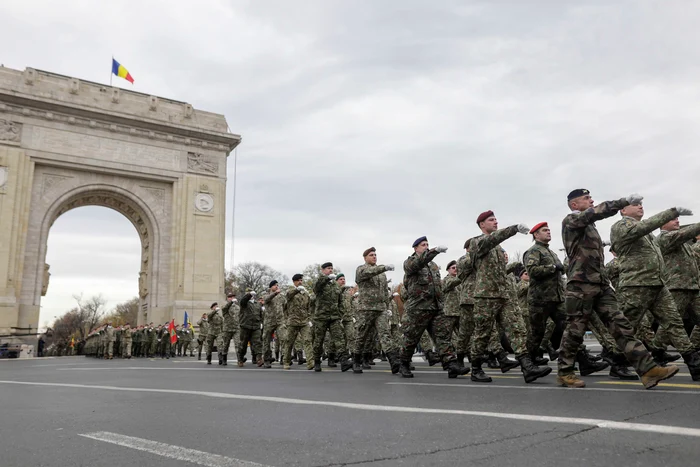
PHOTO Inquam/George Calin
That people don't mobilize. And above all, that if something were to happen – a conflict, a deep crisis, a rupture in the fragile balance of our world – we would be taken by surprise. But beyond this vague, reflexively repeated perception, looms a more uncomfortable and deeper question: Do we know why we're not ready?
Looking closer, the answer begins with trust – or more precisely, with her absence. We are not just talking about the lack of trust in parties, governments or parliaments – although they are constantly rated in surveys as being among the least credible institutions in Romania. But about a more insidious type of mistrust: mistrust between us citizens, between us as citizens and the state, between us and the truth. It is a rupture that is not always visible on the surface, but which silently runs through the social fabric. In Romanian society, interpersonal trust is fragile, almost absent outside the close circle. Trusting a stranger is often seen as a risk, not the norm. And collective solidarity is activated, as a rule, only in exceptional moments and in the short term.
In times of crisis, Romanians have no one to believe. Or worse, they don't know who to believe. That is why the most stable landmarks often become institutions perceived to be “outside the political game”: the army, the firemen, the doctors, the Church. When everything seems to be collapsing, Romanians seek refuge in institutions that did not ask for their vote or explanations. The army, for example, is constantly at the top of public trust – 70% of Romanians declare that they have “great confidence” in it. But the same survey shows that only 21% believe that the Romanian Army could handle an attack on its own. Everything else is related to NATO. A delegation of responsibility to alliances, lacking confidence in one's own ability.
This rupture in collective perception is doubled by another fault – the political one. Romania lives a form of exhausted democracy, in which the political elites are perceived as self-sufficient, cynical and indifferent. In this landscape, the anti-system parties grew precisely feeding on the feeling that no one represents us. Young voters are drawn to charismatic leaders who promise disruption – not construction. At the other pole, the elderly seek stability and protection. And between these two poles, society is fragmenting in a continuous rhythm – ideological, value and emotional. It's not just about differences of opinion. It is a fundamental distrust between social groups that no longer share the same moral code.
In this society, crisis preparedness cannot simply mean weaponry or military exercises. The real problem is one of social psychology. We may have equipment, but we do not have collective reaction mechanisms. We have institutions, but we no longer have an emotional connection with them. We have rights, but we don't know how to articulate them in the face of the threat. Specialized studies show that in Romania, only a minority is willing to follow military training courses. And a majority would oppose the country's direct involvement in a regional conflict. Not from a lack of patriotism, but from a deep form of disorientation and fear.
This fear is not a recent one. A century ago, Constantin Rădulescu-Motru described a Romania led by “intellectuals without character” and masses with “passive inclinations”. He said that Romanians are brave in groups, but fearful individually. That they have a predisposition to believe rumors rather than evidence. That they have a culture of suspicion and adaptability, but not accountability. A bitter introspection, but which surprisingly resonates with today's realities.
So we know we're not ready. But we also know why. Because we let trust erode. Because we have become accustomed to delegating our safety to others – to the Alliance, to luck, to providence. Because we have accepted a culture of survival instead of one of construction. Because we have not learned, neither politically, nor civically, nor educationally, to react as a unitary body in the face of danger. And perhaps the most painful: because I did not consciously recognize this.
Recognition comes with uncomfortable questions. But also with the hope that by finally knowing why we're not ready, we could finally begin to be.
Here are a set of essential—uncomfortable but necessary—questions we should ask ourselves as a society if we really want to understand why we're not ready and what we could change:
1. Do we trust each other enough to act together in the face of real danger?
2. Why we trust more allies than in our own institutions?
3. What leaders would we really follow in a deep crisis? Who would speak for us – and would we listen?
4. Are we willing to take risks for the common good, or only when it directly affects us?
5. What have we done, as a state and society, in recent years to prepare ourselves not only militarily, but especially civically, psychologically and informationally?
6. Who benefits from our lack of preparation? Why have we accepted this silent vulnerability for so long?
7. When did we become more interested in who is to blame than what needs to be done?
8. What values could still hold us together in a time of crisis? We have them, do we still recognize them?
9. Are we aware that war, disinformation, manipulation, and the collapse of trust are already here—not just future threats?
10. How long do we think it's “going on” before it completely breaks?
These questions do not have simple answers, but should form the basis of a real national reflection – not just at the level of institutions, but in every newsroom, class, household or party. Happy birthday Romania!