
Mircea Cărtărescu, explanation in The Guardian about a diaspora phenomenon: “It was the most democratic. Then they started hating their own country so much that they wanted to destroy it. But Romanians will continue to be Europeans”

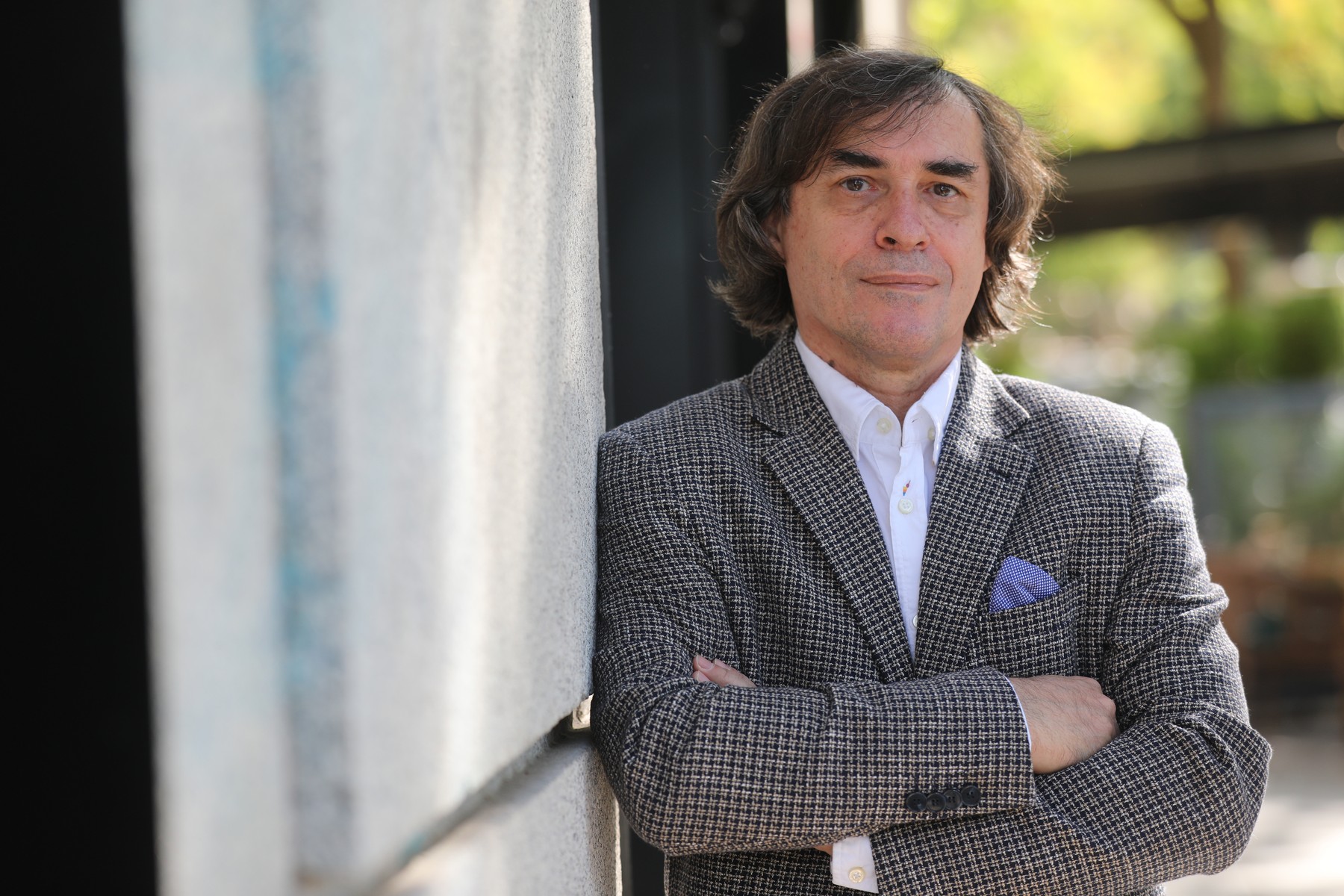
In an interview given to the British newspaper The Guardian, Mircea Cărtărescu says that, in his opinion, “the Bible is not only a holy book, but the greatest novel ever written”. Cărtărescu also discusses the complicated way in which Romanians express their Europeanism: “For a long time, the diaspora was the most democratic and the most advanced part of society, but, to our huge surprise, it turned completely against it”.
The Guardian published an interview with Mircea Cărtărescu, on the occasion of the release in Great Britain of the volume “Left Wing”, the first part of the “Orbitor” trilogy. The writer recalls the moment in 2014, when, while on tour in the United States, he visited Vladimir Nabokov's butterfly collection.
“His most important scientific work was about the sexual organs of butterflies, and I saw those very small vials that contained them. It's like an image from a poem or a story. It was absolutely fantastic,” Cărtărescu says in the interview.
The “Orbitor” trilogy is, in the author's view, built like a butterfly, and the imagery of insects constantly returns in its pages. Of one of the standout scenes, he states: “The image of giant butterflies under the ice of the Danube could have come from Salvador Dalí or Giorgio de Chirico, artists with whose imagination I have always felt a kinship.”
“After the revolution I became a citizen of the universe”
Cărtărescu also talks about the difficult relationship with Bucharest, a city transfigured literary in “Orbitor”: “I took a stylistic and literary revenge against the people who stole my youth.”
The interview also touches on the subject of the collapse of communism. The writer tells about the moment when his father, disappointed by the fall of the regime, burned his party card: “He cried continuously because he believed in communism, and now he saw that everything had been a lie.” For him, however, 1989 meant liberation: “After the revolution I became a citizen of the universe.”
Mircea Cărtărescu, about a part of the diaspora: “For a long time, it was the most democratic and the most advanced part of society”
The Guardian journalist notes that Cărtărescu's ambivalent relationship with Romania “could be the most Romanian thing about him”. The article mentions that Romania had, in 2024, the largest diaspora in the European Union, with 3.1 million Romanian citizens living in other member states.
The publication also notes that, in the presidential election rescheduled for May 2025, a clear majority of these expats voted for a “nationalist, MAGA-type” candidate.
Cărtărescu comments on this change: “For a long time, the diaspora was the most democratic and advanced part of society, but, to our great surprise, it turned completely against it.”
He adds: “They began to envy the Romanians who remained in the country, when they began to earn more money than they did abroad. In fact, they began to hate their own country so much that they wanted to destroy it.”
“Romanians have always been European and will continue to be”
Even so, the writer remains optimistic about Romania's European orientation: “Romanians have always been European and will continue to be. The date they became members of the European Union, in 2007, was perhaps the most important day in our history. Even if those fascist or extremist movements are very strong now in Romania, we hope they will diminish.”
Rumors about the Nobel
The interview also achieves its international status at a time when Eastern European literature is enjoying increasing visibility.
Asked about the fact that his name has appeared among possible Nobel laureates for over a decade, Cărtărescu replies: “I have never waited for a phone call. I am grateful to those who consider me worthy of the prize, because to be seen as worthy of the Nobel, even if it is just a rumor, is an absolute honor.”


