Crisis at the heart of power. Your eminence grise leaves the stage. Ukrainian politics is facing “tectonic changes” and at the worst moment

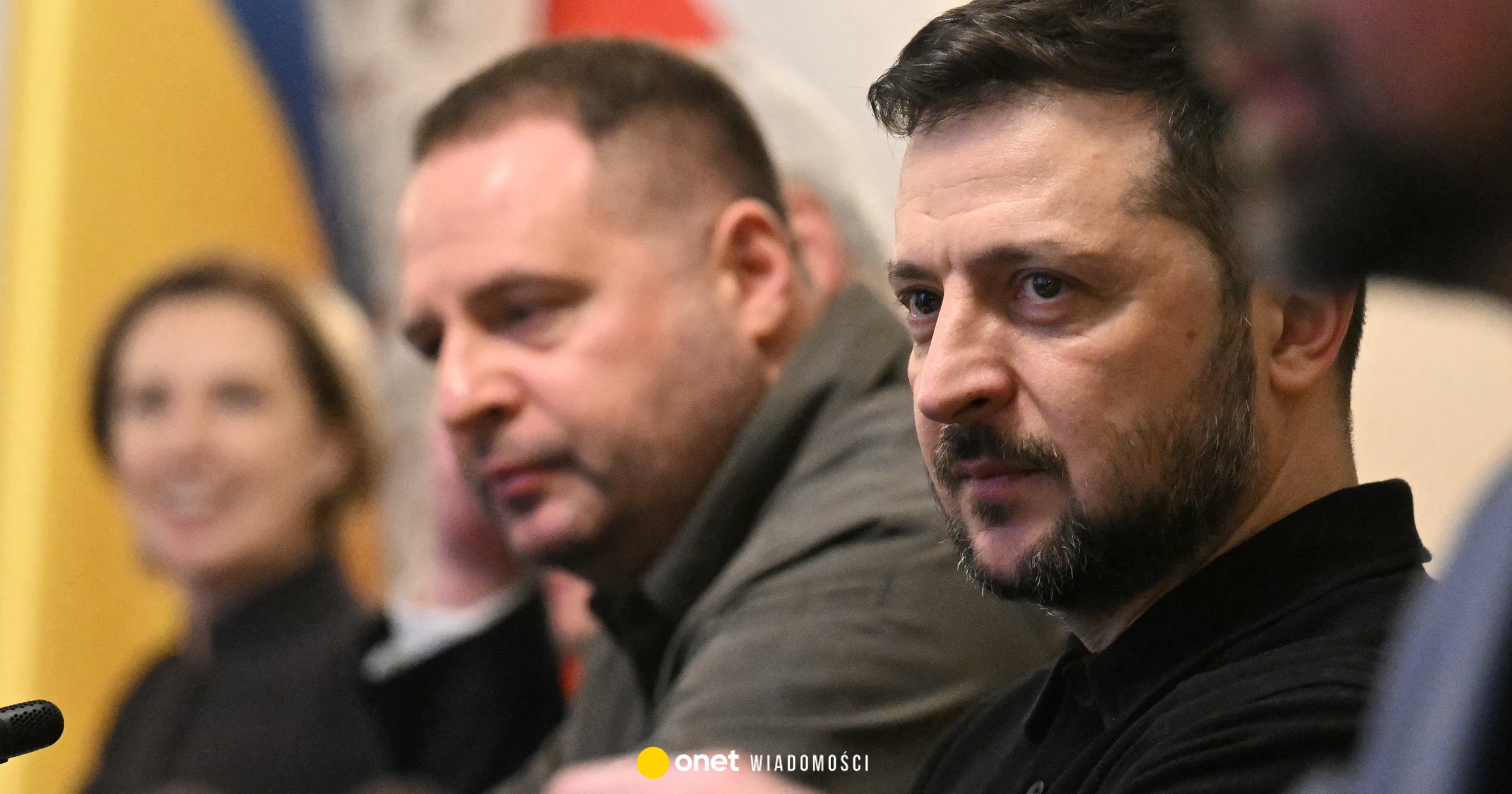
Yermak built something unprecedented in Ukrainian politics: a parallel government that influenced all levels of government. After replacing the energetic Andriy Bohdan as head of the office in February 2020. strengthened his power even more than his predecessor, expanding its influence over the parliament, government and state institutions. The ministers understood that access to Zelensky — their political survival — depended on maintaining good relations with Yermak.
All important decisions regarding military strategy, economic policy, and diplomatic initiatives passed through his office. He became what one European official privately called “Zelensky's man,” or rather his eminence grise — a vigilante whom everyone had to reckon with, whether they liked it or not.
Ukrainian leaders must now improvise
The catalyst for its collapse was the Energoatom scandal, the largest corruption investigation during Zelensky's presidency. Prosecutors say about $100 million. (PLN 366 million) was misappropriated from the Ukrainian state nuclear energy operator – a company that supplies about half of the country's electricity.
The alleged head of the group was Timur Mindich, a close associate of Zelensky himself. While Russia bombed Ukrainian power plants for almost three years, someone was allegedly stealing funds that could have been used to repair infrastructure or support the war effort. For a president who came to power in 2019 thanks to an anti-corruption program, this is a devastating blow.
But the point is that the very fact that anti-corruption investigators were able to raid the home of the president's closest adviser and force him to resign shows that Ukraine's reformed institutions actually work.
The Ukrainian National Anticorruption Bureau (NABU) and the Specialized Anticorruption Prosecutor's Office (SAPO), established after the Euromaidan revolution in 2014, have proven they can prosecute even the most powerful officials. For years, skeptics have questioned whether these bodies would be taken over by political interests. The Yermak case provides a telling answer.
The article continues below the video
This is of great importance for Ukraine's international ambitions. The EU has made clear that Ukraine must meet high governance standards to be eligible for membership. Anti-corruption reforms are not optional – they are a necessary condition. The US Congress, which must regularly approve military aid, cited corruption concerns as a reason for its doubts.
Demonstrating that Ukraine will pursue and punish high-level corruption — even when it involves the president's inner circle — is a direct response to these concerns.
However, Yermak's departure also poses immediate threats. His excessive centralization of power structures, while problematic for democracy, provided some stability during the war. He mediated between rival factions, managed tensions between civilian and military leaders, and maintained a complex web of relationships.
As Ukrainian political observers have already claimed, his departure means “tectonic changes.” The ground under Ukrainian politics is shaking. Who will coordinate the activities of the presidential administration and parliament? Who will manage the relationship between security agencies? Ukraine's leaders must now improvise at a time when clarity is key.
The diplomatic consequences are even more urgent. Yermak became Ukraine's main interlocutor with the West, especially Washington, and served as the de facto foreign minister. He led the Ukrainian delegation at the Geneva peace talks, serving as the main intermediary between Kiev and the United States on the most sensitive issues of war and peace.
Although he was reportedly unpopular in Washington, Western officials began to see him as someone who could speak authoritatively on Zelensky's behalf and navigate Ukraine's complex domestic politics.
Ukraine faces a key test
His resignation takes place when Ukraine faces intense pressure to accept a negotiated settlement with Russia. The Trump administration has proposed a peace plan that largely reflects Russia's demands, including territorial concessions and restrictions on Ukrainian security arrangements. Some Western partners experience “Ukraine fatigue” — their societies are tired of the economic costs of war. There is a growing belief in some capitals that the war has reached a stalemate that will continue as long as Trump and Putin play for time.
Also appears credibility problem. When the country's chief negotiator resigns amid a corruption scandal, questions arise about the stability of the government. This gives arguments to skeptics who claim that Ukraine is not ready to join the EU or NATO. This may encourage Russia to adopt a tougher stance, given that Ukraine's political instability creates opportunities to exploit.
The pressure for Yermak's resignation came not only from opposition parties, but also from within Zelensky's own coalition. Members of parliament who initially supported the president began to express concerns about Yermak's dominanceworrying that concentrating so much power in the hands of one person has created a single flashpoint. That internal disputes persisted and ultimately contributed to Yermak's departure is a testament to the resilience of Ukraine's democratic culture, even in times of war.
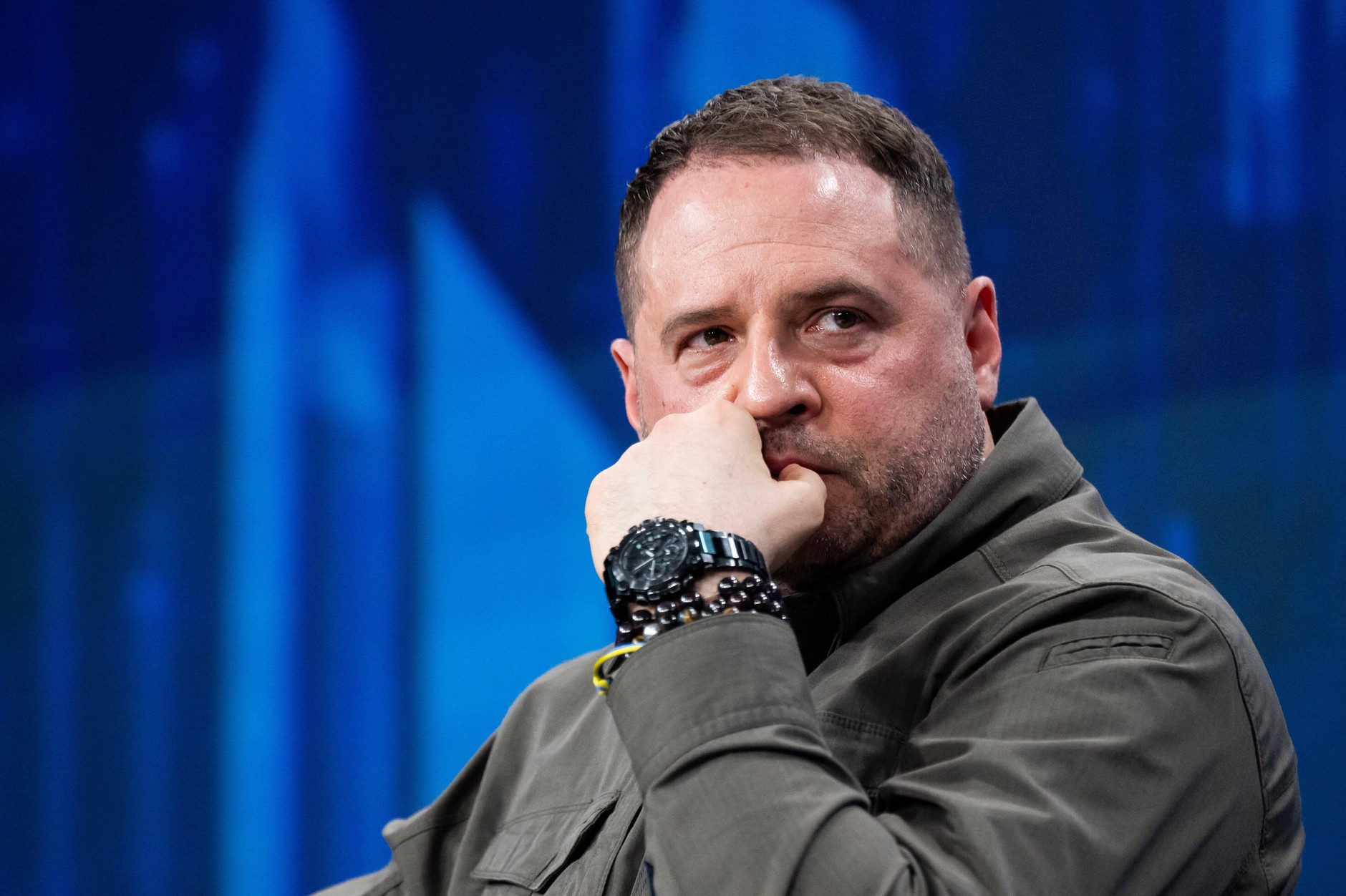
Andriy Yermak in Kiev, February 25, 2024.AA/ABACA / PAP
President Zelensky initially refused to fire Yermak despite mounting pressure, revealing the depth of their relationship. That he ultimately accepted his resignation shows that even considerable presidential power in wartime has its limits.
Ukraine now faces a challenge: will it be able to show that Yermak's resignation means responsibility, not chaos?
This means a transparent investigation into Energoatom, clear communication on government reforms, and the appointment of a credible person to a diplomatic position — all while fighting a brutal war against a much greater adversary.
The stakes here are higher than one scandal or one resignation. Ukraine is fighting for its existence as an independent, democratic state. This fight is taking place on battlefields, in government offices in Kiev, in Washington and European capitals, and in courtrooms. Yermak's resignation marks a critical moment in all of these areas.
In the international arena, Yermak's successor will have to gain credibility among both Ukrainian and international public opinion. Fortunately, Ukraine has many potential candidates for this role, experienced diplomats who were sidelined during Yermak's “rule”.
What Ukraine builds in the wake of these events will matter more than the fall of one person. If the country emerges from this situation with stronger institutions and a cleaner government, it may be remembered as a painful but necessary step forward. However, if this causes instability that Russia exploits, the consequences could be serious.
Ukrainians, who have sacrificed so much, deserve leaders who understand what is needed. The world that has invested so much in Ukraine's success also needs their success.
But without a doubt Zelensky now feels even more lonely and beleaguered. However, perhaps lessons have been learned and this is an opportunity for a new approach.