Winter on construction sites increases costs. New technologies change the rules of the game


Building in winter involves technological, logistic and organizational limitations. Low temperature affects both the ground and the materials used in construction works. As Sandra Wróblewska, senior manager for business development at Kajima Poland, emphasizes, earthworks are most sensitive to frost.
In her opinion “stabilization, compaction or mixing of the soil is not possible due to the ice content – after thawing, the soil would lose its bearing capacity”. For this reason, some work can only be carried out at positive temperatures.
Concreting is also a big risk. Monolithic works require a stable setting process, which is seriously limited at low temperatures. There is also a problem with logistics – in winter, equipment failures increase, transport may slow down, and a shorter working day limits the number of activities that can be performed.
Winter conditions also affect safety. Marcin Ardziński, director of the Central Infrastructure Region at PORR, draws attention to increasing risk of slips and the need to work in difficult conditions. Although, as he says, health and safety rules do not change, “during low temperatures and snowfall, work breaks must be extended appropriately”and workers require full protective equipment with high insulating parameters.
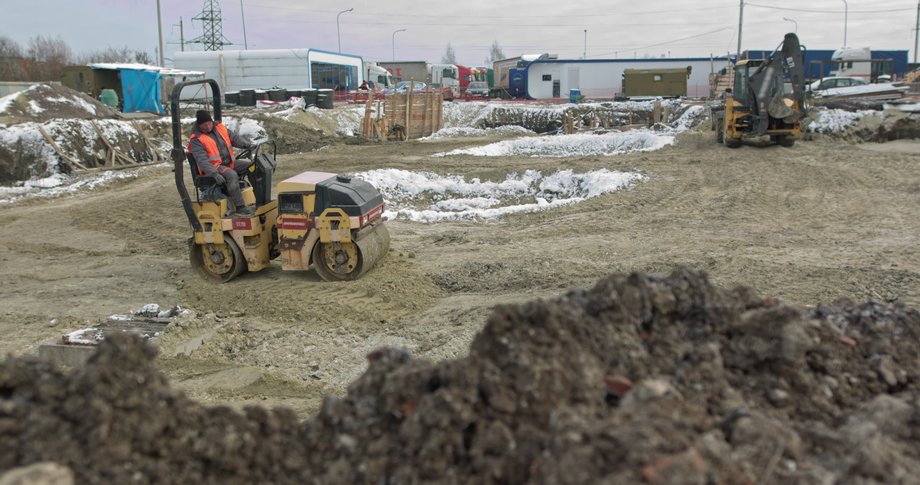
The possibility of continuing work depends on temperature, humidity and type of work
|
Felbaba Volodymyr / Getty Images
Read also: PGZ relies on an anti-drone system. Adam Leszkiewicz reveals the group's plans
What can and cannot be done on a construction site in winter?
The possibility of continuing work depends on temperature, humidity and type of work. Some of them – such as finishing or installation works in buildings – are relatively insensitive to weather conditions. The situation is different with earthworks.
Sandra Wróblewska points out that Deep excavations are less problematic today thanks to modern equipment, but foundation work or soil stabilization cannot be carried out at sub-zero temperatures. Marcin Ardziński adds that “works related to temperature regimes are usually suspended”, and only those that are fully compliant with the technology can be continued.
The biggest restrictions concern concreting and road works. Strict standards apply when performing bituminous layers – most asphalt works cannot be carried out at temperatures below a few degrees above zero. In turn, concreting is only possible with the use of additional protection and special mixtures.
How do construction companies deal with frost?
Building in winter is possible thanks to technologieswhich were used much less frequently a decade ago. Three approaches dominate in concreting: using chemical admixtures, heating the mixture components and reheating the structure after pouring.
Mateusz Job, RMX marketing manager at Holcim Polska, explains that “winter concrete mix is a recipe prepared so that the concrete sets and hardens properly at low temperatures”. As he says, the key is to use cements with high early strength, reduce the w/c ratio and use admixtures that accelerate setting and plasticize.
Holcim emphasizes that the preparation of “winter concrete” involves not only chemical modification of the composition, but also heating of aggregates and water. Thanks to this the finished mixture can maintain a temperature above +5°Cwhich allows you to maintain the proper hydration process.
In practice, contractors also use tents and mobile halls that protect fresh concrete from cooling. Ardziński points out that “tents, heaters and all kinds of concrete admixtures, including heating of aggregates”, are popular. Additionally, teams switch to work system adapted to the time of day — the most sensitive tasks are carried out during the warmest hours.
It is also necessary to maintain the construction site in winter additional logistics: insulating materials, heating the facilities, illuminating the area and regular snow removal. Wróblewska points out that “large industrial investments sometimes require clearing snow from areas reaching several dozen thousand square meters”which generates costs comparable to basic works.
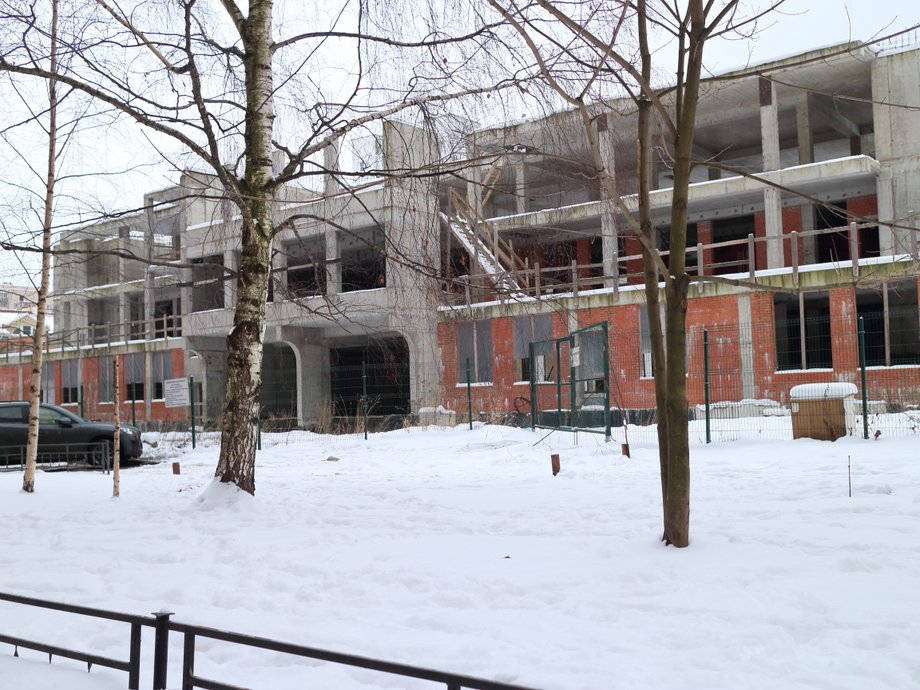
The cost of construction increases during the winter season for several reasons: materials, labor, energy, and longer schedules
|
Mann_Clon/Getty Images
See also: Buying an apartment: new or used? Comparison of the advantages and disadvantages of both markets
How much does winter cost investors?
The cost of construction increases during the winter season for several reasons: materials, labor, energy, and longer schedules. Contractors incur expenses for heating the concrete mixture, energy consumption in heaters, mats and covers, as well as for maintaining the facilities in the required conditions.
As Sandra Wróblewska emphasizes, winter conditions “cause slower pace of work and more frequent breaks and downtime”which automatically translates into an extension of the schedule and an increase in costs. Even if construction does not stop, its efficiency decreases, and each day of investment implementation generates fixed costs.
Mirosław Józefczuk, an industry expert and former member of the Warbud management board, emphasizes that The biggest problems occur where winter has not been factored into the schedule and budget. In his opinion, the key is “real planning of the winter scenario, along with alternatives and reserved funds.” Drama rarely occurs in such projects; problems occur where it was hoped that “it would work out somehow”.
Józefczuk also draws attention to: pressure from investors who expect a pace comparable to the summer one: — It happens very often that the investor expects the work to continue despite real frost. The contractor's role is to translate the weather into numbers and show what it will cost to maintain full speed, explains the expert. In practice, this may mean many times higher energy consumption, the need for 24-hour laboratory supervision or the design of temporary protective structures.
Does climate change make winter building easier?
Although winters are statistically becoming milder, they are also becoming more unpredictable. The industry emphasizes that stable frost is less problematic than sudden temperature drops, interspersed with thaws and wet snow.
This is why the role of planning and digitization is increasing. As Józefczuk notes, new technologies “allow you to simulate weather scenarios, control concrete temperature in real time and use prefabrication, which eliminates much of the winter risk”. 4D/5D models and IoT sensors help you plan so that the most sensitive work does not fall during periods of high risk.
Climate change also means more short “weather windows” to hit. Automation of construction organization — information flow, reporting, quality control — is becoming one of the most important factors determining the pace and costs.
All year round for construction work
Construction takes place practically all year round, but in winter the process is much more complex. It requires careful planning, specialized technologies and higher investments. Many works can be carried out, but their pace slows down and the risk increases. As Józefczuk emphasizes, winter is not force majeure, but a “test of the quality of preparation”. Technologies make it possible to maintain schedules, but this always means additional costs and greater logistics. The success of winter construction depends primarily on the scenario prepared before the first frost – and the willingness to respond flexibly to rapidly changing conditions.