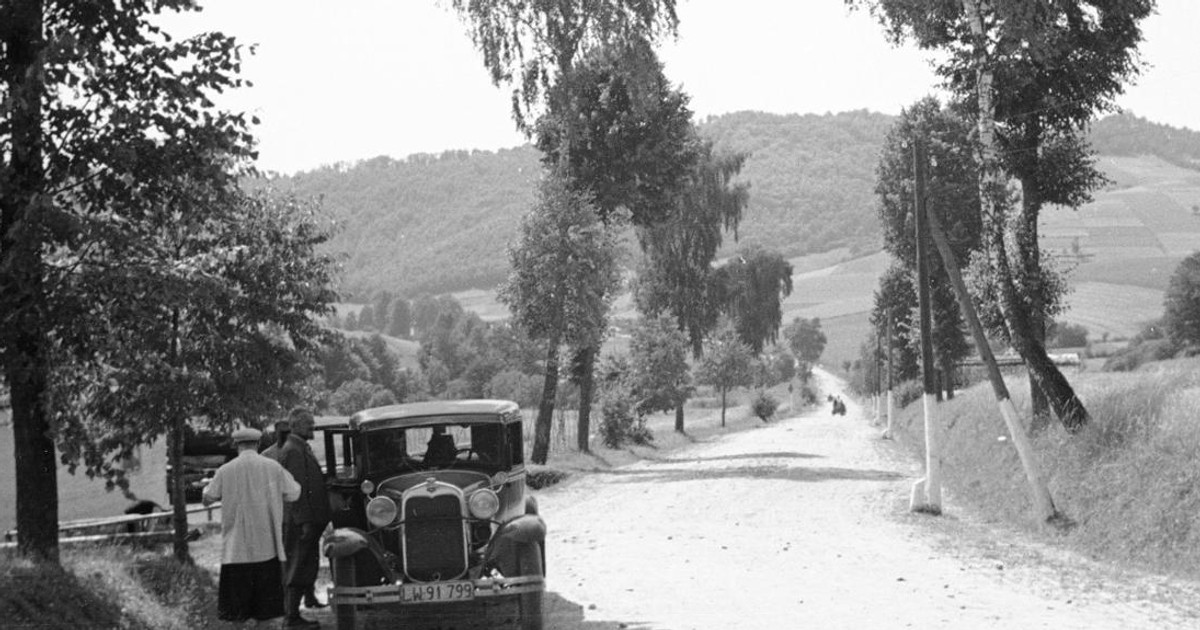
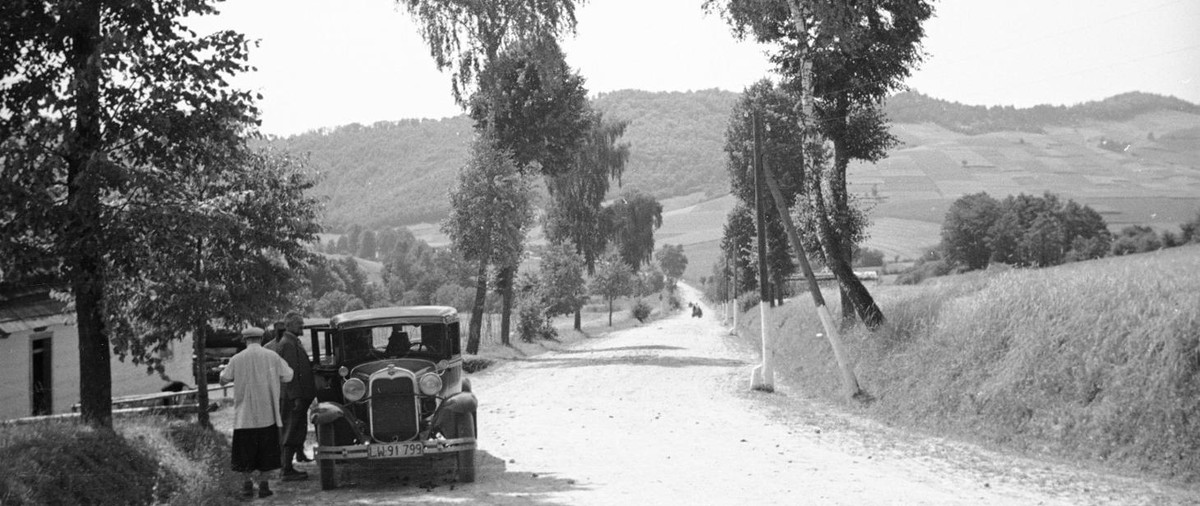
On the occasion of the National Independence Day, which we celebrate on November 11, this year GDDKiA decided to remind Poles what the first steps in road reconstruction looked like and what challenges the authorities of the Second Polish Republic encountered.
See also: The most beautiful road in Poland has been put into operation. Drivers will be delighted
In an occasional article, the General Directorate for National Roads and Motorways mentions that after regaining independence in 1918, Poland faced a huge challenge – combining the areas of the three partitions into one coherent state entity.
One of the key tasks was the construction of a road network that would meet the needs of the young country. However, the condition of the road infrastructure was disastrous – only 44,000. km of roads had a paved surface, and half of them required immediate renovation.
As GDDKiA points out, the development of road infrastructure was crucial for the integration of the reborn Polish state. After 123 years of partition, Poland had to face differences in road systems, lack of qualified staff and a difficult political and economic situation. Rebuilding the roads was not only a technical challenge, but also a symbolic step towards building a modern country.
The condition of the roads was disastrous. What did it look like to build freedom on Polish roads?
In 1919, the Ministry of Public Works was established, and its first head was Gabriel Narutowicz, later president of Poland. A key role was also played by prof. Melchior Władysław Nestorowicz, who headed the Road Department.
At that time, a road law was developed that remained in force for decades. However, the lack of qualified staff, materials and funds significantly delayed the work. In the 1920s, only 800 km of new roads were built per year, and in the following decade the pace increased to 1,700 km per year.
The text continues below the video
In addition to staff and financial shortages, work on road construction was hampered by the unstable political situation. The Polish-Bolshevik war, border disputes with Ukraine, Czechoslovakia and Germany, as well as plebiscites in Upper Silesia, Warmia and Masuria consumed the state's resources.
Additionally, the road networks inherited from the partitioners were unevenly developed – in the Prussian partition there were 30 km of paved roads for every 100 square kilometers, while in the Eastern Borderlands it was only 1.5 km.
Prof. Melchior Władysław Nestorowicz emphasized the importance of highways for the development of communication in Europe. “The emergence of highways is a breakthrough in communication construction comparable to that previously achieved by the creation of the first paved roads or later railways,” wrote Nestorowicz, whose words are quoted by GDDKiA in the article. He pointed out that the construction of motor roads should not end at the borders of Poland.
See also: She left the corporation and became a garbage truck driver. Today it carries aviation fuel
In 1934, technical assumptions for Polish highways were developed. The plans assumed the construction of roads from 7.5 to 12 m wide, with traffic lanes adapted to the traffic flow. Multi-level intersections and passenger service areas with toll collection points, gas stations and traffic police stations are also planned.
Unfortunately, the ambitious plans remained mainly on paper. The only fragment completed was a 30-kilometer road between Warlub and Osiek, which was to connect the Coast with Silesia.
Despite the difficulties, Poland managed to create the basis for modern road infrastructure. Experimental sections, innovative structures, such as the world's first welded bridge in Maurzyce, and research programs on new technologies were created.
The authorities of the Second Polish Republic also organized four Polish road congresses, following the example of global events of this type. Although many plans were interrupted by World War II, the actions taken in the interwar period were of great importance for the development of Polish infrastructure in the following decades.