
Trump “blinked” first, but the damage was already done. In Europe, things have changed. “We can no longer cling to the illusion”

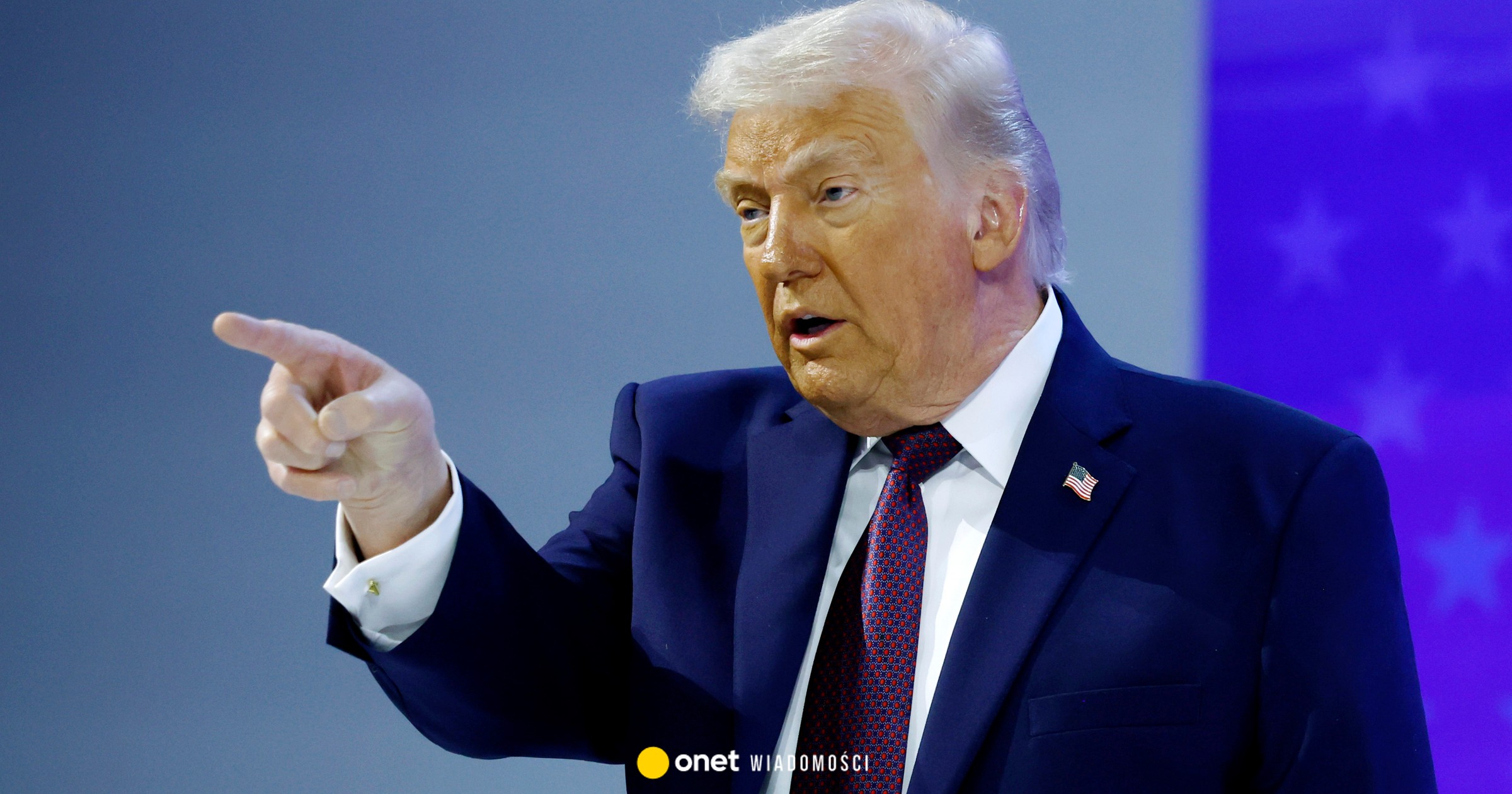
Trump's promise not to use military force to take Greenland back from Denmark alleviated Europeans' fears of the worst-case scenario and caused a rebound on Wall Street. A few hours later, after meeting with the NATO leader, the US president announced that he could back off the threat of tariffs because he had provided a “framework” for the Greenland agreement, thereby backing off one of the boldest moves of his presidency.
But his constant reproaches of allies that they are “ungrateful” for not giving the United States “ownership and rights” to what he called “a piece of ice” have failed to reverse the deepening belief among NATO leaders and other long-time allies that they can no longer consider the United States a reliable ally.
— The lesson for Europe is that opposing Trump can bring results. Of course, it is a relief that he has withdrawn from the threat of using military force, but there is also the knowledge that he may change his mind, said an anonymous European official who was present during the US president's speech. — Trump's promises and statements are unbelievable, but his contempt for Europe is constant. We will have to continue to demonstrate determination and greater independence because we can no longer cling to the illusion that America is still what we imagined it to be, he said.
Trump's sudden change in position after weeks of refusing to rule out military intervention came a day after shocking news from Greenland caused a sharp decline in global marketscausing a loss of over $1.2 trillion. (PLN 4,323 billion) in value only in the S&P 500 index. The change in the president's policy is reminiscent of a similar situation in April, when he quickly withdrew from introducing large-scale tariffs after a decline in markets related to his policy.
If Trump does not change his mind about using military force to intimidate Greenland and U.S. NATO allies, it will be a victory for administration officials such as Treasury Secretary Scott Bessent, who on Tuesday advised participants at the Davos forum not to overreact and not escalate the conflict with Trump, assuring concerned Europeans that everything will soon be okay.
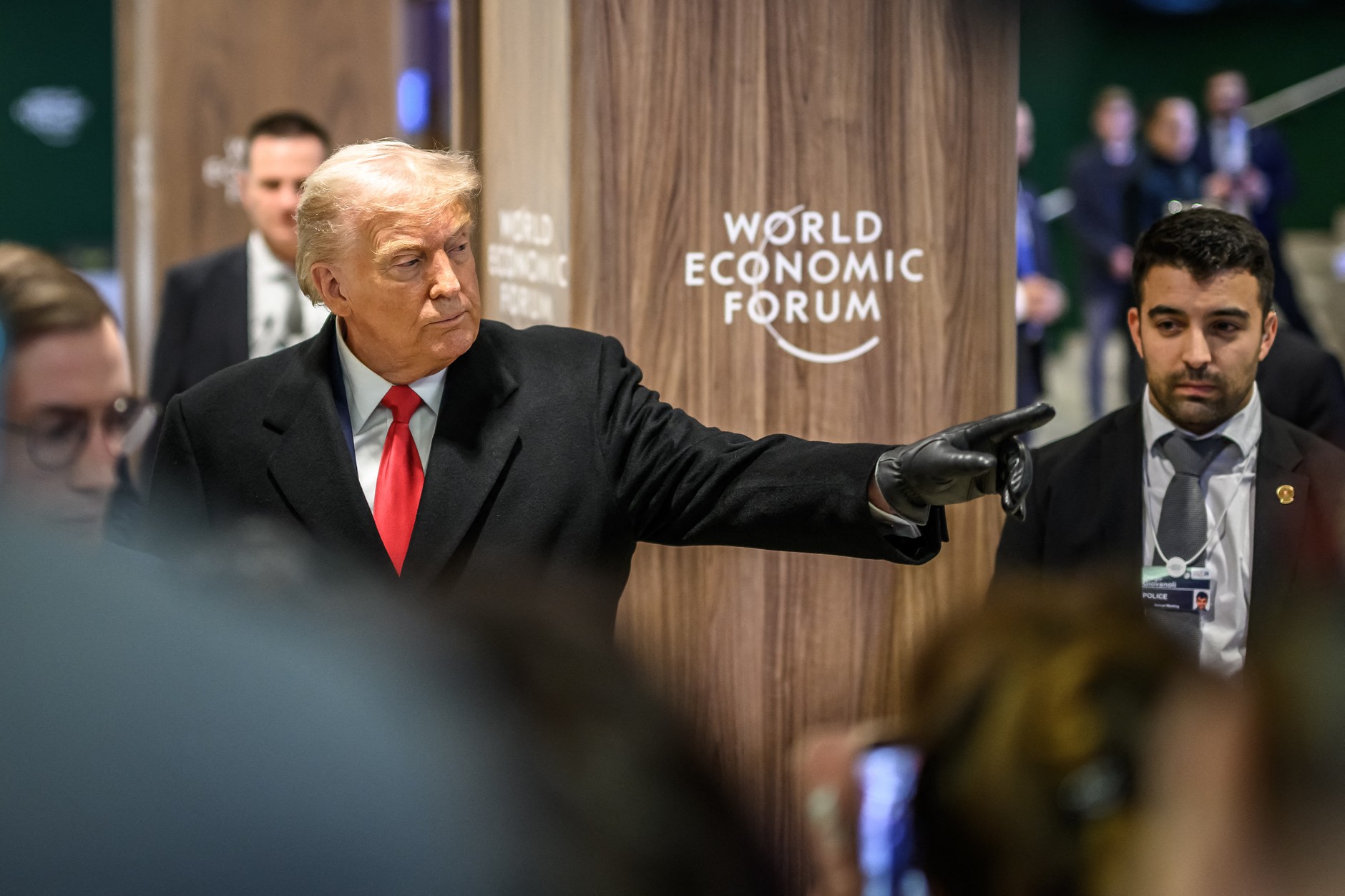
US President Donald Trump leaves the convention center during the World Economic Forum in Davos, January 21, 2026FABRICE COFFRINI/AFP / AFP
The threat to use force appeared to have strong support from White House deputy chief of staff Stephen Miller, who expressed those desires most forcefully in an interview this month, insisting that America is the rightful owner of Greenland and insisting that the “real world” is one “governed by force and might.”
But apart from Miller, most viewed the threat of force as an attempt to create leverage in possible negotiations. If Trump decided to use military force, he could face resistance from his closest allies, such as Secretary of State Marco Rubio and Vice President J.D. Vance, said a person close to the administration who asked not to be named.
— Are some senior members of the administration talking to their best friends in the conservative world and the media and basically saying, “Yeah, I don't know why we're doing this”? Of course, but I think these are confidential conversations, admits the interlocutor.
“Trump's narrative is bullshit.”
Europeans are expressing their growing concerns more and more loudly. As Trump arrived in the snow-covered Swiss Alps on Wednesday afternoon for the annual conference of business and political giants, the West remained on edge. The atmosphere escalated after the president announced last weekend that he intended to increase tariffs on several European countries that sent troops to Greenland to conduct military exercises. Faced with the American president's threats to the territorial sovereignty of one ally and the use of economic coercive tactics against others, European leaders they were openly developing a strategy of retaliation.
This approach was a significant change from Trump's first year in office, when European leaders put up a fight but ultimately largely accepted his terms. NATO reluctantly agreed to increase defense spending by taking on the entire financial burden of aid to Ukraine, and the European Union accepted a 15 percent tariff on all goods exported to the United States to prevent the president from breaking up the alliance and abandoning Ukraine.
But Trump's brazen challenge to Denmark over Greenland and shocking disregard for Europe's territorial sovereignty represented a far more disturbing violation. Demanding that Denmark, a staunch NATO ally, allow him to buy Greenland — and until Wednesday maintaining the prospect of using military force to take it — threatened to cross a red line for Europe and effectively destroy 80 years of cooperationtearing down the alliance structure that America has largely built to avoid precisely the kind of imperialist conquests that Trump suddenly seems focused on.
— It's not just weird and hard to understand. This borders on the unthinkable, and that's why Europe is reacting differently than it did before Greenland came into the spotlight, notes Charles Kupchan, director of European studies at the Council on Foreign Relations and a former adviser to President Barack Obama.
Trump's social media posts last weekend in which he announced that he intended to increase tariffs on European countries that sent troops to Greenland for training exercises, sparked a sharp reaction from heads of state from across Europe and prompted a flurry of private calls and text messages — some of which the president shared on social media — urging him to cooperate more constructively to ensure security in the Arctic.
That didn't stop Trump from continuing to reaffirm on Wednesday his intention to acquire Greenland through negotiations, even though the overwhelming majority of Greenlanders oppose living under U.S. control.
“Let's not be too happy that he ruled out violence, because it was outrageous from the beginning,” insists a second European official in Davos. — And his narrative about Greenland is bullshit. This needs to be said out loud, he adds.
Trump, who met with European leaders on Wednesday afternoon to discuss Greenland, suggested that a U.S. takeover of the huge island located between the Arctic and the North Atlantic is in the best interests of both Europe and America. “Only the United States can protect this gigantic, enormous land, this gigantic piece of ice, develop it and make it good for Europe and safe for Europe,” he said.
“You can say yes and we will be very grateful, or you can say no and we will remember it,” he continued.
There is no turning back
These words did not fully allay the growing concerns of Democratic leadersthat the world is heading in a new and terrifying direction, away from decades of relative peace and stability and back to a pre-war era of global conquest.
Canadian Prime Minister Mark Carney, speaking in Davos on Tuesday before Trump's arrival, firmly declared that there was no going back. “We are reminded every day that we live in an era of great power competition,” Carney said. — That the rule-based order is disappearing. That the strong do what they can, and the weak suffer because they have to.
Urging democratic nations to take steps to reduce their dependence on the United States and vulnerability to pressure from the White House, Carney urged other leaders to accept a new reality in which he believes the old post-war order no longer exists. — Let me put it simply: we are in the middle of a breakthrough, not a transformation
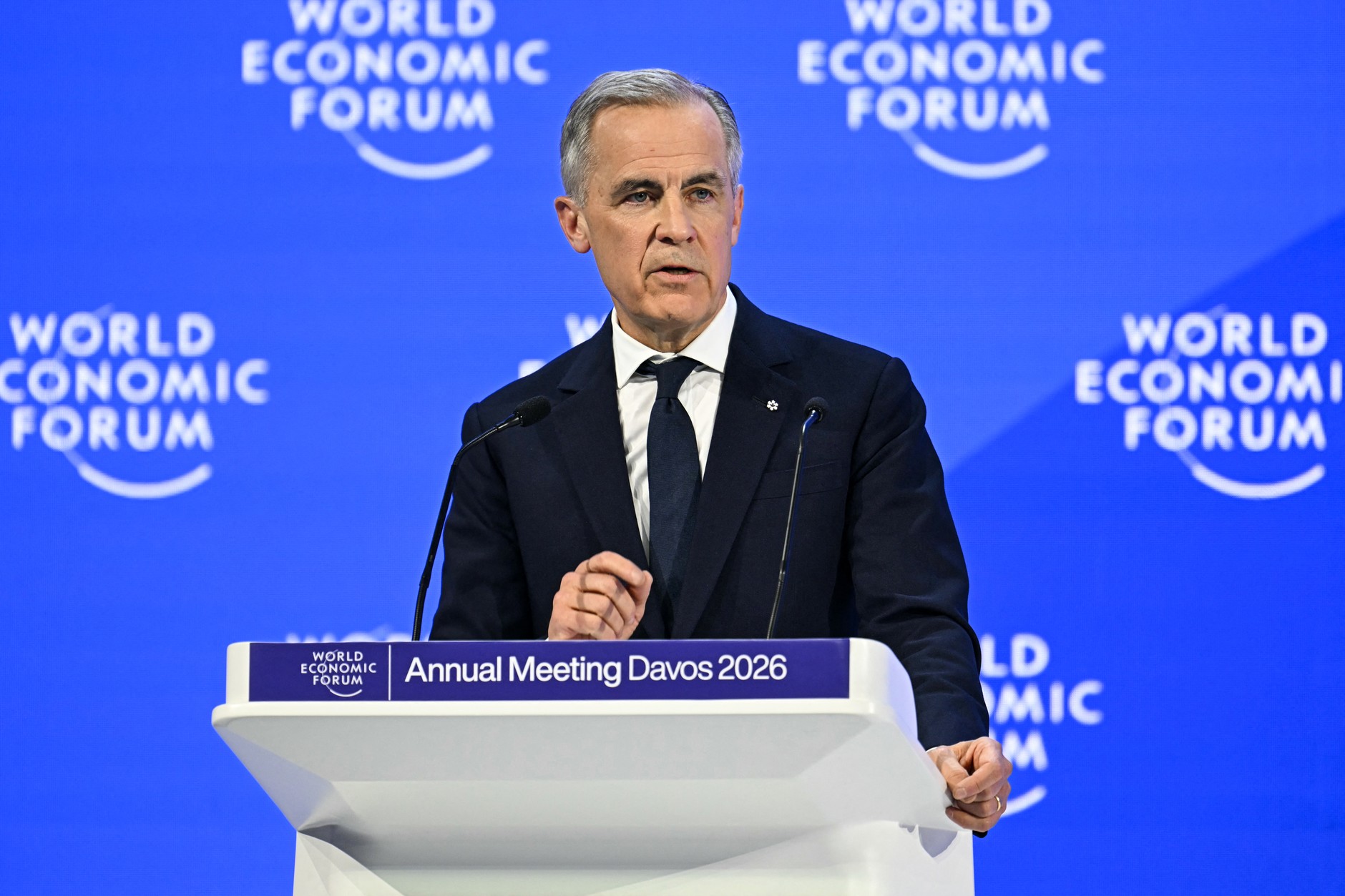
Canadian Prime Minister Mark Carney delivers a speech at the World Economic Forum in Davos, January 20, 2026.FABRICE COFFRINI/AFP / AFP
On Wednesday, Trump made it clear that he had read Carney's comments, referring to Canada's dependence on the United States and even suggesting that its security still depends on American defense technology. “They should be grateful to us,” he said. — Canada exists because of the United States. “Remember that, Mark, next time you make your statements,” he added. In some ways, this veiled threat may have emphasized the Canadian leader's point.
Facing continued threats from the White House to increase tariffs, even after Trump backed off his threat to annex the country, Canada has decided to rebalance its trade relationships with other countries, including China, to reduce its economic dependence on the United States.
In Europe, leaders may follow suit. Brussels last week approved a landmark free trade agreement with the Mercosur bloc of South American countries, a long-awaited agreement that has become even more urgent in recent months to ensure Europe is protected from Trump's protectionism and coercive economic measures.
There is still hope in Europe that Trump will ultimately agree to something other than a US takeover of Greenland, especially after his apparent backtracking on Wednesday on the threat of tariffs and the use of military force. This could include accepting Denmark's standing offer to increase America's military presence on the island, not to mention economic cooperation agreements to exploit natural resources that are becoming more available due to climate change.
However, European leaders increasingly realize that their ability to control Trump is limited and are seeking to secure their dependence on the United States as quickly as possible.
“Trump believes only in strength”
Anders Fogh Rasmussen, former prime minister of Denmark and secretary general of NATO, wrote this week that it is time for Europe to change its position towards the United States from a close ally to a more self-defense stance, characterized by a stronger military and mutual tariffs.
“Trump, like Vladimir Putin and Xi Jinping, believes only in strength,” he wrote, comparing the US president to the leaders of Russia and China. “Europe must be prepared to play by the same rules.”
Trump's threats against Denmark upended a long-held view of the United States that, after 80 years of opposing imperialist conquerors, from Adolf Hitler's Germany to Saddam Hussein's Iraq, Washington would always be at the forefront of enforcing a world order based on shared democratic ideals.
Suddenly, U.S. efforts were directed against longtime allies. — The crown jewel of our power and our role in the world has always been our system of alliances, notes Jeremy Shapiro, a longtime employee of the State Department in President Barack Obama's administration and currently a member of the European Council on Foreign Relations in Washington.
Shapiro points out that since the end of World War II, the United States has continued to use hard power at times, especially in its own hemisphere. But overall, American foreign policy has relied largely on soft power, which, he emphasizes, “is much cheaper, much less coercive, much more moral and ethical, and more durable.”
A return to the law of the jungle and a world where larger powers swallow smaller ones will make it so The United States will be more like Russia and China — two countries that he says threaten U.S. interests in Greenland — and will become weaker in the long run.
“Departing from our proven methods in favor of Putin's is worse than a crime,” he said. – This is idiocy.


