The “Shocking Forecasts” published every year by Saxo Bank are not intended to come true, but to shock and force investors to think about securing their assets in the event of even the most unlikely market events. Just before the publication of the latest forecasts for 2026, Saxo Bank summarizes predictions from previous years that have already come true.
– Saxo's shocking Forecasts are not official predictions, but a thought experiment that is intended to stimulate investors' imagination and encourage them to consider scenarios that seem unrealistic today, but may shape markets tomorrow. As history shows, many of our Shocking Predictions have already come true, although at the time of publication they caused great disbelief. We are also looking forward to the publication of the latest forecasts in early December – this is a unique edition in which, for the first time, we have prepared scenarios for selected countries, including Poland. Of course, you must remember that these are not predictions of the future, but an intellectual exercise for investors so that they can better prepare for the unexpected and thus make more informed investment decisions – says Aleksander Mrózek, Manager for relations with key clients of the CEE region at Saxo Bank.
Late boom: Gold surges above $3,000 as central banks fail to meet inflation mandate
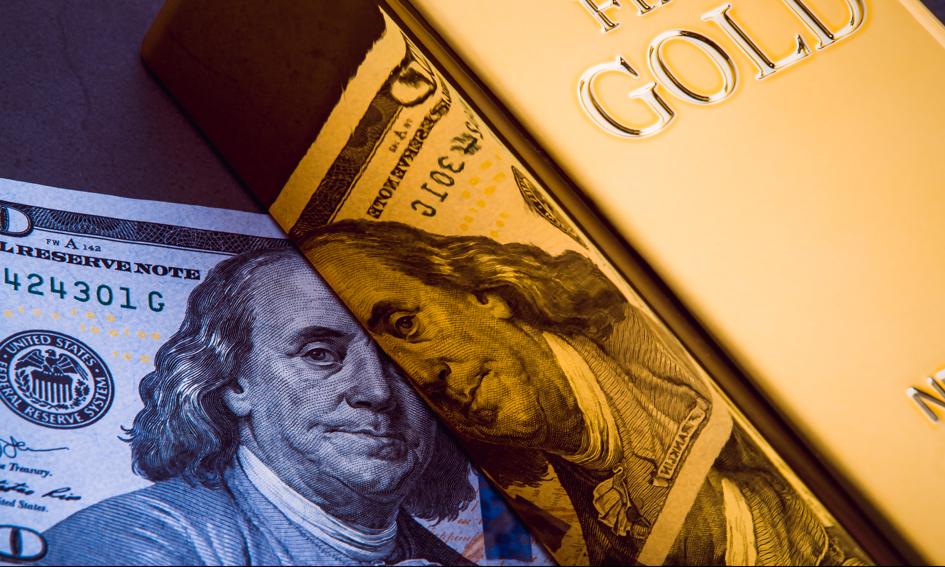
As early as 2022, Ole Hansen predicted that the gold price would skyrocket to $3,000 the following year due to the failure of central banks to manage inflation. This did not happen, but in March 2025, after a remarkable series of increases in recent years, gold reached the previously forecast level of $3,000 per ounce.
– Gold prices have been incredibly fascinating to watch in recent years, and now they have become much more important as an investment asset. In 2022, the forecast was obviously shocking, as at that time gold was trading at $1,800 per ounce. Although it took much longer than expected, I still find it amazing that we have reached the point where gold is trading well above USD 3,000 and is still attracting the attention of investors, says Ole Hansen, director of commodity strategy at Saxo Bank.
In the year that Donald Trump became president of the United States for the second time, one of the most shocking claims by John J. Hardy, chief macroeconomic strategist at Saxo, was that the new president would cause the dollar to crash by imposing significant tariffs.
– While some of the potential market impacts described in the forecast did not materialize, the sharp rise in the gold price Ole mentioned above and the weakening USD have caused the dollar to fall more than 10% in a very short period of time from its early 2025 high. And while this has as much to do with the rise in the gold price as it does with the fall in the dollar, both phenomena can be seen as symptoms of the same problem.
2025 was the year of artificial intelligence, which is why John J. Hardy boldly predicted that Nvidia, thanks to its breakthrough AI chips, would double the value of Apple. It didn't work out, but at one point Nvidia's capitalization was almost 50% greater than that of the iPhone manufacturer.
– We will probably have to consider this a near-accurate forecast because the growth assumptions have not been fully confirmed. Nevertheless, the basic thesis that artificial intelligence is becoming more and more important compared to traditional technology turned out to be correct. “I think that's reason enough to put it on the list of predictions that have come true,” says Hardy.
As 2022 approaches, Ole Hansen wrote that policymakers will postpone climate goals and support fossil fuel investments to combat inflation and the risk of social unrest, while reconsidering the path to a low-carbon future. This prediction came true, although unfortunately it was caused by Russia's unforeseen invasion of Ukraine.
– Last November, we did not know that the world was galloping towards an energy crisis caused by the war between Russia and Ukraine – says Ole Hansen, director of commodity market strategy at Saxo Bank, explaining how he came to the conclusion that fossil fuels would become more important again in 2022: – The lack of investments and the increasingly urgent need to support gas instead of coal led us to formulate a concept that essentially assumed a more investor-friendly environment for (until now) stigmatized investments in the so-called “dirty” energy. This, in turn, resulted in the EU's decision to recognize gas and nuclear energy as green investments.
In 2018, there was no 25% decline in one event – similar to that in 1987, but there were two dramatic episodes that partially confirmed our thesis.
The “Volmageddon” event of February 2018 almost completely eliminated short volatility funds. This event changed the entire segment of the short vol strategy for years. Later in 2018, the market tried to make the Fed understand that it was making a mistake by raising interest rates despite the deteriorating economic situation. This led to a 20% sell-off from the October high to the low during the December 26, 2018 session, with the most dramatic trading sessions occurring over the Christmas period when financial liquidity was very low.
As cryptocurrencies, and especially Bitcoin, began to gain popularity in the public eye, Saxo analysts predicted that the value of the then-leading currency would increase significantly. The reason for this increase was said to be excessive spending by President Donald Trump's administration, causing an increase in public debt and a sharp increase in inflation. Coupled with society's global desire to move away from central bank currencies, bitcoin has become the preferred alternative. This shocking prediction ultimately came true, with the price of Bitcoin rising from $800 to nearly $20,000 at its peak in 2017.
However, the circumstances surrounding this prediction were not entirely accurate. The increase was driven more by speculation on Bitcoin than by the macroeconomic conditions of the Trump era. Looking at the subsequent spikes in cryptocurrency prices – especially Bitcoin in 2021 – the justifications presented in the shocking forecast from 2017 turned out to be true.
In a shocking prediction for 2015, Saxo's analyst team predicted that the United Kingdom Independence Party (UKIP) would win 25% of the vote in the general election on 7 May 2015, sensationally becoming the third largest party in parliament. UKIP would then join David Cameron's Conservatives in a coalition government and call for a referendum on Britain's EU membership in 2017.
Even though the expected Brexit date was a bit far off, the circumstances surrounding this forecast were accurately captured.