Trump never understood Putin's twisted psychology. Europe must hold the line for Kyiv, writes The Telegraph


For anyone following the conflict since 2014, one thing remains clear: Vladimir Putin's ambitions for “Greater Russia” have not wavered. The front lines have changed after February 24, 2022, but the strategic objective – the complete subjugation of Ukraine – remains the same.
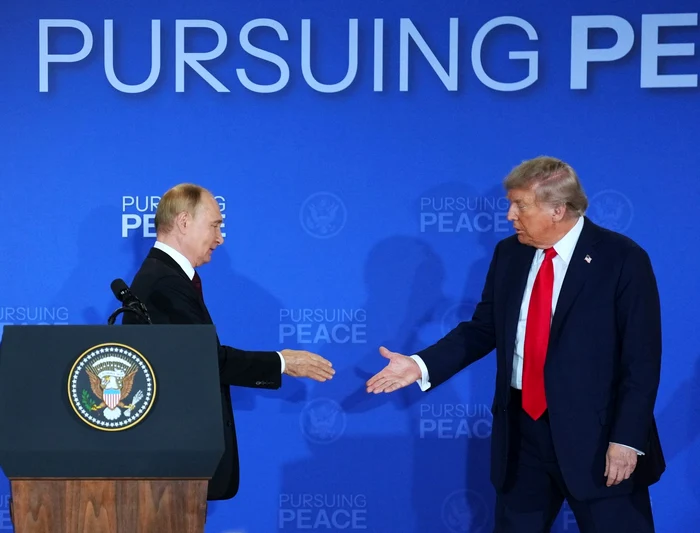
Vladimir Putin and Donald Trump/PHOTO: Profimedia
In this context, the first version of the peace plan presented by Donald Trump to Volodymyr Zelensky rightfully raises many questions. If it was a diplomatic blunder, that's serious. If it was a deliberate move, it is even more problematic: a direct defiance of the Ukrainians and a symbolic blow to Europe and NATO, as military analyst Hamish de Bretton-Gordon notes.
The plan, in 28 points, is presented behind the scenes as a document born in Moscow. And the content, far too favorable to the Kremlin's positions, only fuels this perception. Now Trump seems to be backing down, finally realizing that the aggressor is not Kiev, but Moscow.
According to the expert, “the European counter-proposal in 24 points is reasonable”, but the chances that Putin will accept such restrictive conditions are slim. “Why would he negotiate in good faith when Trump himself has publicly undermined Ukraine's position?” Bretton-Gordon asks.
Steve Witkoff, easily manipulated by Russia's aggressive diplomacy
The problem is that Trump continues to treat the talks as a trade deal – one related to resources, rare metals and strategic assets. For Putin, the stake is ideological: the defeat of Ukraine, regardless of the costs. The absence of General Keith Kellogg, who understood the real dynamics on the front, is already visible, says the expert. Trump's current negotiator, Steve Witkoff, approaches the talks “like a $10 deal,” easily manipulated by Russia's aggressive diplomacy.
Secretary of State Marco Rubio's recent visit to Geneva could, in theory, clarify the White House's position. But with the increasingly visible influence of the MAGA wing – a section of supporters clearly pro-Russia – the task becomes complicated.
Europe can no longer afford ambiguities
As usual, Trump talks about “significant progress” without evidence. The next few weeks are crucial: the leaders of Italy and Germany are preparing for visits to Washington, and Zelenski, in turn, could return to the US shortly.
But, warns Bretton-Gordon, the real responsibility lies with Europe. “We're the only ones who really support a fair deal for Ukraine. Putin — and perhaps Trump — are ready for a deal that benefits Moscow, allowing the US president to claim another >. But for those who earned their decorations on the battlefield, it's not the medal that matters, but how you got it.”
Europe can no longer afford ambiguities. Despite the bravado displayed in Moscow, the cracks in the Russian military and economy are visible. A coherent and firm strategy is needed, even a confrontational one, says the expert, if this means protecting Ukraine's sovereignty.
Trump's motivations — and why he seems so sensitive to Kremlin influence — remain unclear. What is certain is that Putin continues to exert a murky attraction over him, something that is persistently discussed at the diplomatic level.
“This is the moment when British Prime Minister Keir Starmer and other European leaders must show their resolve”concludes de Bretton-Gordon. “The world needs to see that we stand steadfastly by Ukraine, including through military means. We will not allow Europe to be paralyzed by a tyrant again. And Trump's – or rather America's – resources must not be thrown overboard. We will need them,” says Gordon, in The Telegraph.