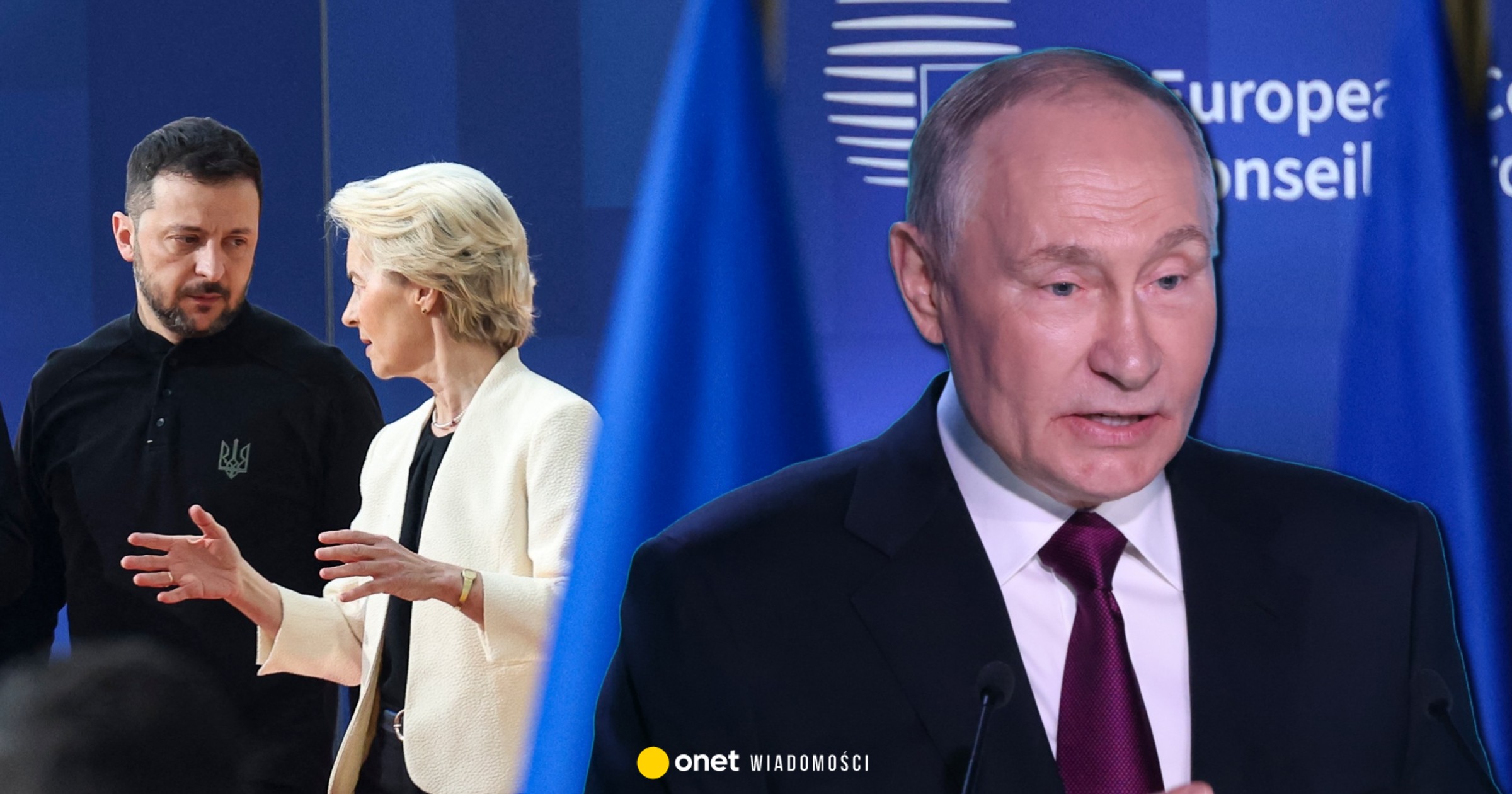
During a summit held a month ago, European Union leaders hoped to reach an agreement to use Moscow's frozen financial reserves of 140 billion euros (PLN 591 billion) for a “reparations loan” to Ukraine. However, this idea was met with strong opposition from Bart De Wever, the Prime Minister of Belgium, where the money is kept.
Currently, due to the intensification of peace talks and the running out of funds in Kiev, the issue of dealing with Russian assets has taken on a new importance. — If we don't take action, others will do it before us – says one EU official who, like others quoted in this article, asked to remain anonymous in order to speak honestly on the matter.
European officials suggest Donald Trump's new peace initiative could help strengthen support for a plan to use frozen Russian funds for a reparations loan to Ukraine. The plan assumes that they could be returned to Moscow in only one, unlikely scenario – if it agreed to pay war compensation to Ukraine.
EU diplomats believe that European Commission President Ursula von der Leyen will instruct her officials to present a draft legal text on the reparations loan within days. The pace of work on this solution is increasing.
Belgian brake
Despite intensive talks between Belgium and the European Commission in recent weeks, De Wever still has concerns about the legal liability related to the use of frozen funds. He is also afraid of retaliation from Moscow.
Therefore, policy experts in Brussels are currently considering how to help Ukraine in the event that the reparations loan proposal is not presented on time. They want to find a solution that EU leaders can approve at their summit on December 18.
Four EU officials reveal that one of the proposals gaining more and more support is a “bridge” loan. Financed by an EU loan, it would allow Ukraine to stay on the frontline in the first months of 2026. This would give Brussels more time to work out a long-term solution – a full reparations loan using Russian assets in a way acceptable to Belgium.
The article continues below the video
Two EU diplomats say Ukraine may be asked to repay the initial bridging loan after receiving financing from a long-term reparations loan. Representatives of EU countries discussed various options with the European Commission during a meeting in Brussels on Tuesday. According to one official briefed on the discussions Countries such as France, Germany, the Netherlands, Lithuania and Luxembourg pressed the Commission to continue working on proposals for financing Ukraine.
The topic of Ukraine's bridging financing model was also raised on November 4 by Valdis Dombrovskis, EU Commissioner for Economy and Productivity. “The longer we wait, the more difficult this task will be,” he said.
Urgent need
The Commission is fully aware of the urgent need to find a solution. Kyiv warns that in the first months of next year he may run out of money. On Tuesday, French President Emmanuel Macron said EU allies would finalize a solution “in the coming days” that would “provide financing” to Ukraine.
According to many EU officials, a reparations loan is the only possible solution in the long term. EU Member States are not willing to reach into their own national budgets and send funds from them to Ukraine. Many of them are already struggling with budget deficits and high borrowing costs. Therefore, it is crucial to convince Belgians to participate in this project.
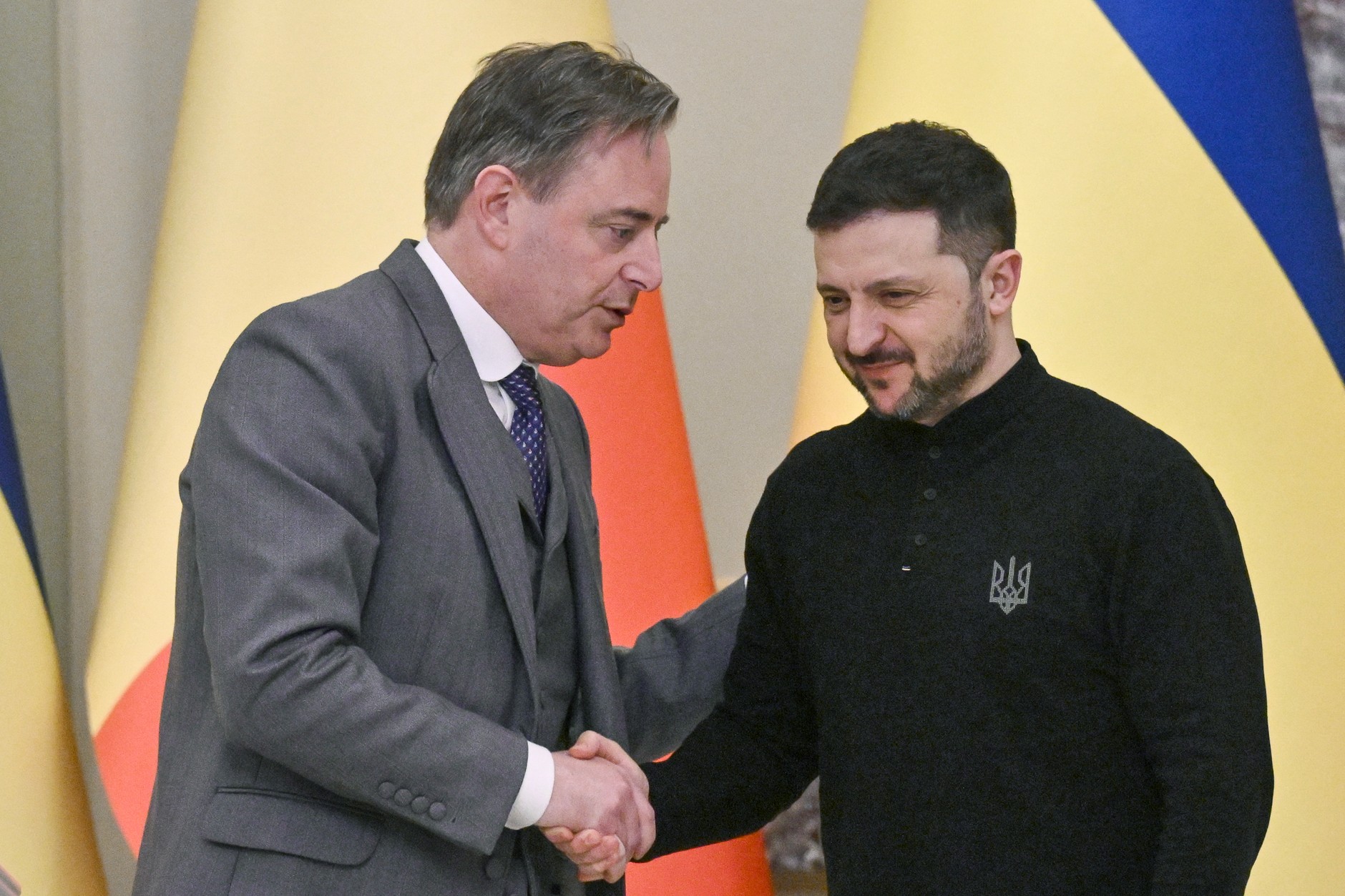
Prime Minister of Belgium Bart De Wever and President of Ukraine Volodymyr Zelensky during a joint press conference in Kiev, April 8, 2025.GENYA SAVILOV / AFP
— We hope that we will be able to overcome their hesitations. We really don't see any other option other than a reparations loan – says an EU diplomat. In his opinion, one of the ideas is to “combine the reparation loan with one of the other options.” He adds that this process cannot, however, “take too much time because currently “The situation is urgent and requires immediate action.”
There are still problems with setting up a bridge loan using common EU loans, which some commentators refer to as “Eurobonds”, although not everyone likes this term.
The last word
Perhaps the biggest obstacle will be the fact that such EU loans would require the unanimous support of 27 Member States, and Hungary has long opposed new measures to help finance Ukraine's war effort. However, it might be helpful to present the bridge loan as funding for Ukraine's reconstruction rather than financing its war machine.
Another factor is the acceleration of peace efforts — Trump's team is trying to get officials from Ukraine and Russia to come to an agreement. Subsequent versions of the draft peace plan mention the use of frozen assets to finance the reconstruction of Ukraine. Last week, European officials reacted with dismay to the proposal in the original US proposal that the US should benefit from the use of these assets.
EU leaders hope they have convinced Trump's team that they must have the final say on the destination of these assets, as well as the deadline for lifting European sanctions against Russia and Ukraine's path to EU membership, EU diplomats say anonymously.
I’m Ashley Davis as an editor, I’m committed to upholding the highest standards of integrity and accuracy in every piece we publish. My work is driven by curiosity, a passion for truth, and a belief that journalism plays a crucial role in shaping public discourse. I strive to tell stories that not only inform but also inspire action and conversation.