
The new presidents of TVR and Radioul Public were heard in the culture commission / They will be officially appointed tomorrow


On Tuesday, the Culture Committees of the Parliament heard Adriana Săftoiu, proposed by PNL for the position of president-director-general of TVR, and Robert Schwartz, proposed by USR for the head of Public Radio. Both received favorable reviews.
Adriana Săftoiu and Robert Schwarz were proposed in the first meetings of the Boards of Directors of the Romanian Television Society and the Romanian Broadcasting Society.
10 members of the Board of Directors voted for Săftoiu, and 3 abstained. Robert Schwartz was nominated by a majority vote.
Today, the two were heard by the culture commissions gathered, from the Chamber of Deputies and the Senate. And tomorrow, Adriana Săftoiu and Robert Schwartz will be voted on by senators and deputies. Voting will be secret, with balls.
Committee hearings
The two candidates proposed for the management of TVR and Public Radio had five minutes to introduce themselves, and then the representatives of the political parties asked them questions. But PSD, PNL and USR did not ask any questions.
Adriana Săftoiu began by saying that she cannot now clarify the situation of Romanian Television because “I have received information, but it is either based on sources or through discussions that are not officially assumed”. She proposed that the TVR situation be discussed later, after she can better understand clearly what is going on.
“TVR, at this moment, is perceived as a budgetary institution, rather than a media institution. We will have to do a lot of things to change this perception”, Adriana Săftoiu appreciated.
She also said that TVR is said to have very low audiences and that, looking at the ratings, she noticed that there are channels that have 0 audiences.
“The purpose of TVR is not to make an audience, it's a public service meant to inform, the law doesn't say that, but it also doesn't say that you have to do 0,0,0. We have to think about how to respect the law and a solution so that the audiences are not like that”, said Săftoiu.
AUR representatives accused that at the regional level, TVR does not respect the antenna quotas, especially in Timiș and Craiova, and asked how it will reflect the public interest without partisanship.
“At the moment I don't know if things are as you said, but I assure you that I will carefully monitor if the electoral quota is not respected. I think that television must respect the Romanians' vote in percentages”, answered Adriana Săftoiu.
At the end of the debates, which lasted half an hour, Mihail Neamțu, the president of the culture committee of the Chamber of Deputies, expressed his surprise at the fact that PSD and PNL did not ask any questions.
Adriana Săftoiu obtained a favorable opinion from the assembled commissions with 20 votes “for”, one abstention and 6 votes “against”.
Robert Schwartz began the presentation by saying that Public Radio has good audiences.
“Public Radio is an institution of strategic interest and we will try to put it on those stable pillars that allow radio to have a visible presence. We want to produce, distribute relevant content, being a public station,” said Robert Schwartz.
He also mentioned that in 2028 Public Radio will be 100 years old.
Schwartz proposed long-term policies, development of multimedia productions, adaptation to attract a younger audience, reduction of bureaucracy, introduction of a fact-checking division and a modern performance evaluation system:
“We should be relevant to all generations, through digitization.”
Regarding a future fact-checking division, Schwartz said it would be made up of professional journalists from all departments and “younger people who can search the Internet for information from verifiable sources.”
PSD, PNL and USR did not ask him any questions either. Instead, AUR Senator Titi Stoica asked him how big was the team he led at Deutsche Welle.
“I ran a department with 60 people. And then, in the position of deputy director for Europe, there were 450 people. I think I'm in a position where I can prove that I can succeed in this mission,” was his answer.
Then, he was asked, also by AUR, what is the mandate he received from USR, the party that proposed him to the Board of Directors. Robert Schwartz said he has no political mandate and would not have accepted the candidacy if there had been one.
He too received a positive opinion, with 19 votes “for” and 8 against.
Who is Adriana Săftoiu?
Adriana Săftoiu was a journalist, then spokeswoman for former president Traian Băsescu, in his first term in Cotroceni. For 8 years she was also a deputy.
In 2012, elected on the PNL lists, Adriana Săftoiu resigned from the Parliament: “I give up my mandate and refuse to deceive and deceive the people,” she said.
Săftoiu motivated by the fact that his actions as a deputy are without effect. “I tried to regulate the law on school textbooks, for a year and a half it has been lying forgotten in some drawer. Unfortunately, I was not in the right bank, in the bank of Power.”
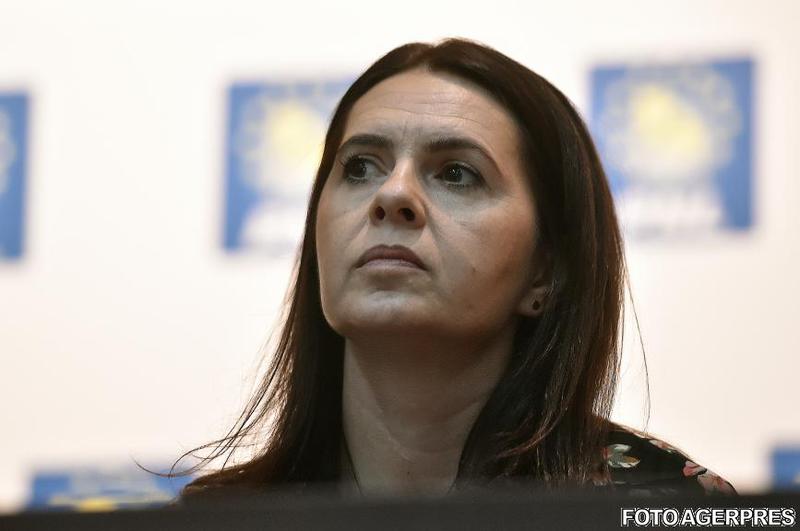 Former adviser to Băsescu and one of the few parliamentarians who ever resigned, proposed head of TVR
“This medieval mentality blocks the Parliament, I cannot believe that everything the Power does is valid and everything the Opposition does is wrong,” Săftoiu said.
Adriana Săftoiu was a journalist at Rompres and Mediafax in the period 1993-1998. From 1998 to 2000 she was the spokesperson of the Government (when Radu Vasile was prime minister). For one year, from 2000 to 2001, he was also cabinet director at the Ministry of Transport (when Traian Băsescu was minister).
In the period 2001-2004, she was the press director of the Democratic Party (PD). From 2004 to 2007, she was the spokesperson of President Traian Băsescu. Between 2012 and 2016, he was a political and institutional communication trainer, his CV also states.
Who is Robert Schwartz?
Robert Schwartz has over 30 years of experience at Deutsche Welle, where he headed the Romanian language newsroom between 2000-2020.
In 2012, he received the Order of Cultural Merit in the rank of Commander for his contribution to Romanian-German relations, according to the biography sent by USR.
Born in 1956 in Sibiu, he graduated in German Studies at the University of Bucharest with the highest grade and collaborated since his student days with the German newsrooms of the Romanian Radio Television. He worked as a teacher and in 1990 became the first elected director of the German High School in Bucharest after the Revolution.
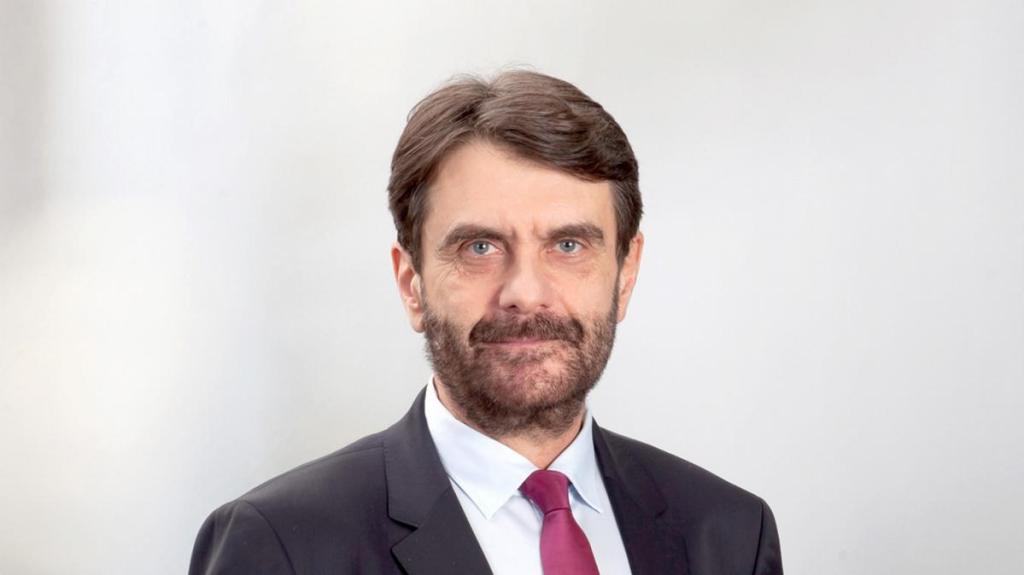 Journalist Robert Schwartz, former editor-in-chief of Deutsche Welle, proposed by USR for the management of Public Radio
Based in Germany since 1991, he joined Deutsche Welle in 1992, holding various positions up to the director of the Romanian language department. Between 2020 and 2023, he coordinated the DW project “Sinti and Roma in Europe”, and after his retirement in 2023 he continues to work as an independent journalist.
He is a member of important academic and cultural organizations, and in 2023 he was elected president of the German-Romanian Society in Berlin.


