The company that operates Lukoil in Romania will be liquidated. Analysts warn of underground Russian oil deals


The company that operates Lukoil and manages the refineries in Romania and Bulgaria will be liquidated, the company's representatives have already notified their employees that they will be fired. The move is causing concern, as analysts believe it will lead to further undergrounding of Russian oil transactions.
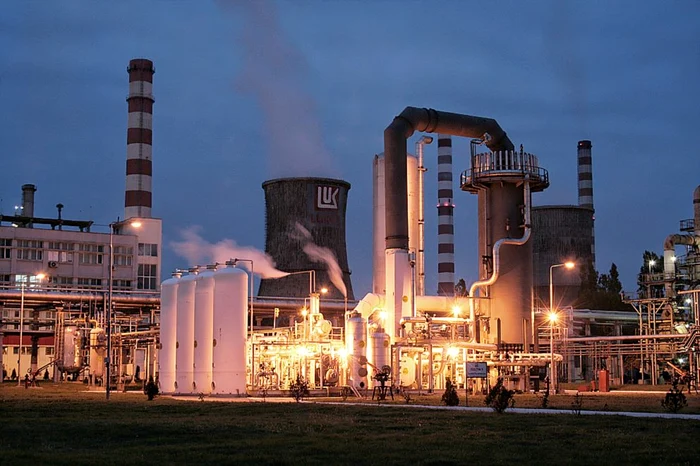
The company that operates the Petrotel refinery will be liquidated. Facebook photo
Five informed sources told Reuters that Litasco, the company that operates Lukoil's assets, including the Petrotel refinery in Romania, will permanently close its doors, already starting the procedures to lay off employees.
Isolated from the global financial system, Litasco has laid off most of its traders and operational staff, offering severance pay equivalent to three months' salary and bonuses, the sources said, adding that a handful of employees would stay on to handle administrative tasks.
Litasco and Lukoil did not respond to Reuters' request for comment on the decision.
Litasco is closing its offices globally
The crude traders and other employees are to leave Litasco's Swiss headquarters in Geneva by the end of this week. The office is expected to be fully closed by the end of February.
In the US offices in Houston, most of the firm's 20 or so traders and operational staff left on Thursday. A few employees will stay on to settle remaining commitments with suppliers and customers, they said.
In the UAE's Dubai offices, employees have been given notice but will continue to work until February.
Founded in 2000, Litasco was among the leading global oil trading firms in its heyday, transporting oil and fuels for Lukoil's assets around the world.
Russia's shadow fleet
Litasco traded just under 4 million barrels per day (bpd) of crude oil and fuel in 2019, or about 4% of global consumption at the time.
It competed with both major oil companies and trading houses, snapping up some of their best talent.
“The liquidation of Litasco's activity will lead to an even deeper undergrounding of Russian oil transactions,” said Adi Imsirovic of consultancy Surrey Clean Energy and former head of Gazprom's oil trading division.
Moscow relies heavily on a shadow fleet of aging tankers to transport crude despite sanctions.
“It is possible to recover, but it takes money, time and patience“, said Imsirovic.
Russia has been forced to redirect most of its oil exports to Asia from Europe due to US and EU sanctions.
Litasco suffered a major blow in 2022 when the West cracked down on Russia's oil industry over Moscow's invasion of Ukraine, but has tried to rebuild operations in recent years by hiring American traders and securing lines of credit.
“Obviously, Litasco needs to shut down given the sanctions. Russian oil will get to refineries one way or another, but traders need access to dollars and the global financial system.”said energy economist Philip Verleger, according to Reuters.
US sanctions: OFAC extended deadline
Lukoil came under a new package of economic sanctions imposed by the United States, in the context of the war waged by Russia in Ukraine. Washington's decision targets both Lukoil and Rosneft, the two largest Russian oil groups.
The sanctions, announced on October 22, 2025, are aimed at restricting the financing of the Russian economy and “the Kremlin's war machine”. The US Treasury Department stated that the measures extend to subsidiaries and partners of these companies, prohibiting US entities and their allies from carrying out commercial or financial transactions with Lukoil.
The Office of Foreign Assets Control (OFAC) has set a deadline of November 21, 2025 for the closure or sale of international assets held by the Russian company, under the risk of additional sanctions.
On November 14, 2025, OFAC extended the deadline to December 13, 2025. “GL 131 also authorizes until December 13, 2025, transactions that are customary and necessary to maintain or terminate the operations, contracts, or other agreements of LIG entities. This includes transactions that are necessary to carry out preexisting agreements, provided that such transactions are consistent with previously established practices and support preexisting projects or operations. Such activities could also include payments to employees, suppliers, owners, creditors, and partners; preservation and maintenance of pre-existing tangible properties; however, any payment made, directly or indirectly, to LIG entities or any other blocked person must be made to a blocked account (…) unless separately authorized by OFAC.“, the US office added.
Lukoil later confirmed that it had begun the process of identifying buyers for its overseas assets and announced its intention to sell its entire international network, including refineries in Romania and Bulgaria.
The former executive director of the company, quoted by the publication Politico, estimated that the move could reduce Lukoil's revenues by up to 30% by selling three refineries and about half of the 5,000 gas stations operated globally.