What follows after the negotiations in Switzerland regarding the peace in Ukraine. The difference in the US release


US and Ukrainian officials reported progress in efforts to end the war with Russia after talks in Geneva on Sunday, but did not provide details on how some deep disagreements between Moscow and Kiev will be resolved, raising substantial questions about next steps, the Financial Times reports.
Speaking to reporters after a day of talks with Ukrainian and European officials, US Secretary of State Marco Rubio said “extraordinary” progress had been made, describing the day as one of the most productive so far in the talks.
“I'm very optimistic that we will get there (no deal) in a very reasonable amount of time,” he said.
Rubio said talks will continue to resolve a number of outstanding issues. “I don't want to declare any victory or completion here. There is still work to be done,” he declared.
The US secretary of state did not say whether there had been progress on some of the more controversial points of the 28-point plan, including a demand that Ukraine cede territory in the Donbas region that remains under Kiev's control.
Rubio says Putin will receive the plan after it is approved by Trump and Zelenskiy
The US secretary of state said on Sunday that the final text of the agreement will need the approval of the presidents of Ukraine and the US before it is sent to Moscow.
A joint statement issued by the US and Ukraine described the talks as “constructive, focused and respectful”.
“The discussions showed significant progress towards aligning positions and identifying clear next steps. They reaffirmed that any future agreement must fully protect Ukraine's sovereignty and ensure a lasting and just peace,” the statement said.
What the US said in a separate official statement
Yaroslav Trofimov, The Wall Street Journal's chief international affairs correspondent, however, notes an omission in a separate statement issued by the US.
“The American statement states that the Ukrainians told the US that the current project 'reflects their national interests'. But the joint American-Ukrainian statement says nothing of the sort: the talks only 'showed significant progress in the direction of aligning positions and identifying clear next steps', further discussions on some 'joint proposals' being necessary, and the final decisions to be taken by the presidents of the two countries,” comments Trofimov in a message published on the social network “X”.
“Chaos” in the Trump administration
The talks began under inauspicious auspices, with US President Donald Trump harshly criticizing Ukraine and Europe on Sunday for failing to reach a truce with Russia.
The Financial Times recalls that the Trump administration has stepped up pressure on Ukraine and its allies to force them to reach a deal with Moscow, raising concerns in European capitals and Washington that the US is caving in to Russian demands.
Sunday's talks capped a weekend of rapid diplomatic reversals. After pressing Ukraine to accept the plan by Thursday, Trump said the proposal was not America's “final offer.” Rubio then tried to distance Washington from the proposal, before insisting hours later that the Trump administration, not Russia, had authored it.
A European official described the situation in the Trump administration as “chaotic”.
Who participated in the negotiations between the US, Ukraine and Europe
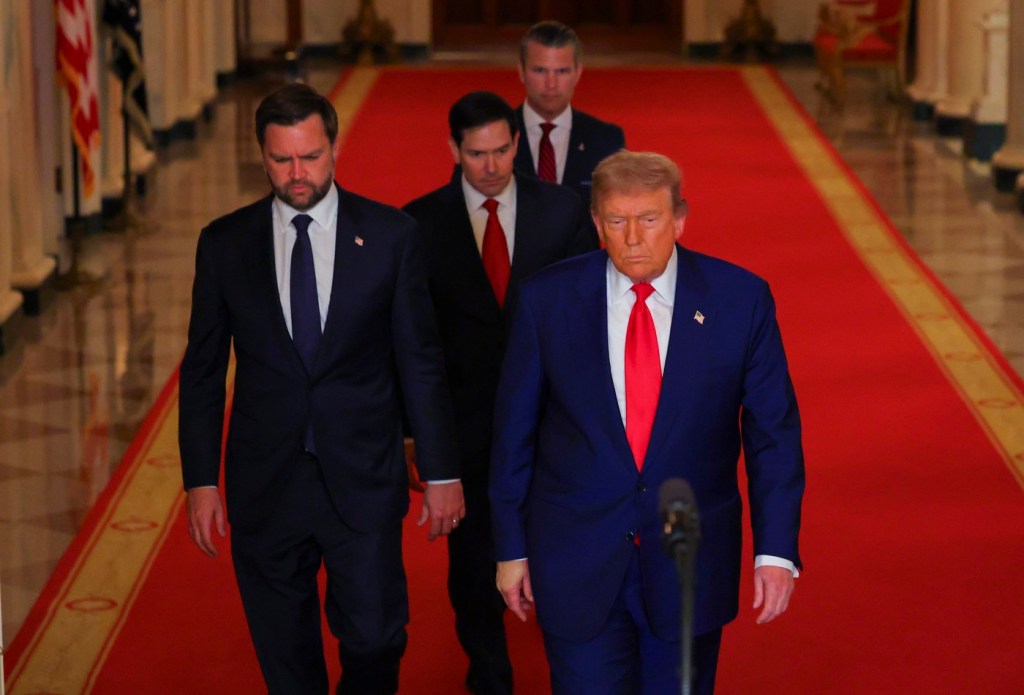
National security advisers from France, Germany, Great Britain and the EU met in Geneva on Sunday alongside their Ukrainian and American counterparts, including Rubio, Trump's son-in-law – Jared Kushner -, special envoy Steve Witkoff – one of the plan's authors – and US Army Secretary Daniel Driscoll, a close ally of US Vice President JD Vance.
They met with Ukraine's delegation – led by Andrii Iermak, President Volodymyr Zelenskiy's chief of staff – and the head of Ukraine's National Security and Defense Council, Rustem Umerov – before meeting European representatives.
In his remarks late Sunday, Rubio said he had assured European officials that any elements of the plan that directly concern Europe or NATO would be included in a “separate line” of discussion because they needed their input.
Dissatisfaction in the Republican Party over the original plan submitted to Ukraine
Republican congressmen are divided over the proposals. Several senators — including former Senate Majority Leader Mitch McConnell and close Trump ally Lindsey Graham — have publicly criticized the plan.
“Vladimir Putin is a criminal, a rapist and a murderer, and we shouldn't do anything to make him feel like he won a victory here,” said Republican Senator Thom Tillis, speaking at the International Security Forum in Halifax. “Any agreement must be an agreement that the people of Ukraine want,” he stressed.
Still, Republican Sen. Eric Schmitt defended Trump's “realistic” approach.
“The truth is — and many don't want to say it — that the Ukrainians have been losing for a long time,” Schmitt said Sunday on Fox News.
Michael McCaul, a Republican congressman who previously chaired the House Foreign Affairs Committee, told ABC News that “about 80 percent” of the plan could find consensus in Geneva, but “the problem is going to be the 20 percent of terms that are really difficult to negotiate.”
Europe mobilized to counter the US proposal
European states tried to slow down US efforts to impose the plan on Ukraine.
Ursula von der Leyen, president of the European Commission, said: “Any credible and lasting peace plan should first and foremost stop the killing and end the war, without sowing the seeds of future conflict.”
She said three elements were crucial: “First, borders cannot be changed by force. Second, as a sovereign nation, there can be no limitations on Ukraine's armed forces; third, the central role of the European Union in securing peace for Ukraine must be fully reflected.”
The original US plan violated several of Ukraine's long-term red lines, including ceding the rest of the Donetsk region, which Russia has failed to capture since it began its offensive there in 2014.
A European official spoke of fears that Trump could withdraw US support for Ukraine out of frustration, leaving Ukraine in a highly vulnerable position. “That's a scenario we're preparing for, obviously,” he said.
European diplomats expect further meetings next week between France, Germany and Britain. Other possible participants could include the leaders of Poland, Finland and NATO Secretary General Mark Rutte.
“We are trying to come up with something that works as a counter proposal,” the European diplomat said.
According to Reuters, US and Ukrainian delegates have discussed the possibility of a visit by Volodymyr Zelensky to the United States in the very next few days to discuss the peace plan with Trump.