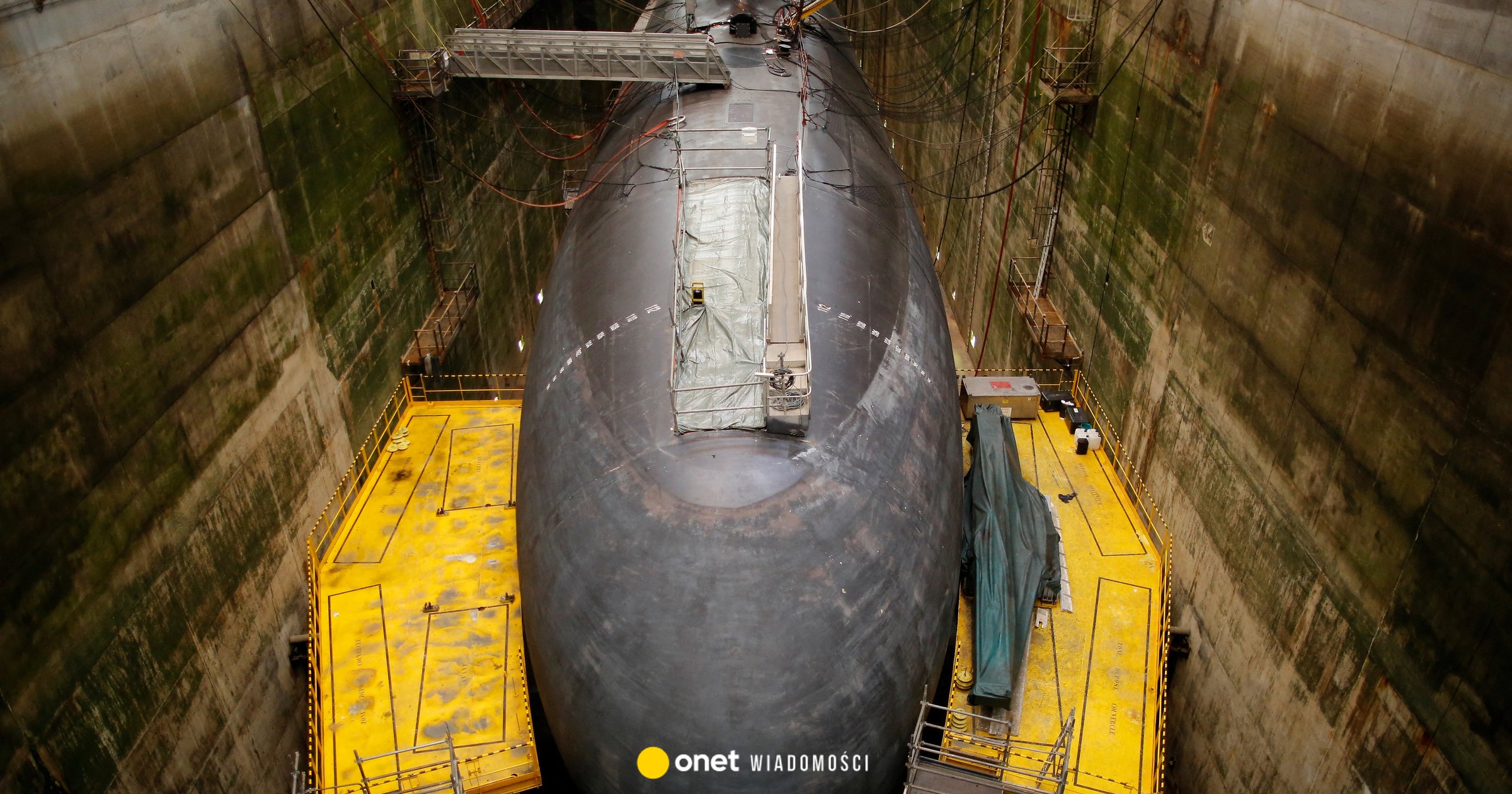
War without soldiers. This is how artificial intelligence is changing the battlefield


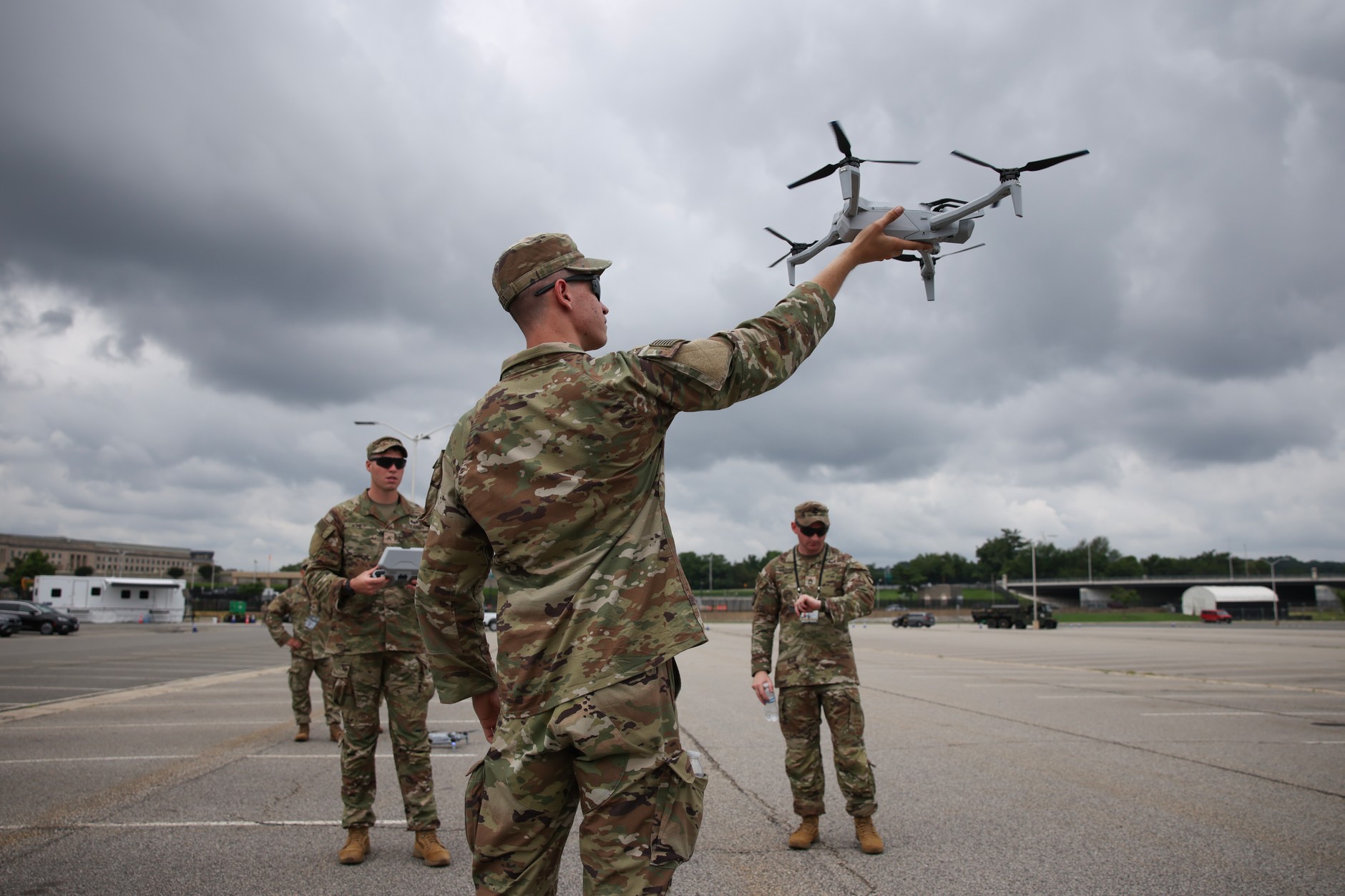
Christopher Siler looks solemnly at the drone hovering just above his head. Then he checks the body of the device by tapping his knuckles. “If I get hurt on a mission and I'm on the ground, honestly, I'll be happy to have something like that save me,” he admits. Siler knows what he's talking about: he's a U.S. Army rescue expert.
He came to the AUSA fair in Washington, which took place from October 13 to 15, from San Antonio, Texas. It was in the capital of the USA that companies from all over the world presented the latest solutions in the arms industry. The event attracted over 800 exhibitors and tens of thousands of visitors. There's buzzing and screeching all around as men in uniforms and black suits climb into tanks and helicopters, examining cruise missiles and machine guns.
Exhibitors present not only drones, but also robots and systems based on artificial intelligence. You only need to walk through the halls to see how far European countries – including Germany – lag behind the technological future of armaments.
Two Bundeswehr officers walk between the stands. They are clearly overwhelmed by the amount of news. Where soldiers once dominated, machines now rule. Americans already know this and are ahead of Europe.
Europe lags behind the United States
The arms industry is booming around the world. More and more countries are arming themselves more and more intensively, and industry concerns have their hands full – and with orders. It is estimated that this year the US military budget may exceed $1 trillion for the first time. (PLN 3.6 trillion). The European arms market is also growing in the face of the threat from Russia. There is discussion in Washington that the German government is taking the “epochal turn” seriously by allocating billions to the army.
At the fair in Washington, it was easy to see that the American fascination with small arms and attachment to military tradition still shape thinking about armaments. Yet machine guns and tanks are starting to give way to robots, sensors and artificial intelligence. Military experts are convinced that the outcome of future wars will be determined not by muscle power, but by the use of machines' capabilities.
Much of what will soon be considered standards by Americans is still an enigma to Germans. While the Bundestag is still debating the use of armed drones, the United States is already two steps ahead.
Silicon Valley on the frontline
The changes, says Siler, concern, among other things, logistics. Soon, drones will not only transport materials to the front, but also save the wounded. – Many places are difficult to access by helicopters or cars, and rescuers traveling there are exposed to great danger – explains the soldier. The use of drones seems to be a more logical solution. After all, it's better for an unmanned machine to be shot down than a helicopter with people on board.
Almost every second stand at the fair presents drones that, thanks to artificial intelligence, can autonomously detect targets, transmit data in real time and independently coordinate their actions. In addition to small start-ups, there are also giants such as Microsoft, Anduril and Palantir. Their “offer” includes software for creating digital images of the battlefield and more efficient control of drone fleets. Despite the obvious war potential, many exhibitors do not consider themselves weapons producers, but representatives of technology companies.
However, their presence in such large numbers shows a clear change in the approach of Silicon Valley. Technology giants began to look at the army and police as a promising market. Even during Joe Biden's presidency, Google claimed that it was not investing in these areas, and companies such as Anduril were treated by the technological community as black sheep. However, after Donald Trump returned to the White House, entrepreneurs began to line up – because a huge new business awaits in the army and border guard.
“What we're seeing is more than just technological developments,” says Harald Schaub, a psychology professor at the University of Bamberg who studies the new type of warfare. — The soldier gains a second, algorithmic consciousness. It's fascinating, but also dangerous. When the screen replaces reality, actions quickly become abstract. And that should never be the case in a fight.
A new look at the battlefield
The technological trend cannot be stopped. And it is for this reason that the command of the US army found it necessary to closely link digital warfare with classic infantry – this is one of the conclusions of the war in Ukraine.
The so-called loitering munitions — autonomous weapon systems that can be flexibly incorporated into tactical operations of land forces.
In the United States, you can now order modern solutions from Kopin from Massachusetts – a manufacturer of LED microscreens that received a gift from the American army. 15 million hole. (PLN 54.75 million) for a pilot project of augmented reality displays. Such “binoculars of the future” are intended to improve visibility and orientation on the battlefield.
Not far away, just a block away from the fairgrounds, Kopin's CEO, Michael Murray, opens the door to a suite on the third floor of the Marriott Hotel. The company rented the premises specifically to present its new products. Anyone who wants to test the glasses puts on a helmet and watches the image from a drone circling over the virtual battlefield through a miniature screen in front of the left eye.
The soldier sees what the drone records – and gains a tactical advantage. “As soon as the drone's field of view appears on the display, shooters can react immediately,” explains Murray. Many U.S. military members can't wait to use this technology. “The sooner, the better,” argues Boss Kopin.
From drones to superheroes
However, not everyone shares this enthusiasm. Psychologist Harald Schaub notes that involving algorithms in front-end decision-making carries risks. — When the algorithm says “target confirmed”, it is not the same as a decision made by a human – he emphasizes. In his opinion, there is a risk that the technology will start to function independently, going beyond the support function. — On the other hand, properly used artificial intelligence can protect soldiers, relieve them and reduce stress, and help them make better decisions.
Elke Schwarz from the London School of Economics is even more critical. — What the computer “sees” is always a pure set of data – not a human being – says the political scientist. — The system must objectify the goal. It does not see people, but shapes and patterns corresponding to specific parameters. And when technology begins to treat people only as a collection of data, it is very close to dehumanization.
The researcher believes that Europe will sooner or later follow the US lead – even though EU regulations are more restrictive.
The article continues below the video
Murray does not hide that the European market is also attractive for his company. Kopin has just signed an investment agreement worth USD 15 million. (PLN 54.75 million) with the Greek manufacturer of night vision systems, Theon International. The aim of the cooperation is to develop products for NATO forces in Europe.
Some American arms companies can now also count on the Germans. The Bundeswehr has become one of Boeing's largest clients – Berlin has invested over EUR 28 billion (PLN 118.7 billion) in American defense systems, which constitutes over a quarter of the so-called special fund. The cooperation works both ways: the Bavarian Hensoldt supplies rangefinders for tanks, and Rheinmetall cooperates with several American companies.
ZF from Friedrichshafen also sent its representatives to Washington. Most Germans know it as a supplier of car parts, but the company also produces gearboxes and electric drives for armored personnel carriers. Stefan Schnuse stands in front of one of such models. A pin with the German and American flags gleams on the lapel of his jacket. — The arms sector is doing much better than the automotive sector – says the engineer. — And it will probably stay that way.
ZF is currently conducting a radical savings program that includes eliminating thousands of jobs. The arms industry, although still a small part of the company's operations, gives hope. It's true that between stands full of software and drones, the exhibition with a heavy gearbox looks a bit archaic, but it still attracts attention.
Drones are increasingly used by the militarySamuel Corum/Getty Images
However, the Anduril Industries stand is of much greater interest. His boss, Palmer Luckey, wants – as he says – to “turn soldiers into superheroes.” He believes that to deter China and prevent a possible invasion of Taiwan, further technicalization of the army is necessary.
Like many others in the industry, Luckey argues that China's military has made enormous progress in recent years, thanks in part to industrial espionage. Now, he says, the United States must catch up.
The war of the future: man or machine
The 33-year-old entrepreneur already financially supported Donald Trump's campaign in 2016, and recently his company received a contract worth billions of dollars to supply Eagle-Eye augmented reality helmets for the US army. Mark Zuckerberg also participated in the project.
Helmets equipped with this technology display soldiers' compass, map, and the positions of allies and adversaries – all in real time. If an enemy hides behind an obstacle and is detected by the drone, the ground soldier will be able to see their silhouette – almost like an X-ray. What has so far appeared only in computer games is to become part of real strategy on the battlefield. There are queues in front of camouflage helmets that completely cover the face and look like props from science fiction movies.
However, not everyone likes these pop culture associations. — This is a classic pattern that has been perpetuated in cinema for decades: technology and machines symbolize evil, and ultimately humanity wins, says Gavin Kenneally, head of the American company Ghost Robotics. He prefers to emphasize the positive aspects of progress.
His invention – a four-legged dog-like robot – seems almost cute compared to the weapons on display at the fair. The machine can detect and warn about explosives, but it can also be armed. “Imagine a task force storming a house,” Murray says. — The first soldier to cross the threshold is the most vulnerable. This risk can be eliminated.
In the future, wars will not disappear – they will only take on new forms. Because if a robot can enter a building, why couldn't the entire unit be made up of machines? According to prof. Schaub, the key question is whether technology should support humans or replace them. — If we forget about it, the “digital soldier” will quickly become only an element of the system, and not an independent participant in operations.