Medicine is beautiful, but it has its challenges and, regardless of the specialty they choose, the doctors, are preparing to cope with great.
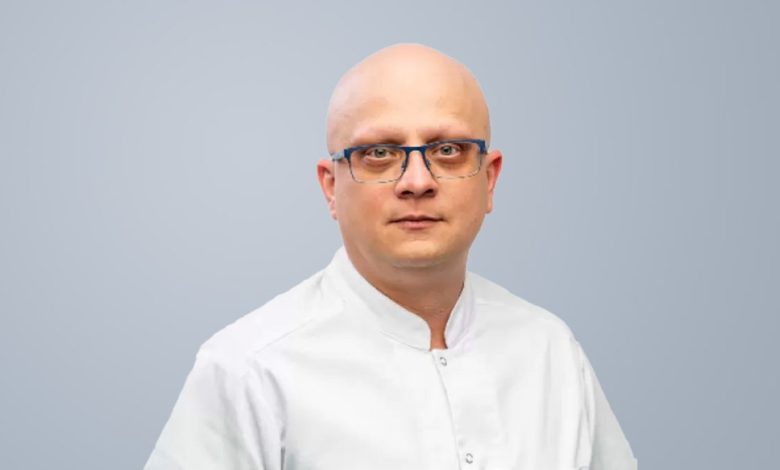
Dr. Alexandru Mihai Ciucă, primary ENT doctor within the Medlife Floreasca Hyperclinic, confessed that one of the biggest challenges in the ENT practice is the self -medication: “Patients tend to administer incorrect or excessive treatments, often under the influence of information in the online environment. It has led to an exaggerated consumption of antibiotics, with adverse consequences,” said Dr. Ciuca.
Anatomy attracted Dr. Alexandru Mihai Ciuca since childhood.
“I have always been fascinated by anatomy, as well as the way the human body works. Being a child, I was spending hours studying anatomy, especially since I had no access to many ways to spend free time, so the books remained the best source of entertainment.”said the doctor.
Choosing the ENT specialization came naturally due to the diversity of pathology: “I chose ENT due to the flexibility of this specialty, which allows it to practice both in the hospital environment and in the cabinet, where a good part of the ENT pathology can be addressed and solved. Last but not least, the heterogeneity of patients is a feature of this specialty, approaching all age categories,” said Dr. Alexandru Ciucă.
The doctor does not regret the choice made, puts a lot of passion in his work and never forgets that in front of him is a man, not just a patient, so he manifests his empathy and tries to apply as well and better what he knows and learned over time.
Rhinites and rhinosinusitis are among the most common infectious-inflammatory diseases of the upper respiratory tract. Dr. Ciuca argues that within the Medlife Floreasca Hyperclinic he meets very often with the rhinosinus pathology. “This pathology holds the majority share of the cases we see and treat. From the daily practice, I find that there is an increase in cases of rhinosinusal damage in recent years, especially in the context of the Covid-19 pandemic, which, on the one hand, has directly generated a more intense and longer impairment of the rhinosinus. It has in turn generated an increase in rhinitis or even rhinosinus. emphasized the doctor.
According to the specialist, climate change, with sudden temperature variations from day to night or from day to day, can be involved in such changes. And the allergic rhinitis, also called hay fever, are often reactivated in certain seasons: spring, summer and/ or early autumn and cause symptoms such as sneezing, clogged nose, nose, tear and itching in the nose, eyes or sky sky.
Allergic rhinitis vs. non-allergic rhinitis
Allergic rhinitis is triggered by external factors such as dust, pollen or mold. Unlike, non-allergic rhinitis can have multiple causes, from viral to pollution or smoking infections. Almost 1 in 3 adults in the US and more than 1 in 4 children in the US reported that they had a seasonal allergy, eczema or food allergies in 2021, according to the data of the National Center for Health Statistics.
“If the symptoms appear seasonally and improve with anti -allergic treatment, the patient should suspect an allergic rhinitis and consult a specialist, “said the doctor, explaining that some allergic rhinitis can be seasonal (eg, allergic rhinitis with sensitization to ambrosia → late summer, early autumn or gray pollen → May – June).
Non allergic rhinitis represent acute or chronic inflammation of the nose mucosa, without a specific trigger as in the allergic ones. The most common of them are of viral etiology, which come with other symptoms (fever, once, curb) and most of the time only symptomatic medication are spontaneously remitted, but there are other causes (drug abuse), toxic (to certain professional categories), smoking, pollution, task, etc. They do not have an intermittent symptomatology with sudden triggering when contact with various factors, nor are they remitted with anti -allergic treatment, such as allergic rhinitis.
“Some patients are known with other especially drug allergies, or with asthma, but in most cases, they are for the first time for the ENT for a persistent cold, which does not improve with symptomatic self -medication,” said Dr. Ciuca.
There is also a special form of allergic rhinitis, called local allergic rhinitis, in which the symptomatology is completely suggestive for an allergic rhinitis, instead all tests are negative. Also, allergic rhinitis can evolve into a chronic rhinosinusitis form, so -called rhinosinusitis with nasal polyposis, which is why it is very important periodic endoscopic monitoring of patients known to allergic rhinitis.
Sinusitis: acute vs. CHRONIC
Another condition often present in the offices of ENT doctors is sinusitis – whether acute or chronic. Acute sinusitis is defined as an inflammation of infectious, viral or bacterial etiology of paranasal sinuses, which lasts maximum 4 weeks. “Most often we discuss the acute catarrhal sinusitis, of viral etiology (so -called common guturai), which manifests through aqueous rhinorrhea, sneezing, nasal obstruction, headache and facial plenitude, fever and sometimes curbing. A small part of these acute sinusitis overinfects and transforms in the so -called sinus. Purulent, with yellow appearance, sometimes green or brown, the pain in the facial level is stronger as well as nasal obstruction ”, explained Dr. Alexandru Ciuca.
In the case of catarrhal sinusitis, treatment, symptomatic and local nasal (lavage of nasal pits and the use of a nasopharyngeal disobstruct) are sufficient in most cases. Antibiotics are recommended only in suppurated cases. On the other hand, chronic sinusitis lasts over 12 weeks, being an inflammatory process of paranasal sinuses. “Most often, chronic sinusitis continues an acute episode of a sinusitis, but it may have other causes (allergic rhinitis, dental causes, work, pollution, etc.). A special form of chronic rhinosinusitis is chronic rhinosinusitis with nasal polyposis, in which the mucosa that cover the nasal pins and the sinuses, gelatinous and which is manifested initially by hyposmia/ anosmia (decrease/ loss of smell) and later nasal obstruction that can evolve to complete. “said the doctor.
“Unfortunately, many patients use self-medication, which in most cases is either insufficient or wrongly applied, especially in terms of antibiotic consumption, many patients self-administered in viral catarrhal rhinosinusitis, without any real benefit, but with negative consequences regarding the resistance to antibiotics”, ” The ENT doctor drew attention. Sometimes, when the symptoms persist or worsen despite a correct treatment, surgery is required. “Transnary endoscopic techniques are effective, offering a faster recovery than classical methods, “said the doctor.
Also, surgical treatment is also indicated when a complication of acute sinusitis, complications that can be severe and can sometimes end the patient in danger.
Attention to antibiotics!
As for the treatment of these conditions, the doctor stated that he observes “An increase in complicated or resistant cases, due to defective or insufficient self -medication.”
In Romania, the year 2021 was a missed chance to reduce the consumption of antibiotics, as shown by the 2022 Inspire about “antibiotic consumption, microbial resistance and infections associated with medical assistance”.
Although in the years 2020-2021 the consumption of antibiotics decreased by 1.2% compared to 2019, this situation can be considered a missed chance of a much more substantial reduction, as happened in almost all EU/ EEA states (the average of the decrease at European level being 17.8%). In 2022 the consumption of antibiotics increased significantly compared to the previous years, a phenomenon of European states; In Romania, the volume of consumption was 11.6% higher than that of the last prepandemic year, 2019. Dr. Alexandru Ciuca stated that “The very well -known exaggerated consumption of antibiotics fortunately has been tempered in Romania through the legislative framework of 2024.”
The correct and effective treatment of rhinosinusitis is very important. In the absence of it, various remote complications can occur, such as pharyngitis, otitis, laryngites, bronchitis, tracheobronchitis and even bonsic asthma, pathologies that can be triggered or exacerbated by a rhinosinusal pathology. “In daily practice we see many patients who are presented for a sore throat, hoarseness or otalgia without an obvious local cause; or for drag cough, in which the internist or pneumologist does not find a specific local cause”, a said the doctor.
Nose hygiene, another challenge
Another challenge with which ENT doctors meet in practice is the patient's associated diseases. “We treat patients and not diseases, there are cases in which we need to adjust doses, to certain drugs to add others, to treat without certain substances, which patients cannot administer, there are also surgical cases that cannot be intervened due to anesthetic risk and then we must approach the case specific to that patient,” said Dr. Ciuca.
Another important aspect is the nose hygiene. “Many patients tell us in the clinic how they use saline solutions daily in the absence of a rhinosinus pathology. Personal, I recommend the lavage with saline only in pathological situations, with secretions, which must be constantly removed. I do not recommend the use of saline daily, in the absence of a pathology. Very rarely I recommend the lavage daily, to certain categories, in particular, in particular, in particular, To breathe, the physiology and local immunity ensuring its health! ”, Dr. Alexandru Ciuca reported.
Sources:
https://insp.gov.ro/download/consum-de-antibiotice-resistanta-microbiana-si-infectii-asociatei-asistentei-in-romania-2022/
https://acaai.org/allergies/allergies-101/facts-stats/