The key concept of the Defense Strategy, “an insufficiently defined Romanian invention”. Specialist: “The psychosis of war dominates, not the psychology of defense”

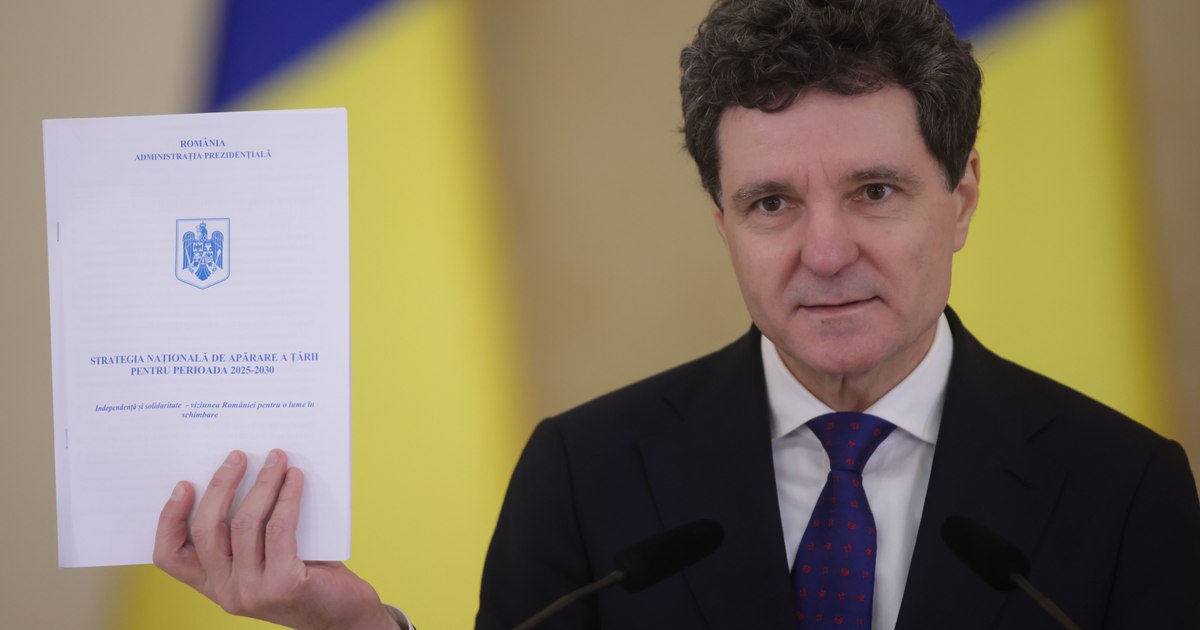
The key concept of the National Defense Strategy – solidary independence – is an insufficiently well-defined Romanian idea, which does not take from the example of model states, such as Poland, says General (r) Virgil Bălăceanu, former representative of Romania at the NATO Brussels Command.
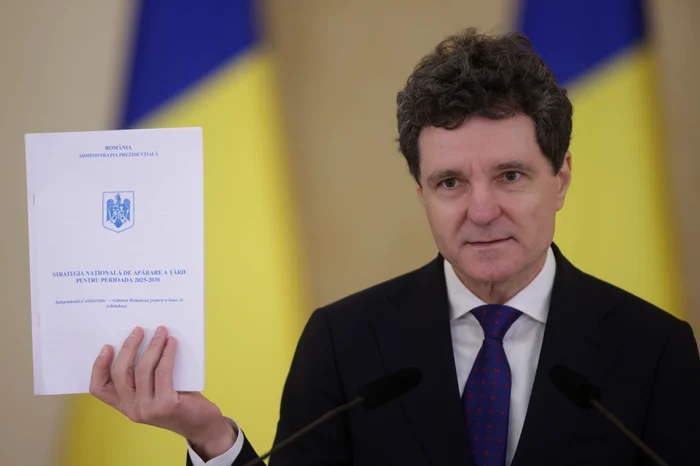
The National Strategy for the Defense of the Country was presented by President Dan. PHOTO: Inquam Photos
The key concept of the National Defense Strategy 2025–2030 – “solidary independence” – is defined as a strategic principle that combines Romania's sovereignty with commitments and loyal cooperation towards allies and partners.
According to the document and the explanations of President Nicușor Dan, Romania wants to pursue its “own national interests with responsibility and maturity” — that is, to have the ability to decide and act according to its interests, not only under the influence of other actors. At the same time, Romania manifests itself “in full solidarity” with its allies — being a loyal partner in NATO and the EU and capitalizing on the experience and support that these alliances offer.
The strategy states that these two dimensions (“independence” and “solidarity”) are not contradictory, but mutually reinforcing: Romania's independence does not exclude loyalty and solidarity with partners is more credible if Romania is a strong and autonomous actor.
In addition, this formulation responds to a maturation of Romania: the Romanian state has accumulated economic and diplomatic resources, experience in defense and security institutions, so that it can be a robust actor, and cooperation with others is not from a position of subordination.
The concept also reflects the relationship with the citizens: the document emphasizes that Romanians must perceive the state as worthy of being defended — if the institutions are corrupt or unjust, the bond of solidarity could weaken.
In short, “solidary independence” is Romania's vision of being a sovereign state, capable of deciding its own course, but responsible and loyal within the international community.
General (retd) Dr. Virgil Bălăceanu, who represented Romania at the NATO Command in Brussels, honorary president of AORR, analyzed for “Adevărul” how this concept of “solidary independence” was presented, one that he did not encounter in the strategies of other countries.
“Solidarity independence, a Romanian invention”
The truth: The National Defense Strategy was submitted for public debate the other day. What do you think could be improved or improved on it?
I think that first of all the key concept of the strategy, that solidarity independence, must be expressed, written in a way that everyone can understand.
Ultimately, we would talk about the principles of the doctrine of territorial defense in the context of collective defense. Because we are talking about the country's Defense Strategy, as such this solidary independence is an abstract concept. It's not for everyone, not even for security insiders, let alone the general public. We should be more explicit from this point of view and speak out. Why? Because, on the one hand, it mentions solidary independence without being defined. It is such a new concept that it should be defined.
Is it new and international? Is it a Romanian “invention”?
Yes, yes, I have never heard of other states having this concept of solidary independence. I suppose that other states are talking, as I mentioned, of territorial defense, of a concept, let's call it, of total defense and other forms whereby the defense effort is of society, focusing only on the attributions of the force institutions, primarily the Ministry of Defense. If this were to happen, it would be a step forward because a doctrine of territorial defense in the context of collective defense is an extremely complex conceptual, legislative and action process. We could also start from the experience of other states that are often cited.
For example, Finland is often cited. We don't necessarily have to go with the idea of compulsory military service, because the issue of total defense for the Finns is directly related to compulsory military service. We can follow the example of the Poles. The Poles apply the concept of territorial defense. The Poles, in addition to established commands, ground forces, air forces, naval forces, special operations forces, have a command and an independent category, territorial forces. It applies principles we know, on a voluntary basis, to defense. They propose the training of 400,000 citizens. They enter the voluntary reserve on a voluntary basis and they have over 30,000 voluntary reservists, they want to reach 50,000. In each voivodship they have one territorial brigade, in Warsaw – two. Their territorial brigade in the area where NATO battle group Poland, led by the United States, participates alongside the NATO battle group in all exercises.
I give another example that comes from ancient times in the case of Poland. In the national security strategy, as they called it, since 2014, after the invasion of Crimea, they specified that the special operations forces together with the territorial forces must be able to carry out specific missions. What type of missions can highly skilled special operations forces, together with territorial forces who have minimal military qualification, but are from the area, who know their area very well? Certainly, it is about guerrilla, insurgency missions. Here, Poland has taken some steps from this point of view. Why don't we follow such an example? To me the question is rhetorical. Even the National Defense Strategy that brings this key concept does not clarify us. Even if, says the strategy, our experience is remarkable as a member of NATO and the European Union and based on this experience we can have in certain situations and independent actions. But more than that is not said.
And then the key concept remains somewhere in the air. He doesn't have to stay in the air.
Related to this key concept, “solidary independence”, can it not simply mean the need to hold out on our own until NATO relief forces arrive?
In essence, such a concept that you are talking about cannot be other than the concept of “territorial defense” which says: I have a well-established territorial defense, so that I can resist with my own defense forces, in the defense forces we include, for example, the forces of the Ministry of the Interior as a whole, the operative structures of the SRI, etc. – which should be integrated into a common concept.
The concept of territorial defense essentially says “I have the ability and I have the capabilities to defend the territory of my country with my own resources, at least at a first stage or in situations of uncertainties and erroneous geopolitical decisions, that I cannot say otherwise now. And I said territorial defense in the context of collective defense. I do not exclude it. But I base it on territorial defense which essentially means preparing the economy, the territory and the population for defense.
The Strategy speaks of the preparation of the population, the economy and the territory for defense, but without explaining much and without a connection with this key concept “solidary independence.”
“It's not a defense strategy, it's a mini-country project”
In the last National Defense Strategy, what key concept was at the center?
The other strategy expired last year. We, for a year, did not have a Strategy for the defense of the country. It was a matter that was overlooked. Now we have a Strategy for the defense of the country, it has advantages over the old strategy which was also for the defense of the country, because there we were hesitant to say who the main possible adversary is, where the main threat is coming from. I was saying “some state actors” and so on. It is now clear from the strategy that the main threat comes from the Russian Federation. It has a good strategy development regarding the directions of revitalization and strengthening of the defense industry. He talks about shortcomings and directions of action regarding civil protection, but unfortunately nothing appears on the defense component, on the forces for defense component, on the component related to new concepts, defense doctrines, on the component related to the development of the force structure, as well as political direction.
Normally, the country's Defense Strategy was supposed to be based on the strategic defense analysis. We do not know if the General Staff of Defense submitted the strategic defense analysis, which has a public part and a classified, secret part. And if in the strategic defense analysis, taking into account the threats, the perspective of these threats, it is considered necessary for the Romanian army to increase from 90,000, the figure we took into account, even if at the present time we are below this figure, to 120,000 or 150,000, the country's defense strategy should have stated the need for the medium or long term structure of the forces of the Romanian army to know an increase, a consolidation without giving the technical details that the White Paper of the government and the military strategy should bring afterwards.
Such referrals do not appear because, I repeat, the defense chapter is moved to “and others”. I think that not necessarily an analyst, not necessarily a political scientist, not necessarily an investigative journalist, if he writes down the direct references to the defense issue, without taking into account the references to the defense industry, he cannot write down more than one page. Of course, the defense industry is included in the preparation of the economy, it is the substance of the preparation of the economy for defense, but there is no mention of the preparation of the population. There is no talk of, let's take an example, the way of educating the young generation through voluntary pre-military training. It is an old provision in the law on the preparation of the population for defense and it is recorded as an amendment in the new law on the preparation of the population for defense, consistent support from the Ministry of Defense, with free accommodation, feeding, training, medical assistance, but the country's defense strategy does not speak of such a component, because we are not even prepared to apply such a provision, being still subject to the psychosis of war and not to the psychology of defense.
“Fear of Amplifying War Psychosis”
What other comments do you have about the Strategy?
Also in the strategy there is extremely little talk about Defense. This chapter of the Strategy is extremely underdeveloped, it is practically not a strategy for the defense of the country, it is a strategy for the security of the citizen and society, it is rather a political program of the president in the form of a mini-country project because otherwise Defense would find its rightful place. The defense is expressed in a few lines that do not take up more than one page. And the expression here suffers. It says in article 89 of chapter 4.2, in the paragraph related to defense, public order, national security, that there are three directions for defense: strengthening the defense capacity to fulfill constitutional duties and, further, to protect national values and interest, including through the development of the national defense industry. What does this strengthening of defense capacity mean for the fulfillment of constitutional duties? What are these debts? I suspect that it was intended to be written, but for fear of amplifying the psychosis of war so present in Romania, the authors did not write “consolidation of the defense capacity for the fulfillment of the constitutional duty of every citizen to defend the homeland. I suspect that this is what they are referring to. But they did not write so as not to deviate from the idea that it is a strategy that prepares Romania to enter the war.