2025-11-21 14:32
publication
2025-11-21 14:32
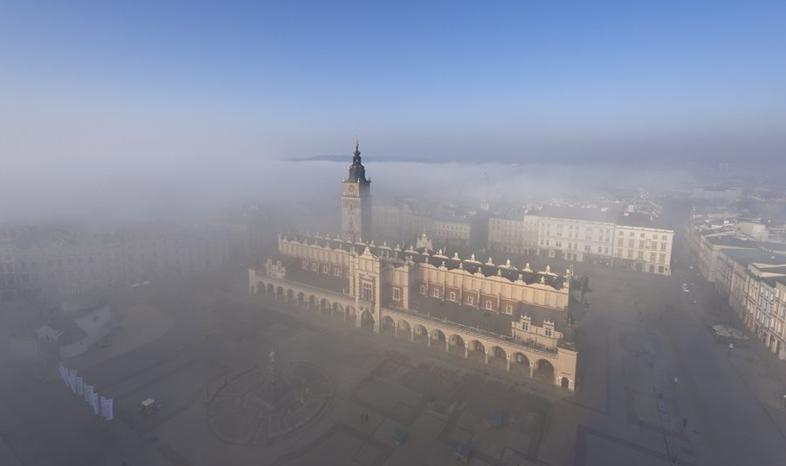
The European Commission announced on Friday that it had referred Poland to the Court of Justice of the EU for exceeding the level of nitrogen dioxide (NO2) specified in the Air Quality Directive. According to the European Commission, NO2 levels have been too high in the Kraków and Upper Silesia agglomerations for over a dozen years.
The complaint to the CJEU is the last step of the EC in the procedure for violation of EU law, which was launched in 2016. If the CJEU issues a judgment unfavorable for Poland, it may involve financial penalties.
“Persistent violation of norms” for 15 years
As the Commission emphasized in its communication, despite many years of exceeding the permitted level of NO2 in the air, Poland has not implemented solutions that would shorten the period of exceedances. Meanwhile – as the EC reminded – if the limit values specified in the Air Quality Directive are exceeded, Member States must adopt and implement measures aimed at shortening the period of exceedance.
The EC noted that in the Krakow agglomeration and the Upper Silesian agglomeration, NO2 levels exceeded the permissible values for 15 and 14 years, respectively. – Despite this persistent and systematic violation of standards, Poland did not take appropriate action – she said.
Delayed Clean Transport Zones
She added that the air protection plans for both agglomerations provide that compliance of the NO2 level with EU regulations was to be achieved by 2026, 16 years after the entry into force of the relevant limit values. – However, it is still uncertain whether this target will be achieved, as the compliance gap of 6-8 micrograms per cubic meter above the permissible value is significant, the EC emphasized.
The solution was to be the introduction of low emission zones. However, the EC noted that the necessary changes to the law were adopted only at the end of 2024 for cities where NO2 levels are exceeded.
The Commission also assessed that the establishment of low emission zones is also significantly delayed. In the Krakow agglomeration this will take place only on January 1, 2026, and in the Upper Silesian agglomeration there are currently no plans to create it at all. “This situation is further exacerbated by the shortcomings of other air pollution control measures (such as their overly broad scope or lack of clearly defined financing),” the release reads.
The deadly effect of NO2 on health
Long-term exposure to excessive concentration of NO2 in the air may lead to bronchial asthma, chronic obstructive pulmonary disease, cardiovascular diseases, as well as cancer, especially lung and breast cancer. According to the SmogLab website, in Poland the number of deaths attributed to long-term exposure to NO2 is estimated at 1.6 thousand. annually.
On Friday, the EC also filed a complaint against Bulgaria, Lithuania, Portugal and Sweden in connection with non-compliance with the provisions of the directive on the reduction of national emissions of certain air pollutants. Bulgaria, Portugal and Sweden have failed to meet their commitments to reduce ammonia (NH3) emissions, and Lithuania has failed to meet its commitments to reduce emissions of nitrogen oxides (NOx) and non-methane volatile organic compounds (NMVOCs).
Moreover, the Commission decided to launch a procedure for infringement of EU law against Poland due to incorrect transposition of the obligation to periodically review water abstraction imposed on member states by the Water Directive.
From Brussels Magdalena Cedro (PAP)
mce/ akl/ lm/