Nvidia's sales in the fourth quarter of the fiscal year, which runs through January, will be about $65 billion. – the chipmaker said in a statement issued on Wednesday, November 19. Analysts estimated the average value at USD 62 billion, and some forecasts even reached USD 75 billion.
Forecasts indicate that Demand for Nvidia's AI accelerators, expensive and efficient chips used to develop AI models, remains high. Nvidia is struggling with growing concerns that uncontrolled spending on such equipment will decline.
Nvidia shares gained almost 6%. in over-the-counter quotations after the publication of the report. This year, the moment to the close of Wednesday's session increased by 39 percent.
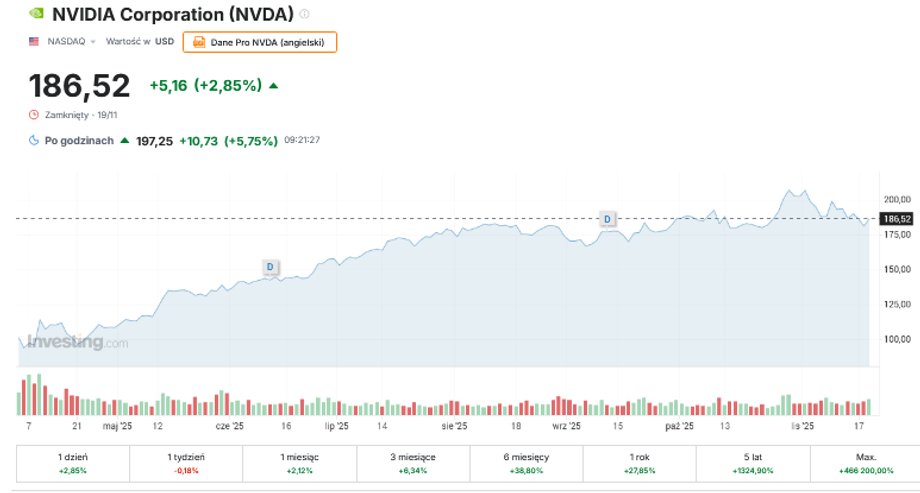
Nvidia stock quotes
|
Investing.com
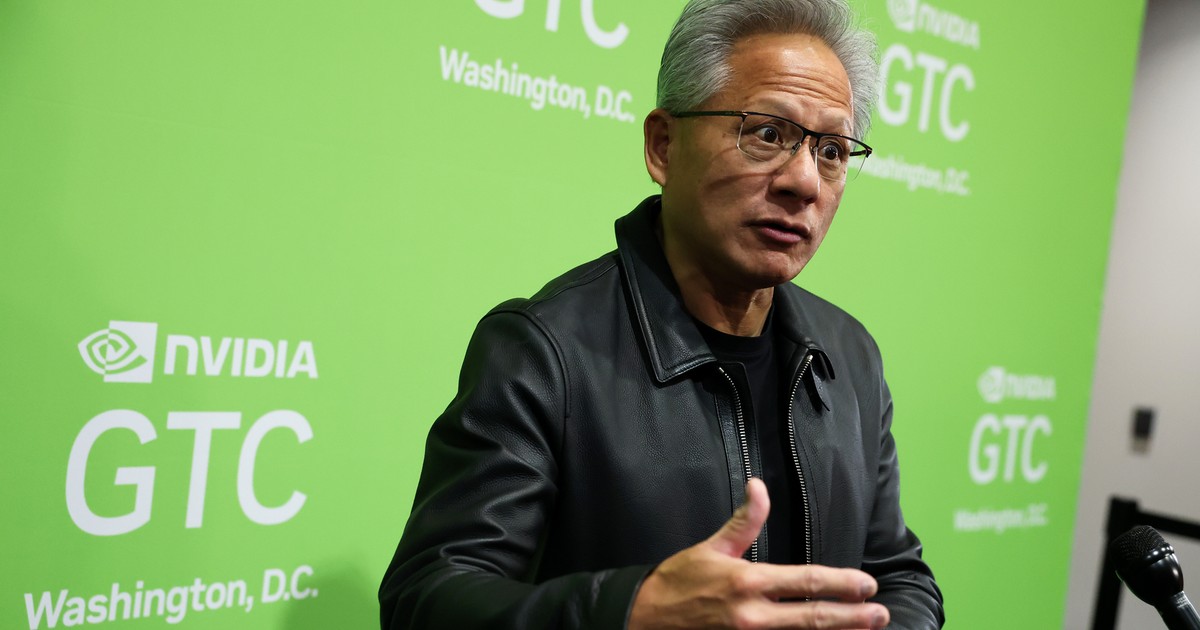
CEO Jensen Huang downplayed concerns about a speculative bubble in the artificial intelligence market and said last month that the company would achieve revenue of more than $500 billion in the next few quarters. He added that owners of large data centers will continue to invest in new equipment as artificial intelligence begins to bear fruit, writes Bloomberg.
Regardless of how the latest quarter compares to forecasts, it represents impressive growth for the company. Sales will increase approximately tenfold compared to the same period just three years ago. Nvidia is on track to achieve higher annual net income than its two long-time rivals, Intel and Advanced Micro Devices (AMD).
Where is the ceiling?
However, Nvidia's expansion has encountered difficulties. US restrictions on the supply of advanced chips to China have largely cut off Nvidia from a huge market for its products. President Huang lobbied Washington to repeal these restrictions, arguing that they were contrary to the national security they were intended to serve.
Some investors have also expressed concerns about the structure of the megadeals Nvidia has struck with customers. These deals include investments in startups such as OpenAI and Anthropic PBC, which raises the question of whether these agreements generate artificial demand for computers.
Earlier this week, Nvidia and its client Microsoft announced their intention to invest $15 billion. in Anthropic. The startup also committed to purchasing computing power in Microsoft's Azure cloud service worth $30 billion. and will work with Nvidia engineers to refine chips and artificial intelligence models.
Meanwhile, some of Nvidia's competitors have become more optimistic that they will finally be able to challenge the company's dominance in the AI accelerator market. Earlier this month AMD has forecast acceleration of growth in the AI systems segment and determined the prospects for future products.
AMD, Broadcom and Qualcomm announced cooperation with large users of Nvidia chips. Data center operators are increasingly choosing to use their own designs, which would reduce their dependence on Nvidia suppliers.
Nvidia convinces governments and corporations
President Huang also aims to spread the use of artificial intelligence across more of the global economy. The company's president set off on a journey around the world to convince government institutions and corporations to implement his technology.
Founded in 1993, Nvidia was a pioneer in the market of graphics chips used to create realistic images in computer games. AMD is its only significant competitor in this industry.
Nvidia built its dominance in artificial intelligence by using the same chip architecture to process massive amounts of data, which helped researchers create software that began to match and even resemble human capabilities.
The Santa Clara, California-based company still owns more than 90 percent. market share of AI accelerator systems. To strengthen its advantage, it added other products to its offering, including network solutions, software and other services.