The measures requested by Vladimir Putin in the field of artificial intelligence. “A matter of national sovereignty” for Russia


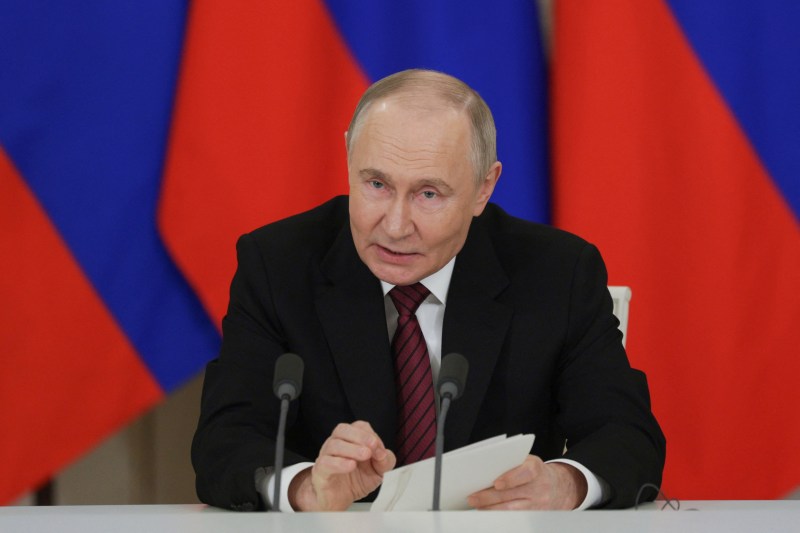
Vladimir Putin at the Kremlin on May 11. Photo: Gavriil GRIGOROV / AFP / Profimedia
President Vladimir Putin on Wednesday called for the creation of a national working group to coordinate Russia's work on domestic generative artificial intelligence models, which he considers vital to the country's sovereignty, Reuters reports.
The Russian leader said that large language models (LLM) have become a major tool in the spread of information and are capable of influencing the opinions of entire nations. He added that dependence on LLMs designed in other countries is unacceptable for Russia.
“For Russia, it is a matter of national sovereignty, technology and values. Therefore, our country must have a comprehensive set of its own technologies and products in the field of generative artificial intelligence,” Vladimir Putin said at AI Journey, Russia's most important event in the field of artificial intelligence (AI).
Putin said the task force should focus on developing data centers across the country and securing nearby energy sources such as small-scale nuclear power plants.
In Russia, which lags behind the United States and China in the field of AI, the main Russian companies in the sector, Sberbank and Yandex, have developed two LLMs, Gigachat and Yandex GPT.
Sberbank, which has evolved from a traditional bank into a technology company, announced a new version of Gigachat on Wednesday and showed Putin AI-based products ranging from humanoid robots to health-scanning ATMs.
Russia's president wants a national plan on AI
Putin said that by 2030 the contributions of AI-based technologies to Russia's gross domestic product should exceed 11 trillion rubles ($136.57 billion). He called for the development of a national AI implementation plan in addition to the task force, and urged state institutions and companies to increasingly use AI.
By blocking imports of hardware, including microchips, Western sanctions have hindered Russian efforts to expand computing capacity and develop AI.