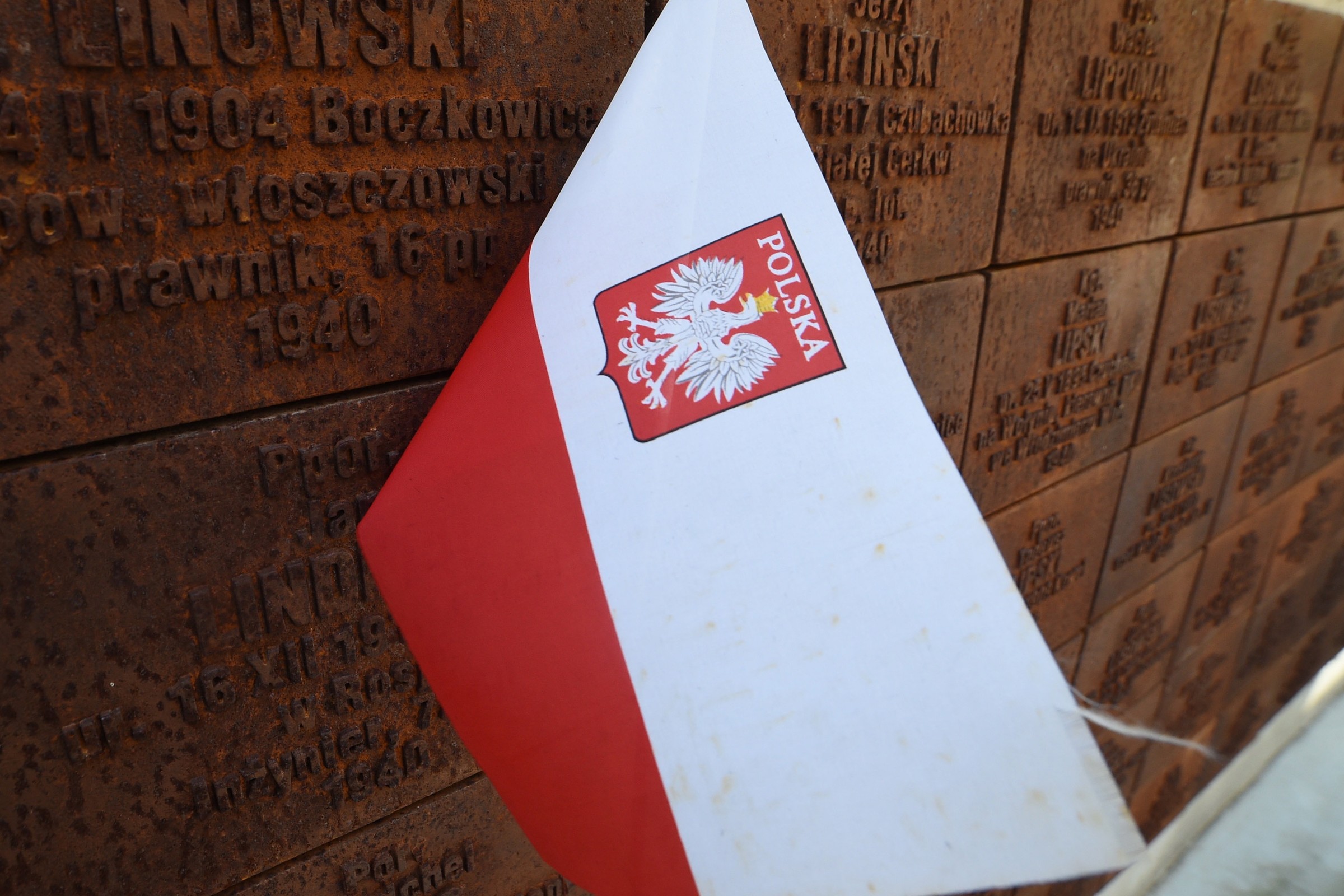
The dismantling order was issued by the Smolensk Oblast Prosecutor's Office, arguing that the bas-reliefs violate the regulations regarding cultural heritage objects and commemoration of the victory in the Great Patriotic War, as World War II is called in Russian official state communications.
The article continues below the video
What symbols disappeared from the Katyn cemetery?
Who issued the order to dismantle the bas-reliefs?
How many Polish soldiers are buried in the cemetery in Katyn?
How did the Institute of National Remembrance react to Russia's decision?
Bas-reliefs also disappeared in Miednoje
Valery Kuznetsov, vice-chairman of the Smolensk Oblast Duma, representing the Communist Party of the Russian Federation, appealed for the dismantling of the sculptures. This group invariably questions the responsibility of the USSR for the Katyn massacre.
In May 2025, similar reliefs were removed from monuments in Mednoye based on the decision of the Tver Oblast council, where there is also a cemetery for the victims of the Katyn massacre.
4,421 Polish soldiers murdered in 1940 by the NKVD are buried in the cemetery in Katyn. The total number of Polish citizens murdered at that time was 22,000, including 15,000. prisoners of war from camps in Kozielsk, Starobielsk and Ostashkov.
Position of the Institute of National Remembrance
The Institute of National Remembrance reacted to the Russians' decision. “According to the decision of the Russian prosecutor's office, Polish symbols: the Order of Virtuti Militari, with which Poland celebrated the victory over the Russians in 1792, and the Cross of the September Campaign, recalling the German-Soviet aggression of 1939, the first stage of World War II – violate the regulations in force in the Russian Federation regarding objects of cultural heritage and commemoration of the victory of the Soviet nation in the Great War Homeland,” we read in the statement.
“Contrary to the claims of the Russian authorities that these decorations are Russophobic in nature, they were created to commemorate specific historical events and the heroism of soldiers, and their meaning refers to the fight for Poland's independence, and not to contemporary or national prejudices,” the Institute emphasized.
“All war cemeteries where Red Army soldiers are buried are subject to protection by the Republic of Poland. Poland thus applies not only international agreements, but also the provisions of the Act of March 28, 1933 on war graves and cemeteries in force in the country. They explicitly state that graves and war cemeteries, regardless of the nationality and religion of the people buried there and regardless of the formations to which these people belonged, are to be cared for and provided with due care. respect,” concluded the Institute of National Remembrance.