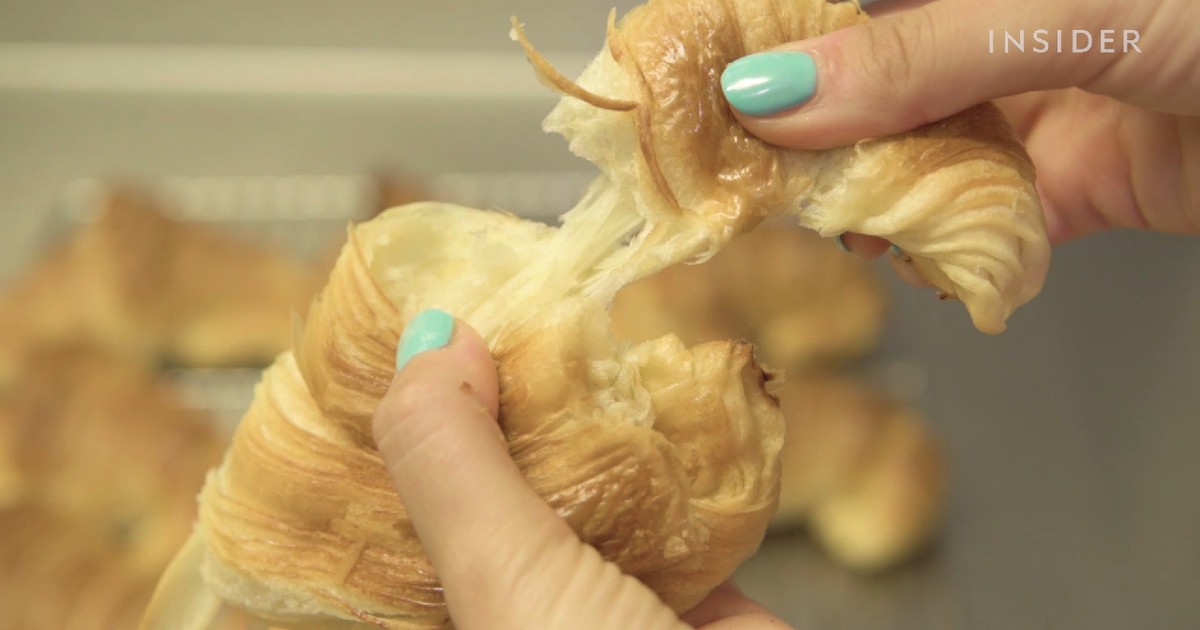
Tender layers, lots of butter and delicate crunch. All this makes a freshly baked croissant irresistible. It's a beautiful morning in Nice on the French Riviera and I can't imagine a better way to start the day than eating a croissant. Personally, I can't imagine anything more French than perfectly laminated dough and, if you know my materials well, butter. Lots of butter. Let's talk more about it.
I know we promised you butter and we'll get to that in a moment, but aren't you curious how croissants get their perfect flaky layers? Sit back, because it takes three days. At least that's what happens in real life. Fortunately, we can speed up the process here.
The first day is “cake day”. We need sugar, salt, water, yeast, leftover dough and flour.
We have two types of flour here. One is traditional French flour, which has no additives. The second one is gruau flour, i.e. wheat flour, and is supposed to make the dough more elastic and easier to knead.
– explains Frédéric Roy, baker at Boulangerie Roy La Captiole Frédéric.
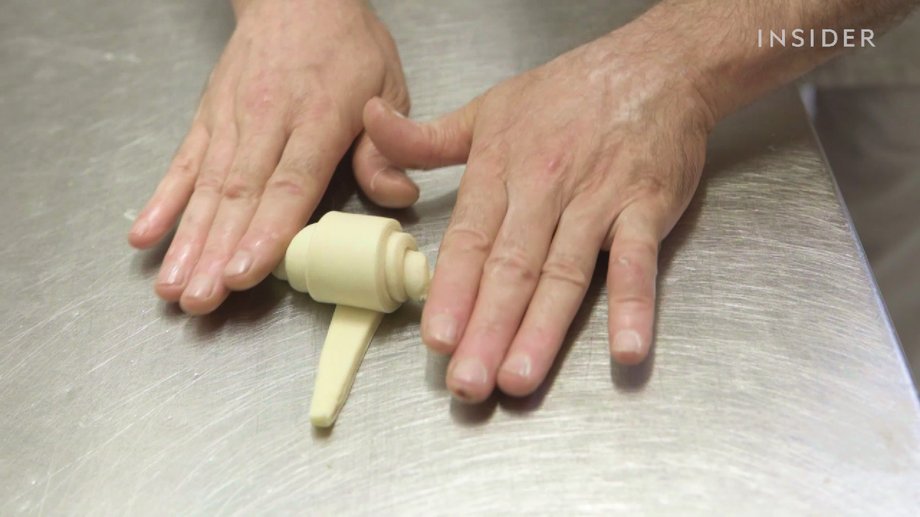
It takes three days to make the perfect croissant
|
Business Insider
Read more: This family business has survived 180 years. The secret to success lies in a simple recipe
What is the difference between croissant dough and other types?
— Croissant dough belongs to the family of fermented laminated doughs. On the one hand, this dough will have layers and add crispness to the product. On the other hand, our product will rise like bread, explains Frédéric.
This dough contains 8 kg of flour and is enough for approximately 240 croissants. And that's only a third of the daily production at Boulangerie Roy Le Capitole, where it bakes on the weekend over 1,000 croissants a day. Frédéric even supplies the most prestigious hotel in Nice: Negresco.
The dough is kneaded for 12 to 14 minutes, which is enough time for it to become elastic, but not to heat up and start the fermentation process too early. In baking terminology this is called fixing the gluten network. That's what Frédéric is showing me here: the dough doesn't deteriorate or stretch. After dividing into patons, which literally means “pieces of dough”, they are placed in the refrigerator and left until the next day.
Day two is “butter day”. Our favorite ingredient accounts for as much as 30%. whole, but the butter is not mixed with the dough. Both must be perfectly layered.
—A layer of butter, a layer of dough, a layer of butter. If the butter is too soft, it will mix with the dough. If the butter is too hard and the dough is too soft, the same thing will happen. So if we have dough and butter with a relatively hard consistency, nothing will mix and we will be able to maintain the layers as the work progresses, says the baker.
What is laminated dough?
Here's how lamination works. The layers are achieved by repeatedly folding the dough and butter. There are two ways to fold:
- In the single-fold technique, the dough is folded into thirds like an envelope and has three layers
- In the double fold technique, both ends meet in the middle and then the dough is folded again like a book and has four layers
The baker can choose any technique. Frédéric starts with a single fold, repeats it, and then does a double fold.
– As you saw, I folded the cake with butter in the middle, making three layers. Then I folded them into thirds again, making nine layers. Dough, butter and so on. So we have nine layers. Now I've added two. So we have another four layers. Four times nine is 36. That's how many layers we have, Frédéric counts.
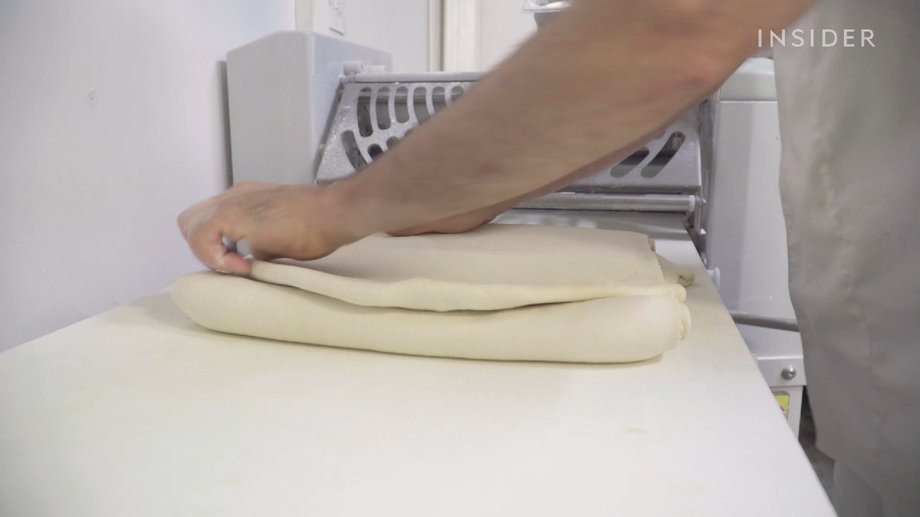
Croissant dough belongs to the family of fermented laminated doughs
|
Business Insider
— How many layers does a good croissant have? – asks the camera operator.
– Three or four. I first fold it twice and then fold it individually. Others fold three times at a time. I have a friend who double folds twice, so our methods differ. The fewer layers we make, the thicker the croissant layers will be. Personally, I like it when a croissant is easy to eat and its skin is not too hard. Its layers cannot be too thick. That's why I work this way, he explains.
During the lamination process, Frédéric puts the dough in the refrigerator for half an hour to keep it cold. Keeping the dough cold and hard is essential for what will happen next: cutting it into small triangles that will be our croissants.
Read more: Five tons of rice a day are cooked in this cauldron. Nobody leaves here hungry
The croissant dough must be of the right thickness
– If it was too thin, its layers and butter might break down. Both layers are 4.5 mm, says Frédéric.
– This allows you to stretch the dough without ruining it? – I'm asking.
– Exactly.
-You don't use molds?
— My eyes are my mold.
— Do you know why croissants are crescent-shaped?
Austria was under attack by the Ottoman Empire. One baker was working at night and sounded the alarm, preventing an attack. To celebrate, Austrians will bake a croissant in the shape of a moon. It resembled the current shape of a croissant, but was not at all what we think of as a croissant today. It was the French who invented the laminated buttered dough that we now know as the croissant
– explains the baker.
– Only the shape remains. So you believe that croissants come from Austria. You have no problem admitting it on camera, I say.
– No, I don't.
— Is there a particular technique for wrapping a croissant?
— There are two techniques. You can wrap it like I do or like this. Only one thing matters: the end result. He is the most important, says Frédéric.
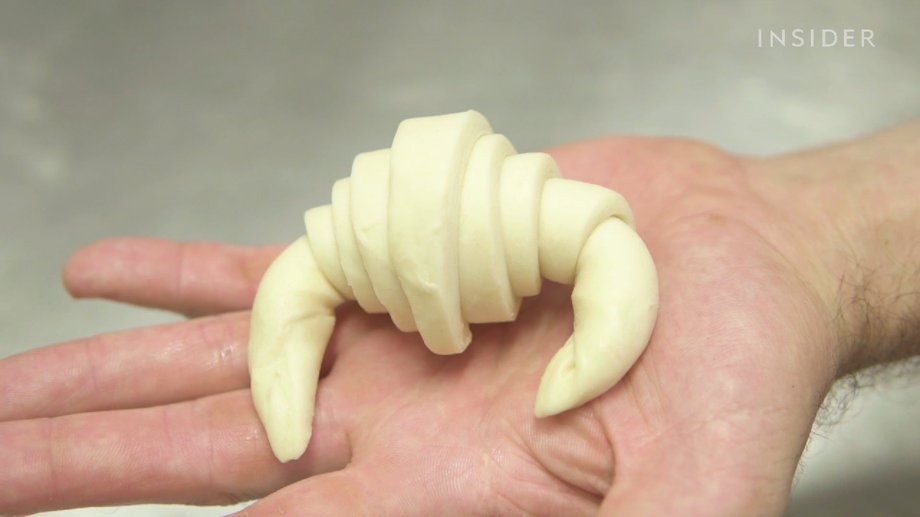
The croissant dough must be of the right thickness
|
Business Insider
You might think the croissants are ready to bake, but we have to wait another 15 hours for that to happen. Following Frédéric's process step by step made me truly appreciate how much time and energy goes into making the perfect product. Do you remember the tradition of baking baguettes? This type of baguette, according to French law, must be baked on site with simple ingredients. For the past four years, Frédéric has been campaigning for croissants to be given the same protection.
In France we have a law about bread. In the case of a bakery, the bread must be kneaded, formed and baked on site. There is no such law in the case of cake production. I called on the French Prime Minister to create something similar for traditional artisan croissants. Croissants are the French symbol of sweet pastries. If we had the same rights as in the case of baking baguettes, craftsmen would be appreciated and customers would be assured of quality. We need to be able to recognize real craftsmen and get people talking about them
says Frédéric.
This is day three of making our croissants. After baking, the croissants become three times larger.
– Now they can be baked. But before they go into the oven, let's apply the glaze. It consists of egg yolk and water, which will make the croissant more fragile and, above all, give it a golden crust. It also makes it shine, explains the baker.
The croissants rested in the warm temperature. We see some butter flowing out of them.
– It's melted a bit. We keep them at a temperature of 4.5 degrees Celsius for 10-11 hours, which then increases to 26 degrees Celsius. Yeast reacts to an increase in temperature. They eat sugar and produce carbon dioxide. They create small holes that we then see inside, whether in bread or croissants. It is a natural process resulting from fermentation. When yeast comes into play, time becomes a factor that affects quality, explains Frédéric.
“You're using a pizza peel,” I point out.
-It's a baker's spatula. The pizza peel is much larger. Used to place trays at the back of the stove. We can put four trays inside, he explains.
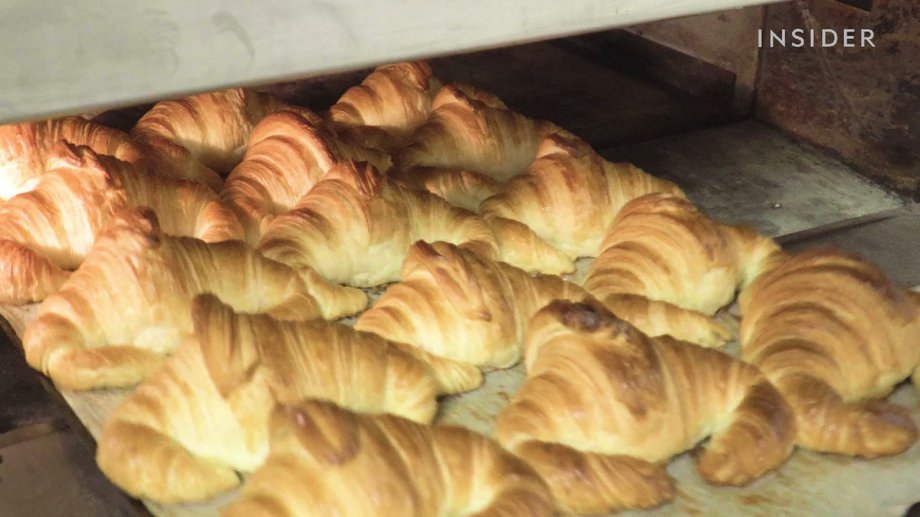
This bakery makes over 1,000 croissants a day
|
Business Insider
Read more: How the iconic Red Leicester is made. “Mold feeds on lard”
How many croissants fit on one tray?
– 15, so a total of 60 of them go inside – says the baker.
– What temperature do you set the stove to?
– 215 degrees C. The croissants will bake for approximately 15-17 minutes.
– So much longer than pizza.
— That's true, but the temperature in such a furnace is also higher.
— We are in Nice, which is close to Italy, so we have some similarities.
— Italians are our neighbors.
– They look beautiful.
— The croissant should be crunchy on the outside and soft on the inside. Listen. We managed to achieve good lamination and softness. It's crispy, tender and buttery, and customers love it. It's nice and yellow and has a lot of butter in it. I'm happy with it, Frédéric laughs.
— It's 9 a.m. but you haven't started your day by eating a croissant, just kidding.
— This batch is ready, so we need to start working on tomorrow's. Tomorrow's cakes need to be made today and allowed to rest for at least 15 hours before baking. This lack of time is, in my opinion, an advantage of craft bakers over industrial producers. Their baked goods will never compare to artisan baked goods in terms of quality. That's because we take the time to do them the right way. This time is the most important – the baker proudly admits.
Author: Claudia Romeo, journalist, Insider