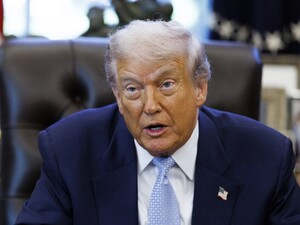
On November 17, the American president told reporters that he was aware of the “tough” bill, and he was “satisfied” with it.
According to the agency, Trump has fundamental conditions under which he will support the bill – to retain the sole right to apply it, and only the president will have the final word.
One of the authors of the document, US Congressional Senator from the Republican Party Lindsey Graham, said the day before that the initiative would allow the US President, at his discretion, to impose secondary sanctions and tariffs on countries that buy Russian oil and gas and thereby support the Russian war in Ukraine.
Context
March 9 on air Fox News Sunday Graham said that the Russian Federation will face “hellish” sanctions (sanction the hell out of them) if it does not stop the war in Ukraine. On May 1 he announced that A draft of “super-powerful” sanctions against the Russian Federation was submitted to the US Senate. Then, according to the congressman, 72 senators supported him, later their number increased to 85.
On May 18, in an interview with CBC News, US Secretary of State Marco Rubio said that in Washington presumably they will introduce new sanctions against the Russian Federationif peace is not achieved in Ukraine. In particular, Graham initiated 500 percent tariffs on imports from countries buying Russian energy. The head of the State Department noted that with the support of more than 80 votes, the US Senate will be able to introduce restrictions without the consent of the White House.
On October 22, the United States imposed sanctions against Rosneft and Lukoilas well as against their subsidiaries. After this, they were relaxed for a number of countries, including Hungary, Slovakia, Kazakhstan and others.
On November 12, Rubio said that The US has almost reached its limit in introducing new sanctions against the Russian Federation and are now working to ensure their compliance. “We hit their main oil companies – this is exactly what everyone demanded. Of course, it takes time for these sanctions to work and begin to be felt, but, frankly, I don’t know what else can be done. We have almost exhausted the list of things on which sanctions can be imposed in this direction,” he explained.