The author emphasizes, however, that in the current situation the key is to remain calm and avoid premature conclusions.
Read also: The salaries of Poles in Germany will go up sharply. This is Berlin's goal
“FAZ”: Sabotage on the Polish railway is a potential “act of war”
According to “FAZ” Identifying the perpetrators of sabotage and their principals will be an extremely difficult task for the Polish services. Veser notes that although there are many indications of a possible Russian trace, the authorities may have trouble presenting irrefutable evidence.
In his opinion, the lack of firm findings should encourage caution and the abandonment of hasty accusations that could further escalate tensions.
Russia will deny it, the West must remain calm
The commentator reminds that Moscow usually reacts in similar situations in a predictable way: it firmly denies it, accuses the West of anti-Russian hysteria and mocks the alleged weakness of its opponents. This type of narrative aims to discredit European countries and, at the same time, arouse a sense of threat in their societies.
Read also: The Germans have to wear boots. There is a compromise on service
Veser emphasizes that Russian propaganda has been trying to cause anxiety in EU countries since the beginning of its aggression against Ukraine NATO to weaken their determination to support Kiev.
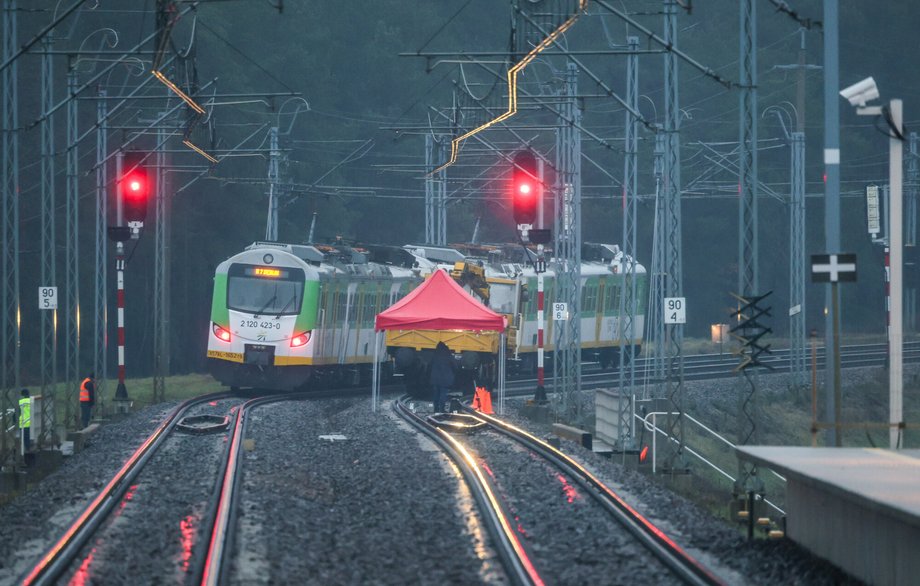
An act of sabotage took place in the town of Mika, said Prime Minister Donald Tusk
|
EastNews
Therefore – as the columnist writes – the reaction of Western countries must be balanced. Panic and violent declarations would play into the hands of the Kremlin, being part of its strategy of influencing public opinion. Veser appeals to Despite your anxiety, remain cautious and allow the services to conduct the investigation calmly. Only reliable findings can constitute the basis for possible political or military actions.
Railway sabotage of a different caliber than previous incidents
According to “FAZ” a potential attack on railway infrastructure in Poland is significantly different from the drone incidents reported in Germany, Denmark and Belgium in recent months. Those events – although disturbing – were incidental and it was difficult to clearly assess their authorship. In the case of sabotage on the key east-west railway route, this involves infrastructure of great strategic importance.
Veser also recalls Poland's previous accusations against Russia regarding the fire in a Warsaw shopping center. This incident, as he notes, however, it had no direct impact on the hostilities in Ukraine. Damage to the railway line leading to the Polish-Ukrainian border, however, is something completely different.
It is through this route that a significant part of the transport of equipment and supplies to the Ukrainian forces takes place. Its deliberate destruction could be interpreted as an attempt to interfere in Ukraine's defense efforts and an action aimed directly at a NATO member state.
“Such an attack would have a different quality – it would be an act of war” – Veser concludes. He also adds that the Kremlin's possible involvement would differ even from previous assassinations and operations observed in Germany or Great Britain. This time it would be about hitting the critical infrastructure of an ally, which could have serious consequences for the security of the entire Europe.