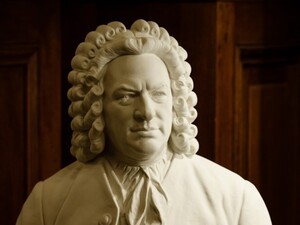
The researchers identified the two organ pieces as the composer's early works with “99.9% confidence,” archive director Peter Wollny said.
Deutsche Welle clarified that we are talking about the compositions “Chaconne in D Minor” and “Chaconne in G Minor”. They were found in Brussels (Belgium).
The works were performed for the first time 275 years after Bach's death in the Leipzig Church of St. Thomas, where the musician worked for many years. Thousands of fans around the world watched the premiere live. German Culture Minister Wolfram Weimer called the discovery “a high point for the world of music and a global sensation.”
The manuscripts were discovered back in the 1990s, but for a long time it was not possible to establish their authorship. Only last year Wollney discovered that the copies were made by Bach's little-known student Salomon Günter John, and traced them back to the composer's early career in Arnstadt, when he was 18 and serving as an organist.
Context
Johann Sebastian Bach (1685 – 1750) was an outstanding German composer of the Baroque era, known as a master of polyphony. His fugues and preludes on piano and organ inspired generations of musicians and composers, creating “incredible miracles” in music, DW wrote.