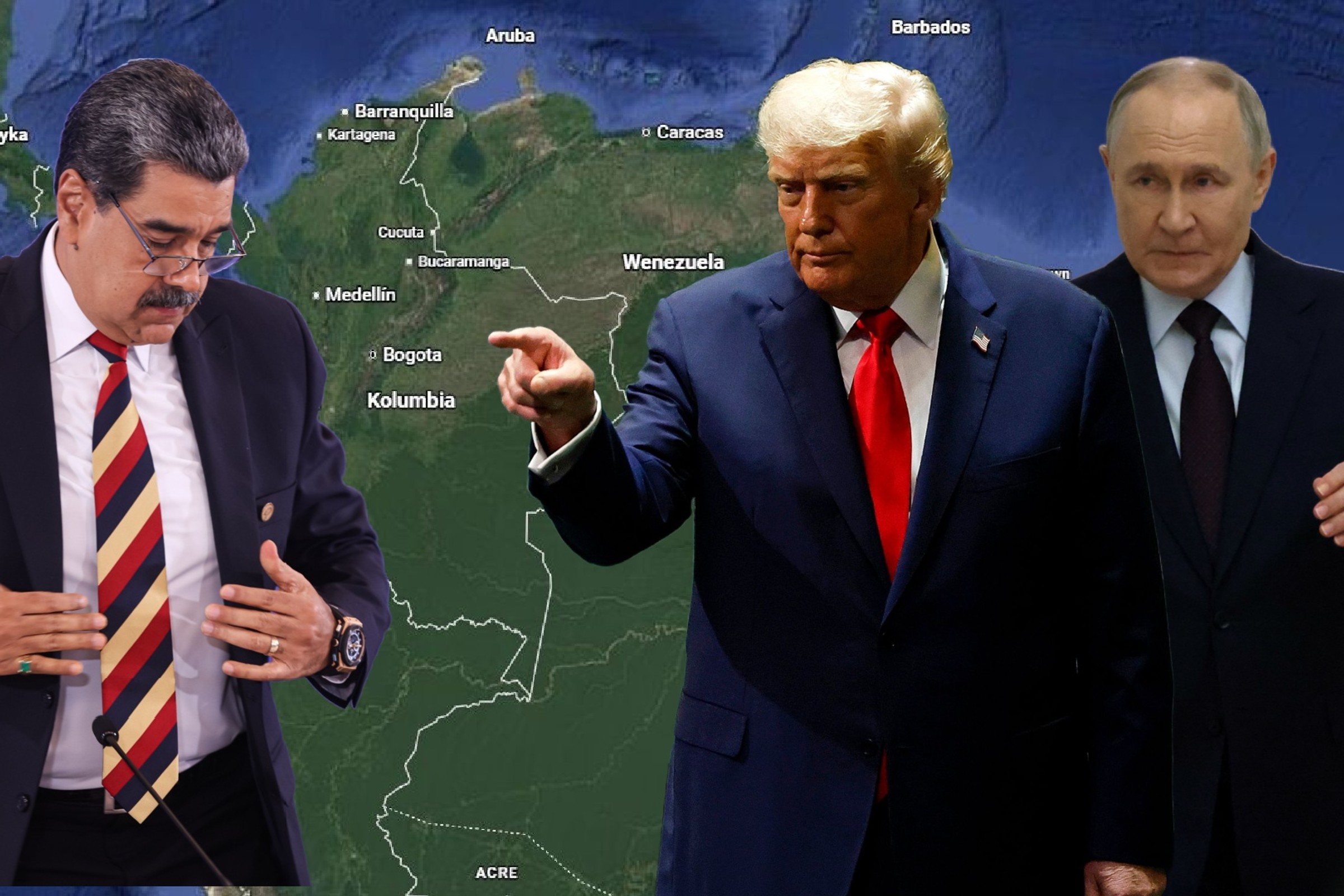
In October, Maduro appeared on television vowing that Venezuelans were ready to “defeat this overt [amerykański] conspiracy against the peace and stability of his country. However, this is just a good face for a bad game. Apparently, the dictator sent a letter to the President of Russia, Vladimir Putin, asking for missiles and help in repairing Russian fighter jets.
Former US officials and regional analysts interviewed by The Moscow Times journalists argue that reports about the letter reflect the difficult situation the Venezuelan leader finds himself in. Relying on Moscow in a possible confrontation with Washington is unlikely to bring success.
And if President Donald Trump actually intends to force Maduro to step down, a victory for the United States could cost Moscow the loss of a key ally in Latin America. And this is only the beginning of Putin's problems, which is why Moscow is already sounding the alarm.
If this one [sytuacja] would have an impact in some way [szerszy] influence, it would of course push Russia out [zachodniej] hemisphere
– says James Story, US ambassador to Venezuela in 2018-2023.
With the U.S. Navy's largest aircraft carrier being sent to the Caribbean, some observers consider regime change increasingly likely.
Russian Foreign Minister Sergei Lavrov warned this week that Washington's tactics “will not lead to anything good”. But analysts say the Kremlin, whose resources are strained by the Kremlin's war in Ukraine, has limited resources or willingness to intervene significantly.
The article continues below the video
“I don't think the relationship is that deep or that strategic,” Story says. “Russia is using the principle of economy of power in Venezuela,” he adds, using a term that refers to allocating the least amount of resources needed to achieve a specific military goal. — These are opportunistic relationships that in some way hinder the actions of the United States. They distract us from other issues, and the Kremlin can do this quite cheaply.
“Too Little, Too Late”
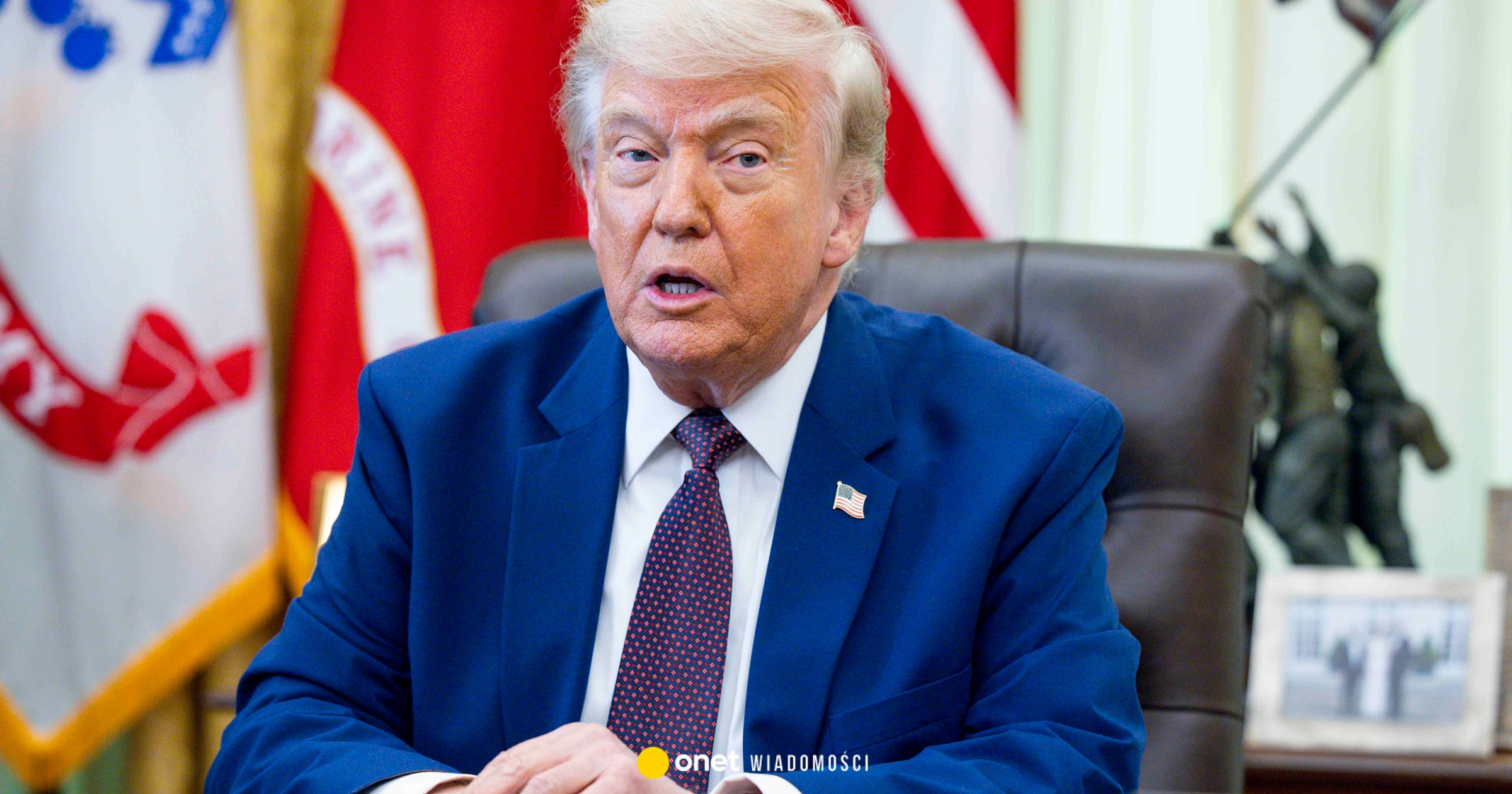
Since returning to office for a second term, Trump has gradually tightened the screws on Maduro and his environment. The Americans accuse him of facilitating the transport of drugs to the United States.
In August, U.S. forces began deploying warships, submarines and aircraft to the Caribbean.
The following month, U.S. forces began attacking boats suspected of drug smuggling. The tactic is intended to curb drug trafficking, according to U.S. officials, but has drawn criticism after over 70 people, most of them Venezuelans, died as a result of such attacks in the Caribbean and Pacific.
Some observers believe that Trump's real goal is regime change in Caracas. In a recent interview on “60 Minutes,” he seemed to confirm this. Asked if Maduro's days as president were numbered, Trump replied bluntly: “I would say yes. I think so, yes.”
The last serious challenge to Maduro's power was the situation in 2019, when representatives of the Venezuelan opposition questioned his re-election. U.S. officials then launched a “maximum pressure” campaign — including sanctions against the oil industry — aimed at weakening the government.
During this crisis Russia played a subtle role in strengthening Venezuela's defense by sending about 100 technical advisers to operate military equipment.
— Russians usually performed several tasks. They came and mainly repaired Sukhoi combat aircraft and combat helicopters, Story says. — Provided operational and maintenance support for surface-to-air missile batteries.
Until recently, there was no indication that Venezuela had again turned to Moscow for military assistance.
Then the letter appeared.
As she announced at the end of October this year. The Washington Post newspaper asked Putin for help in refurbishing Russian Sukhoi Su-30 fighters, repairing other equipment and purchasing 14 missile systems.
Just days earlier, a Russian cargo plane landed in Caracas, prompting speculation that help might be on the way.
If I were to write a dispatch on this topic, I would probably start with: “Too little, too late. Venezuela is trying to strengthen its relationship with Russia in a last desperate attempt to find friends and resources
– says Brian Naranjo, a former American diplomat.
Naranjo, who believes some kind of intervention by the Trump administration is possible, believes Maduro is “trying to increase political pressure on the Russians to either back down or take action.”
“It's not a tactic that's likely to work with the Russians,” Naranjo said, basing his assessment on his understanding of how the two countries negotiate.
Lavrov appeared to deny those reports this week, telling Russian media that Venezuelan authorities “have not asked us” for military support.
In a sense, however, this support already exists. This month, a Russian parliamentarian claimed that the Pantsir-S1 and Buk-M2E missile systems had recently been delivered to Venezuela, but this was not confirmed by The Moscow Times. Apart from Sukhoi fighters The Venezuelan army uses Russian S-300 long-range missile systems and, according to Maduro, Igla-S short-range missile systems.
The problem is that many of them may no longer work, according to a former U.S. official who spoke anonymously to The Moscow Times.
— Over the years, Venezuela has acquired [od Rosji] very advanced anti-aircraft systems, says the official. — It is not known what the condition of these systems is or how they were maintained.
Loss of reputation
When Russia sent advisers to Venezuela in 2019, their presence was a show of solidarity and could have complicated any U.S. considerations for military intervention at the time, explains Vladimir Rouvinski, director of the Politics and International Relations Laboratory at Icesi University in Cali, Colombia.
Today, Rouvinski sees parallels between Russia's plight in Venezuela and the recent loss of another key ally.
— The same thing happened, of course, with Assad in Syria, says The Moscow Times. — If Moscow cannot save the Maduro regime, it will be deja vu.
It is about overthrowing the government of Syrian President Bashar al-Assad in 2024. Like Maduro, Assad found an ally in Russia when he was rejected by the international community. Assad's overthrow has undermined Russia's image as a reliable defender of threatened partners
If Maduro falls and a new government comes to power, Russia's reputation will suffer againnotes Rouvinski.
The main risk at the moment is the collapse of what Moscow has been trying to build for many years in Latin America, namely its status as one of the centers of world power, capable of global protection
– he explains.
Due to Russia's war in Ukraine, which is straining its armed forces, The Kremlin no longer has the flexibility it once had to exert influence abroad. And while some form of aid for Venezuela remains a possibility, Rouvinski said it would likely be more symbolic than substantive.
— I don't think Russia is willing to go very far to protect Maduro's government, he emphasizes. — Russia is not prepared and is not able, realistically, to engage to this extent.
I’m Ashley Davis as an editor, I’m committed to upholding the highest standards of integrity and accuracy in every piece we publish. My work is driven by curiosity, a passion for truth, and a belief that journalism plays a crucial role in shaping public discourse. I strive to tell stories that not only inform but also inspire action and conversation.