Turnaround in Europe. Germany is making a revolution. “The Most Important Thing”


As Germany strives to gain a dominant military position in Europe, the political balance is changing. In France, there is a fight to remain relevant. In Poland, German armament brings up old ghosts and creates a feeling that The Berlin-Warsaw alliance may be the most effective way to contain Russia.
“Everywhere I go, from the Baltic countries to Asia, people are asking Germany to take more responsibility,” says Christoph Schmid, a German social democratic member of the Bundestag's defense committee. —Germany is expected to finally take action and align its economic power with its defense power.
Germany, which has the largest army in Europe, equipped with the most modern tanks, missiles and planes, is far away They differ from the chaotic and ridiculed Bundeswehr for its low morale and outdated equipment. With this military power comes political and economic power – and Europe will have to adapt to Berlin's dominant position.
By 2029, Germany is to spend EUR 153 billion (PLN 647 billion) annually on defense. This amounts to approximately 3.5 percent. GDP and that's it the most ambitious military expansion country since unification. For comparison, France plans to reach approximately EUR 80 billion (PLN 338 billion) by 2030.
Poland intends to spend PLN 186 billion (EUR 44 billion) on defense this year, which is 4.7 percent. GDP – the highest level in NATO – and plans to create one of the largest and best-equipped armies in Europe.
A breakthrough in Europe
The fiscal situation is also changing. While Paris struggles with a debt of more than 110 percent. GDP and a deficit above 5 percent, Berlin's creditworthiness gives it freedomwhich the neighbors can only envy. Poland is also struggling to keep public finances under control, hampered by a sharp increase in defense spending.
One EU official calls the change in Germany's military potential groundbreaking. Another diplomat puts it more directly. — This is the most important thing happening at EU level right now – he explains.
For European diplomats, the increase raises more than just budgetary questions. It challenges the bloc's long-standing narrative about who guards his safety. This issue is being discussed in Brussels, where officials are wondering how “European” the strengthening of Germany's potential will really be.
One of the answers to this question is the issue of public procurement. Berlin remains deeply protective of its defense prerogatives.
It opposes giving the European Commission more powers over arms purchases and plans to rely heavily on national frameworks, including a new public procurement law that will systematically use Art. 346 of the EU Treaty. This clause allows countries to bypass EU competition rules in favor of national contracts.
This first German approach is already taking shape.
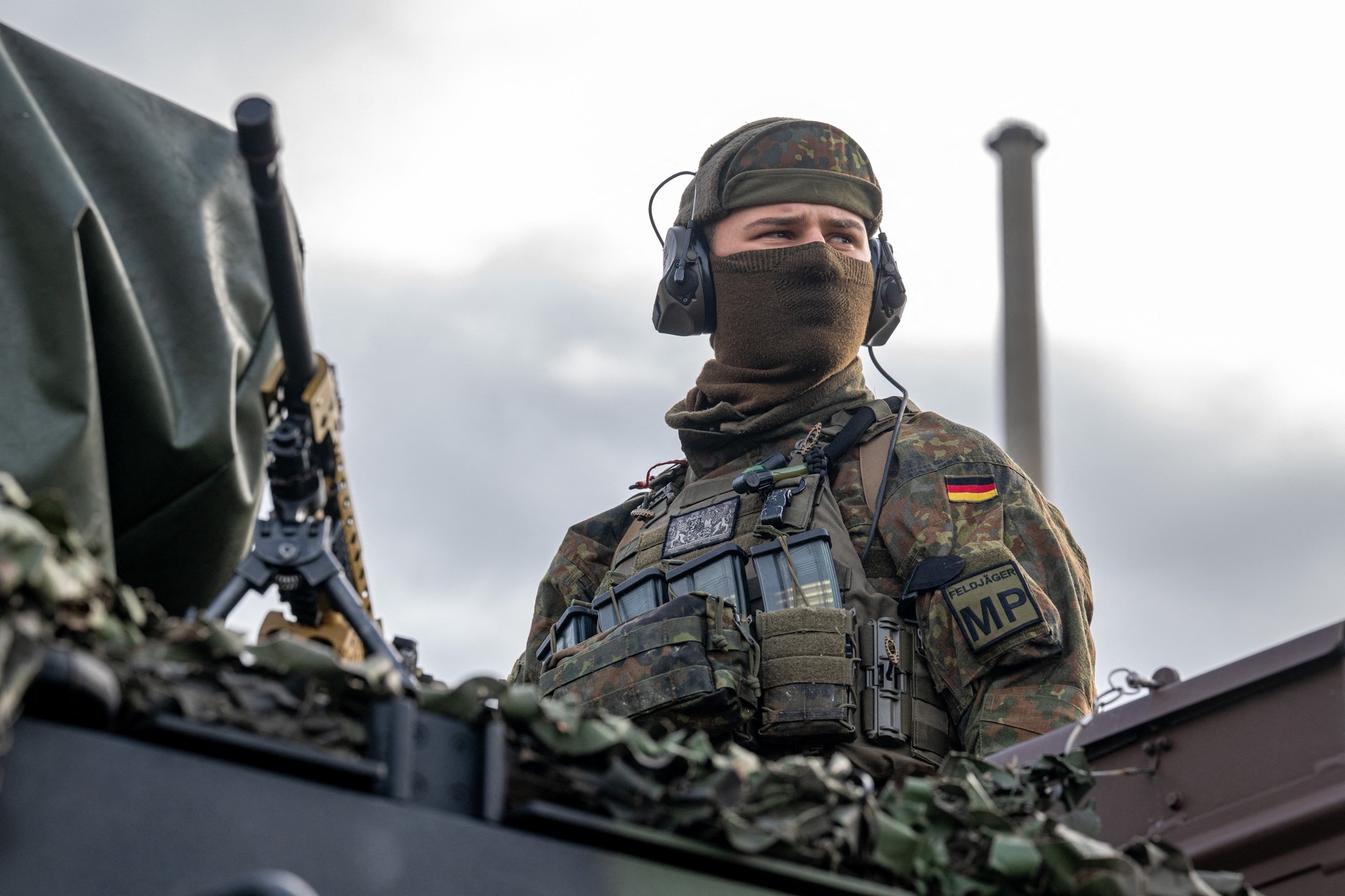
Bundeswehr soldier, Niederaichbach, October 28, 2025.ARMIN WEIGEL / AFP
Bundeswehr wish list
Internal documents regarding public procurement obtained by POLITICO show that Berlin is preparing to push through the Bundestag defense contracts worth EUR 83 billion (PLN 351 billion) by the end of 2026. This is an unprecedented increase that affects all areas of the armed forces, from tanks and frigates to drones, satellites and radar systems.
And this is just the beginning. Behind this is a much larger “wish list” of the Bundeswehr worth EUR 377 billion (PLN 1 trillion), a long-term plan covering over 320 new arms programs in all military fields.
What's even more striking is where those billions will go. According to public procurement plans, less than 10 percent new contracts will go to US suppliers – this is a reversal of the situation after years when Berlin was one of Washington's largest defense clients. Almost all the rest will remain in Europe, and a significant part in the German defense industry.
For Europe, this means that the EU is also becoming the economic engine industrial engineand Berlin is pouring hundreds of billions into domestic production lines, while France and the southern countries remain in a difficult financial situation.
The change is being felt in Paris, where Germany's rearmament is viewed with a mixture of skepticism and concern. — In France, the defense apparatus is the backbone of the system, says one EU official. — The difference between Paris and Berlin is that in France every official is ultimately a defense official.
Despite French President Emmanuel Macron's efforts to improve Franco-German relations, distrust of Berlin remains deeply rooted in French defense circles.
“It's somewhere between vigilance and threat,” one Paris-based defense official tells POLITICO. — Cooperation will be difficult because they will be extremely dominant, the official adds. He emphasizes that the main reservation is whether German Chancellor Friedrich Merz will be able to fill the staff gaps in the Bundeswehr.
Uncertain Franco-German future
But Germany's industrial and economic power is as much of a concern as the country's rearmament, the official continued. “They won't have to invade Alsace and Moselle,” he jokes, referring to the regions of France that Germany successfully occupied in its conquest in 1940. “They'll just have to buy them.”
Beyond the historical unrest, French and European officials are wondering what geopolitical role Berlin plans to play under Merz's leadership. — It's not yet clear what Merz wants to do – says one of the European diplomats from Paris. — Germany will have to take on a broader role on the international stage, but it is unclear how.
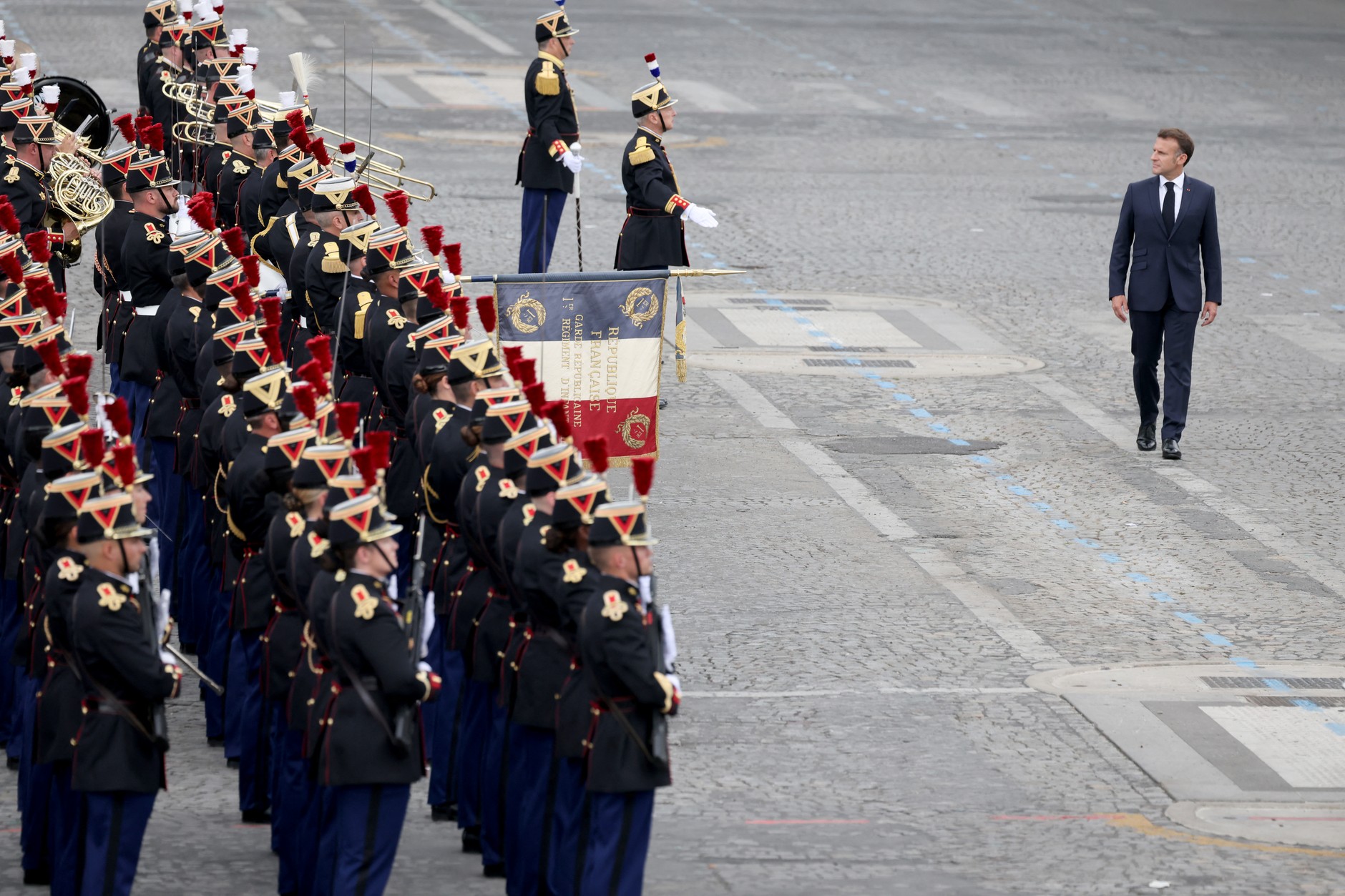
French President Emmanuel Macron during a military parade, Paris, July 14, 2025.LUDOVIC MARIN / AFP
The latest friction over Europe's next-generation fighter project – the Future Combat Air System (FCAS) – has only deepened concerns.
The program worth EUR 100 billion (PLN 423 billion) was supposed to be the jewel in the crown of defense cooperation between France, Germany and Spain. However, delays and disputes over which country will receive a larger share of the work are putting the partnership to the test.
In recent weeks, German defense officials have been considering alternative options, exploring the possibility of working with Sweden or Britain or continuing to work exclusively with Spain.
This prospect worries Paris. For France, FCAS is more political project than just another purchasing project. It is directly linked to its nuclear deterrence potential, which is a fundamental aspect of its claim to military leadership in Europe. Eric Trappier, CEO of Dassault Aviation, which is expected to play a leading role in FCAS, told French lawmakers bluntly: “I'm not against this project, but when Germany says they're going to exclude France, doesn't that bother you?”
If Berlin spends heavily, working mainly with Scandinavian and Eastern allies, Paris risks losing the central role it has long played in Europe's defense architecture.
The role of Warsaw
However, not everyone sees Germany's rearmament as a threat. In Warsaw they are considered necessary and overdue.
— Poland has become a model among NATO allies in terms of military spending, says Marek Magierowski, former Polish ambassador to Israel and the United States. — We therefore urge other partners to follow suit. However, if we are serious about common defense, we cannot keep saying: “Please spend more on defense. But not you, Germans.”
A group of Polish officials interviewed by POLITICO journalists express similar pragmatism. – They're heading in the right direction. From our point of view, it could have been done earlier, but it's good that it's happening at all, says one of the sources.
But bloody past often casts a long shadow.
— Looking at history, a situation in which Germany would combine its economic power with its military power has always raised concerns, says Paweł Zalewski, Secretary of State at the Polish Ministry of National Defense. — Today, Poland has the largest land army in Europe and will be a very strong player in the future, so plans to modernize the Bundeswehr should be considered in the appropriate context. All European countries are rearming.
Zalewski points out that Germany's rearmament takes place at the moment when Washington signals a reduction in its presence in Europe. — The increase in Germany's military power is a natural reaction. The main countries defending the eastern flank will be Poland and Germany, he adds.
However, in Warsaw it is difficult to forget old memories, both from the war and from the policy of economic interdependence with Russia, which was pursued by former Chancellor Angela Merkel. — We also remember pro-Russian Merkel's position. We call on Germany to show how strongly it will defend the international order against Russia. Continuous verification is necessary. We don't forget anything, says Zalewski.
Magierowski shares this concern. – I am more worried about the still quite lively trade relations between Germany and Russia and the growing pressure in Berlin to return to a normal state of affairs after the war in Ukraine – he explains.
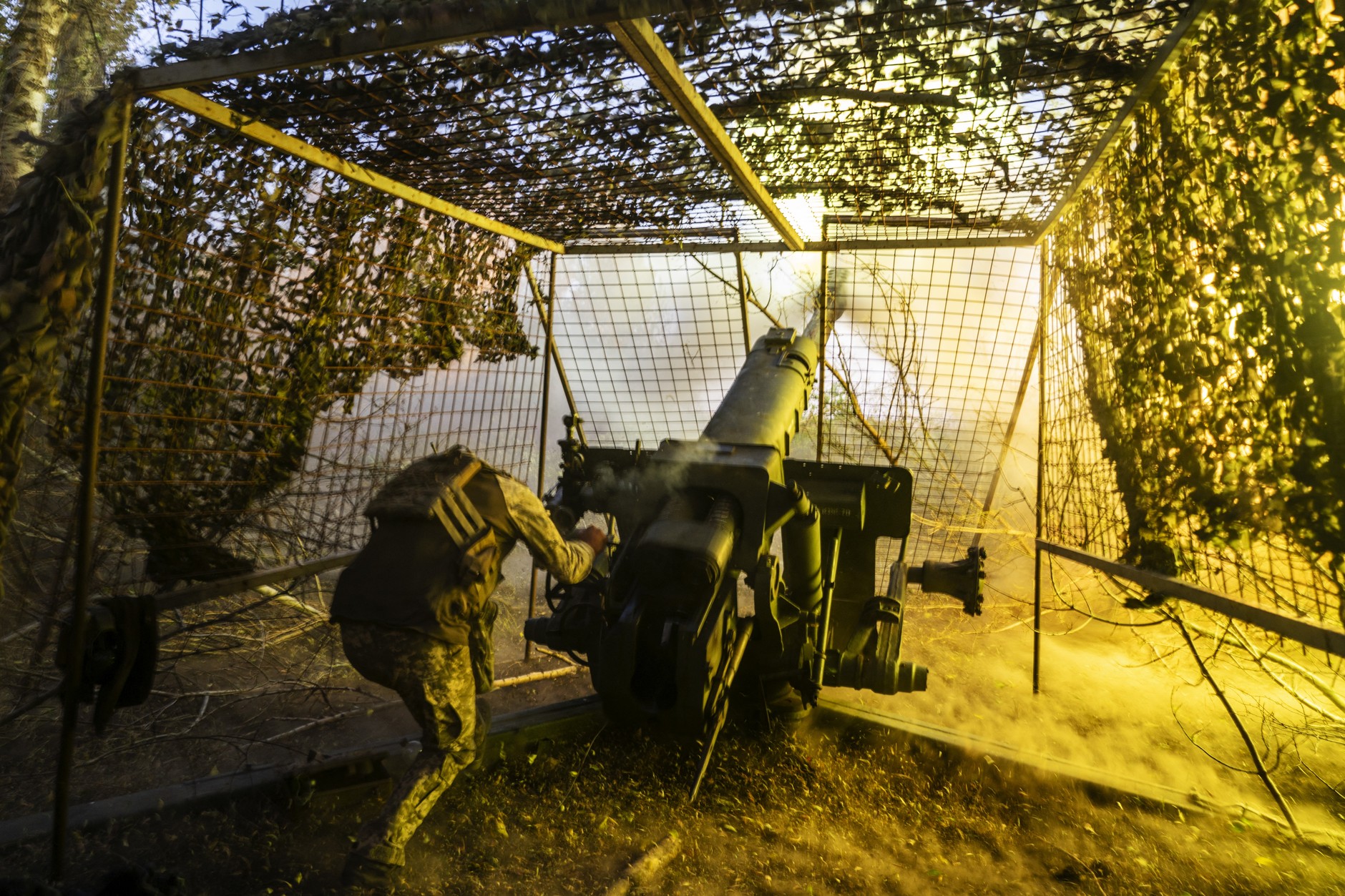
Military operations in Ukraine, Kharkov, October 5, 2025.JOSE COLON / AFP
Center of gravity
This softer stance towards Russia is most visible in the far-right Alternative for Germany (AfD) party, currently the country's second-largest party.
— When we think about the AfD and whether it may gain power or co-power in German governments in the future, it raises concerns anxiety – says one of the Polish officials. — AfD is pro-Putin and has a program that talks about regaining part of Poland's territory. We cannot start this discussion in Europe. World War II broke out because Germany was dissatisfied with the results of the first.
Taking into account Germany's rapid rearmament and the mixed reactions of its partners, it can be seen that Europe's center of gravity is shifting east. The continent's economic power is currently transforming into a military-industrial power. France is sticking to its nuclear card, and Poland is becoming a conventional heavyweight on NATO's eastern flank.
In Brussels, this reorganization poses a challenge: can the EU transform this dynamic into… common structuresor will it deepen the bloc's defensive fragmentation?
For now, the expansion of Berlin's military potential is perceived as a return to responsibility, not as a desire for domination. However, even supporters of this strategy admit that the scale of changes is difficult to comprehend. “There is no doubt that this may raise concerns,” says one EU diplomat. — But Germany has coalitions. They are a member of the EU and NATO —— and a lot can happen in the meantime.