Negotiations on the new EU mechanism for the redistribution of migrants. Frontline states, helped with actual relocations or financial support


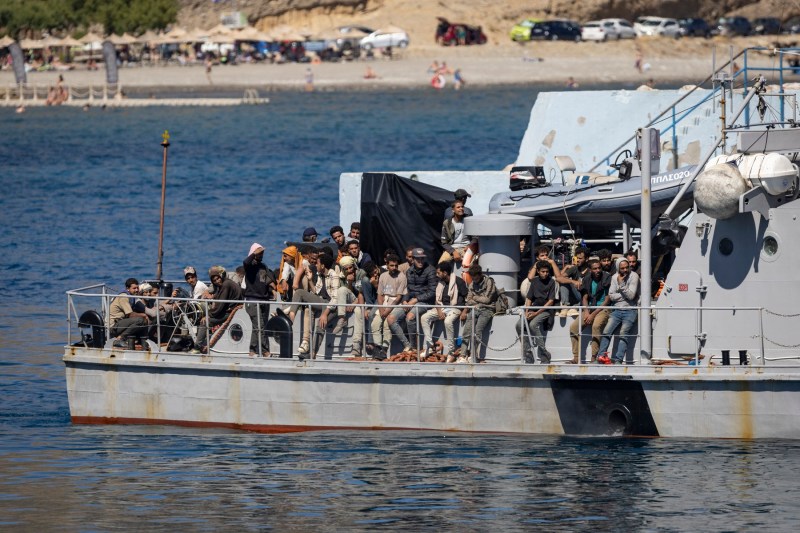
Migrants rescued off Crete, photographed on July 6, 2025, PHOTO: Costas Metaxakis / AFP / Profimedia Images
The European Commission said on Tuesday that Italy, Spain, Greece and Cyprus should receive help in redistributing at least 30,000 asylum seekers to reduce the pressure caused by irregular migration, reports AFP.
The announcement by the EU executive will set off tense negotiations in the 27-nation bloc as countries become increasingly wary of volunteering to take in migrants.
The European Union adopted a wide-ranging review of migration policies in 2024, which will soon come into force.
A key element is a new “solidarity” system aimed at easing the burden on Europe's Mediterranean countries, seen by Brussels as being under “migratory pressure”.
Other EU countries will have to either receive a percentage of asylum seekers from these states, which are on the front line when it comes to migration, or offer them financial support worth 20,000 euros per person.
European states lobbied hard to influence the European Commission's decision, delaying the announcement by a month.
European Mediterranean countries under “migratory pressure”
On Tuesday, the Community Block Executive nominated the most obvious candidates from the category of states that need help.
“Greece and Cyprus are under migratory pressure due to the disproportionate level of arrivals over the past year,” the European Commission said in a statement.
“Spain and Italy are also under migratory pressure due to a disproportionate number of arrivals following search and rescue at sea during the same period,” the Commission added.
The announcement will now form the basis of negotiations by member states over how many asylum seekers each is willing to take in – or how much financial support they are willing to provide.
Several countries have already said they will not take anyone under the mechanism and will only contribute financially.
As governments across the European Union come under pressure to tighten immigration policies, the willingness to take in additional asylum seekers is fraught with political risks.
At least 30,000 migrants will need to be resettled each year under the new system, with the final number and other details to be determined by the end of the year.