Kelemen Hunor, about the Coalition's plan for local government reform: “I don't think it will work, but that's what some wanted and that was the accepted compromise”


The President of UDMR, Kelemen Hunor, believes that the Coalition's plan to reduce expenses and the number of posts in the local administration is difficult to apply and, most likely, “it won't work” in the form adopted on Tuesday evening.
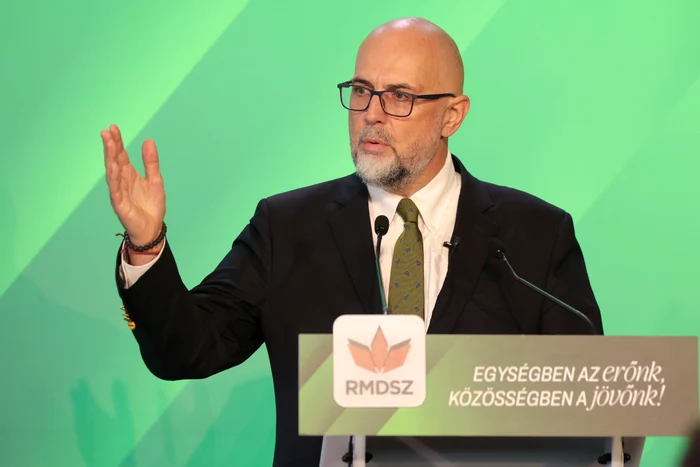
PHOTO: Inquam Photos/Simion Tataru
“In the central administration, I don't think this can be done other than by reducing the number of posts. I don't think it will work in the local administration either, but that's what some wanted and that was the compromise accepted by everyone. But, it won't work. I said, this is my opinion, that it won't work, (…) because at the moment I'm – and here, again, it's good to approach all the topics in a nuanced way, if you want and we all want to have credibility – there are several hundred, so that I'm not wrong, of UATs where you don't have to reduce anything, because there are some UATs where, indeed, the reduction will be higher, and that's why we put the brake of 20. The important thing is that, after three months of discussions, we reached the conclusion we had to reach in August – to reduce the expenses of the central and local apparatus. Maybe we should have started with this measure in June, in July, I don't know. But that's it. Now we've passed this phase, the decision will be implemented by law and then by government decisions,” stated Kelemen Hunor.
The leader of the UDMR explained on Wednesday, November 12, at the Parliament, that decisions regarding spending cuts must be approved by local councils, which will complicate the process.
“In addition, a council decision is needed. The mayor cannot cut salaries. And there is one more thing: the salary, at the moment, is between a minimum and a maximum. If the staffing is at the minimum, then there you cannot reduce expenses. If they are higher, yes — but you still need a local council decision. Why do I say that it will not work or that it will be difficult? Because, in the local council, you have to make a decision to cut people's salaries. Another solution, at this moment, does not exist”, explained Kelemen Hunor, according to Agerpres.
He also detailed how the administrative reform will look in the coming years:
“The year 2026 is a transition year, in the sense that there is the possibility to reduce salaries or the number of positions; from 2027 this possibility no longer exists. In central public administrations, the reduction will be greater than 10%, but it will not be uniform. In some ministries you can go with a 20% reduction, in others not even with 10%, because they have undersized schemes. It will be a more flexible administration. Reducing expenses means that you reduce the wage envelope, saving from the national budget.”
At the same time, Kelemen Hunor drew attention that next year will be extremely difficult for the state budget, given that Romania will have to pay over 60 billion lei in interest. “We are in a very narrow street,” Hunor warned.
On Tuesday evening, November 11, the leaders of the governing Coalition reached an agreement on the reform of local public administration, after months of deadlocked negotiations. According to some sources, the mayors will have a choice between reducing positions and cutting salary expenses.