Vladimir Putin dreamed of restoring the Russian empire. He promised it, repeated it obsessively and linked his entire political career to this ambition. But history has a sense of irony: while the Kremlin dreams of the past, the former Soviet republics have strengthened, broken away and are looking to the future either in the West or in the East.
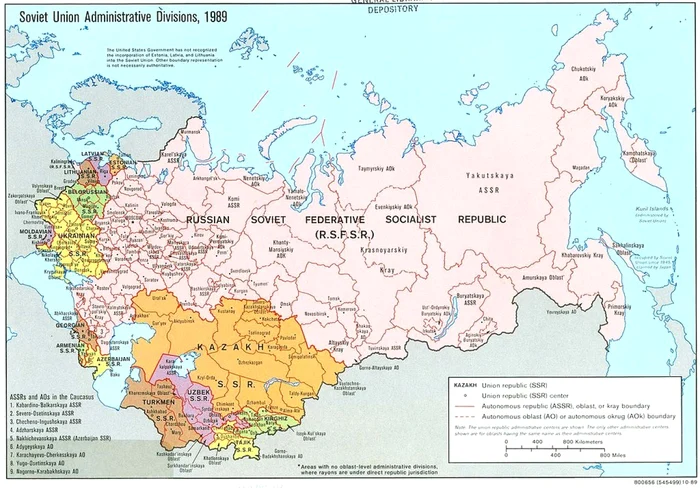
The countries that definitively said “no” to Moscow
The Baltic states, Poland, Hungary, the Czech Republic, Slovakia, Romania and Bulgaria — all sealed their exit from the Russian orbit by joining NATO and the European Union. Even if some still flirt with pro-Russian speeches, no one wants to return under the Kremlin's umbrella.
“Getting Russian gas is one thing, giving up your sovereignty is quite another,” explains Ukrainian-American political scientist Alekander Motil, a professor at Rutgers University.
The countries in the gray area – swinging between East and West
The Republic of Moldova, Georgia and Armenia remain in a transition zone. Sometimes they seem trapped in the orbit of Moscow, other times they approach the West. But regardless of the political zigzags, all three obstinately defend one thing: independence.
Azerbaijan has enough money and enough authority to resist the Kremlin's pressure. In addition, Turkey's support makes it immune to Russian blackmail.
In Central Asia, Kazakhstan and Uzbekistan skilfully play between Russia and China, maintaining a precarious but effective balance. Isolated and landlocked Turkmenistan feigns neutrality, but the degradation of the Caspian Sea could further strain relations with Moscow.
Russian influence is melting, but China is gaining ground
The Eurasian Economic Union, Putin's project to unite former Soviet republics, has remained an anemic construct: only Armenia, Belarus, Kazakhstan, Kyrgyzstan and Russia are still part of it.
Meanwhile, China has quietly extended its umbrella through the Shanghai Cooperation Organization, where Moscow is just one partner among many others. For most Central Asian states, the economic future is already being written in Chinese.
Belarus and Ukraine – two opposite stories
Belarus formally remains Moscow's ally, but Aleksandr Lukashenko plays double. Officially loyal to the Kremlin, unofficially trying not to get dragged into the war against Ukraine.
More than three and a half years have passed since the Russian invasion, and the Belarusian army has not fired a bullet on the Ukrainian front.
In recent months, the Minsk dictator has also made “cosmetic” gestures: he released dozens of political prisoners and received positive signals from Washington. The US lifted some sanctions, and Lukashenko ticked off a new proof that he knows how to survive among the great powers.
Ukraine, on the other hand, is completely lost to Russia.
“The people who were once divided over Moscow are today united in their desire to defend their identity and independence,” says Motil.
For Putin, the loss of Ukraine means the collapse of the most important “pearl” in the imperial crown.
The crumbling empire
Although the Kremlin continues to repeat the rhetoric of the “Russian world” and the civilizing mission, the time for remaking the empire has long passed. In the 1990s, when the former republics were weak, disorganized and vulnerable, Russia might have been able to rebuild its sphere of influence.
But he missed the moment.
Today, independent states are stronger, more stable and less willing to accept any form of domination. And Russia itself is exhausted by the war in Ukraine: the weakened military, the economy on the brink of recession, the ruble unstable, and the diplomatic isolation almost complete.
“Thanks to Putin, Russia's imperial dreams are alive, but the empire's prospects are dead”concludes Motil. “Dependence on the goodwill of China and North Korea has turned Russia into a kind of nuclear-armed Burkina Faso — able to destroy but unable to conquer.”