Liberal Lee Jae-Myung won the presidential elections in South Korea, which he described as the “Day of Judgment” for the attempt to impose military leadership

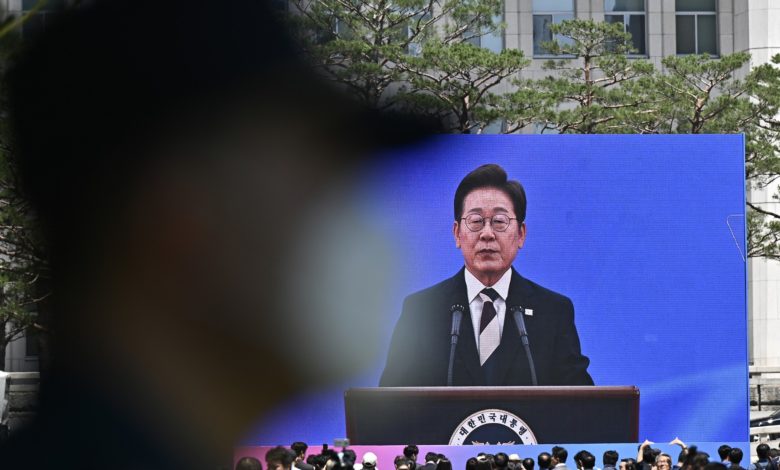
The candidate of the South Korean Liberal Party, Lee Jae-Myung, was elected president in the early elections organized on Tuesday, exactly 6 months after avoiding military cords to vote against a shocking martial law imposed by his dismissed predecessor, Reuters reports.
Lee's victory is about to bring a major political change in the fourth greatest economy of Asia, after the strong reaction against the martial law that brought down Yoon Suk Yeol, the “Outsider” conservative who defeated Lee in the 2022 elections.
Nearly 80% of the 44.39 million eligible voters in South Korea were presented, the largest presence in the presidential elections in the country since 1997, Lee calling the “Judgment Day” against the Martial Law decreed by Yoon on December 3 last year and the failure of the Party Party (PPP).
With over 99% of the counting bulletins, Lee, the candidate of the Democratic Party, obtained 49.42% of the votes, while the PPP candidate, Kim Moon-SOO, had 41.15%, according to the final data of the National Electoral Commission. The difference in votes up to 100% went to a third candidate.
A restrained Kim recognized the defeat and also congratulated Lee through a short statement to journalists.
The new President of South Korea promised peace with the north
Lee was long considered to be a favorite, and his supporters broke out in the cheers when the polls made from the ballot box by the main television stations showed that he was defeating Kim with a wide margin.
In a brief speech addressed to the supporters gathered in front of the Parliament after the closing of the ballot box, Lee said he would fulfill his duties and bring unity to the country.
“We can overcome this temporary difficulty through the combined force of our people, which has great capabilities,” he said.
He also promised to revitalize the economy and seek peace with North Korea, “through dialogue and firmness.”
Unprecedented turbulence in South Korea
The decree on the martial law and the 6 months of turbulence that followed-in which there were three interim presidents and numerous insurrection processes against Yoon and several high-ranking officials-represented a spectacular political collapse for the former leader and, practically, offered him the presidency of his main rival.
Yoon was dismissed by the Parliament led by Lee, then dismissed by the Constitutional Court in April, less than 3 years after taking over the mandate, triggering the early elections that are about to reshape the country's political leadership and the external policies of a key ally.
Lee accused the PPP of tolerating the attempt to tax the martial law by not fighting enough to prevent him and even tried to save Yoon's presidency.
Kim was the Minister of Labor in Yoon's government when the former president declared the Martial Law on December 3.
“I was here on December 3, when the Martial Law was declared, and on December 14, when Yoon was dismissed,” said Choi Mi-Jong, 55, science teacher, who was gathered in front of the Parliament to listen to Lee. “Now, Lee Jae-Myung becomes president. I hope he is a leader who supports ordinary people, not the interests, not a handful of rich,” she added.
“A Verdict lit against the insurgency regime”
Park Chan-Dae, an interim leader of the Democratic Party led by Lee, told KBS that the projections suggest that voters have rejected the martial law and hopes to improve the standard of living.
“I think people have given a heated verdict against the insurgency regime,” he said.
The winner will have to deal with challenges, including a deeply marked company that have become more evident according to the attempt to lead military, and to an economy focused on exports affected by unpredictable protectionist measures coming from the United States, a major commercial partner and ally.
Both Lee and Kim have promised a change for the country, stating that the political system and the economic model established during Korean ascension as emerging democracy and industrial power no longer correspond to current needs.
Their proposals on investments in innovation and technology were often overlapping, but Lee pleaded for more equity and support for families with low and medium income, while Kim advocated for more freedom for business in the face of regulations and labor conflicts.
Lee is expected to adopt a more conciliatory attitude towards China and North Korea, but promised that it would continue the diplomatic involvement from the Yoon era in relations with Japan.
Living level, another topic for voters in South Korea
Kim cataloged Lee as a “dictator”, and on his democratic party as a “monster”, warning that if the former human rights lawyer becomes president, nothing will stop him from modifying the laws.
“The economy has worsened so much since December 3, not just for me, but I hear this from everyone,” said Kim Kwang-Ma, 81 years old. “And we, as a people, have become so divided … I would like to unite that Korea could develop again,” she expressed her hope.
At the presidential election on Tuesday there were no women for the first time in 18 years.
Although the polls showed big differences between young men and women, gender equality did not find among the key themes of this election campaign, in a strong contrast to the 2022 poll.
“One thing that frustrates me a little at the main candidates, whether it's Lee Jae-Myung or Conservatives, is the lack of policies dedicated to women or minority groups,” said Kwon SEO-Hyun, 18, a first year and voter for the first time, who participated in anti-Yoon protests after the establishment of Martial Law.