Without it, artificial intelligence will not develop. Giants are spending billions on undersea cables


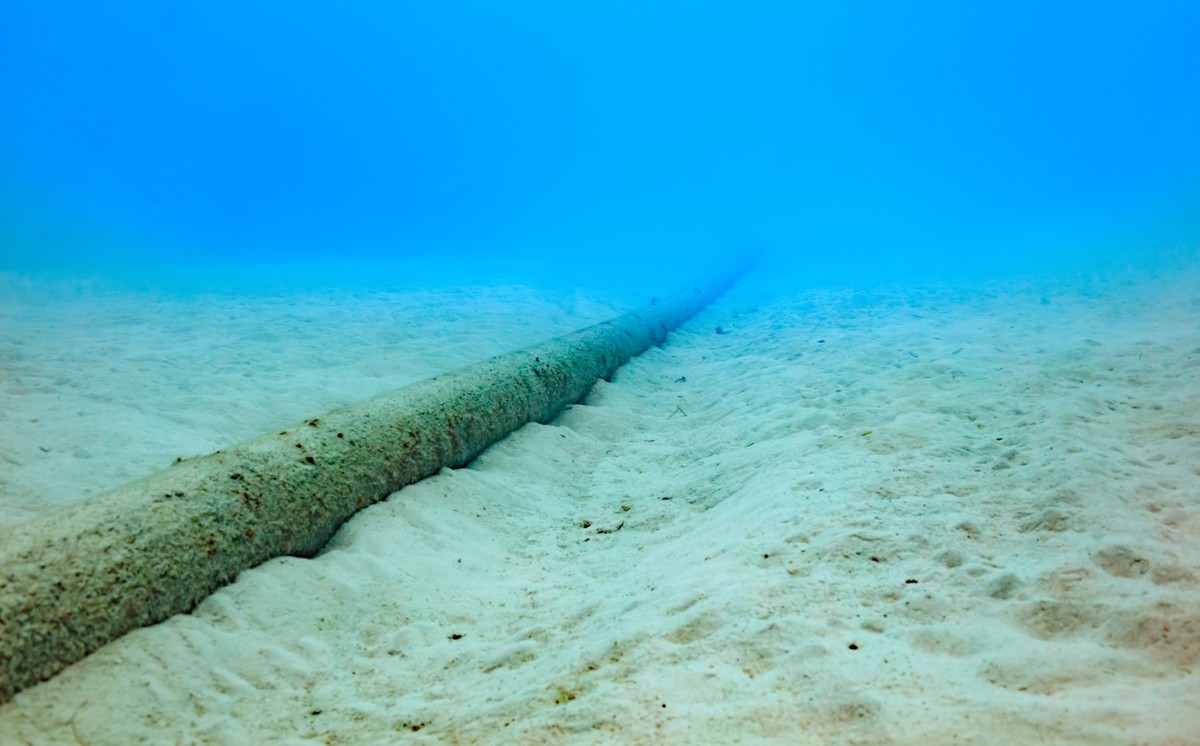
The first commercial submarine cable, intended for telegraphy, was connected in 1850 between Dover, England, and Calais, France. Since then, technology has come a long way – from coaxial cables, through telephone calls, to fiber optics, which are the basis of the Internet today – writes CNBC.
According to Paul Gabli, director of sales at Alcatel Submarine Networks, about ten years ago a new category of investors appeared on the market – internet giants such as Meta, Google and Amazon, which they currently account for almost half of the submarine cable market. Alcatel, according to the industry magazine Submarine Telecoms Forum, is the world's largest producer and installer of this infrastructure.
Growing needs and new investments
With the development of advanced artificial intelligence models and the expansion of global data center networks, the demand for undersea cables continues to grow. According to TeleGeography, in 2025-2027 investments in new cable designs are expected to reach $13 billion, i.e. almost twice as much as in 2022-2024.
Artificial intelligence significantly increases the demand for undersea infrastructure, emphasizes Alex Aime, vice president of network investments at Meta, quoted by CNBC. He points out that although AI is mainly associated with data centers and information processing, without proper connectivity, these centers become mere expensive warehouses.
In February Meta announced the launch of Project Waterworth – a 50,000-kilometer cable. kmwhich will connect five continents and become the longest undersea cable in the world. The company will be its sole owner, and the investment will be spread over many years and will cost billions of dollars.
Amazon also announced its first fully owned submarine cable, named Fastnet. It will connect Maryland's eastern coast with County Cork, Ireland, and will exceed capacity 320 terabits per second. According to company representatives, such performance would allow simultaneous streaming of 12.5 million HD movies.
Matt Rehder, vice president Amazon Web Services for Core Networks, explains that undersea infrastructure is crucial to AWS and all international communications across the oceans. He points out that an alternative would be satellite communication, which, however, involves greater delays, higher costs and insufficient bandwidth for the needs of customers and the Internet as a whole.
Google has already invested in over 30 undersea cablesand one of the company's latest projects is Sol, connecting the United States, Bermuda, the Azores and Spain. Microsoft is also involved in the development of this infrastructure. Matthew Mooney, global director at Recorded Future, notes that the number of undersea cables has increased rapidly over the past 20 years due to the enormous demand for data transmission.
Submarine cable safety under pressure
Cable disruptions can have serious consequences, especially in regions where few internet connections are available. Erin Murphy, a senior fellow at the Center for Strategic and International Studies, emphasizes that cutting a single cable could cut off many countries from the Internet, affecting financial transactions, banking, e-commerce and basic communications.
Recorded Future's Matthew Mooney notes that there has been an increase in recent years in the number of incidents that could be considered intentional cable damage, especially in the Baltic Sea and around Taiwan. In his opinion, it is difficult to say clearly whether these actions are intentional, but recurring patterns raise suspicions.
In the face of growing threats, governments are taking action to protect undersea infrastructure. In January, NATO launched Operation Baltic Sentry after a series of incidents in the Baltic Sea. As part of this mission, drones, aircraft, submarines and surface ships were deployed to secure key connections. Mooney emphasizes that since the end of January 2025, there have been no further cases of cable breaks in this region.
As part of Operation Baltic Sentry, the Swedish patrol ship HMS Carlskrona joined Standing NATO Maritime Group One (SNMG1), raising the NATO flag on board for the first time. The mission's goal is not only to protect infrastructure, but also to demonstrate the Alliance's presence in the region.
An example of natural problems with similar infrastructure is Tonga, an island country east of Australia, which was cut off from the world in 2022 after its only cable was severed by debris from an underwater volcanic eruption. Similar problems occurred in September in the Red Sea, where damaged cables disrupted the Microsoft Azure cloud service. Although the company redirected traffic, users in Asia and the Middle East experienced a significant drop in internet connection performance.