Grandmothers overfeed and parents don't know how to react. New report on obesity in children and teenagers

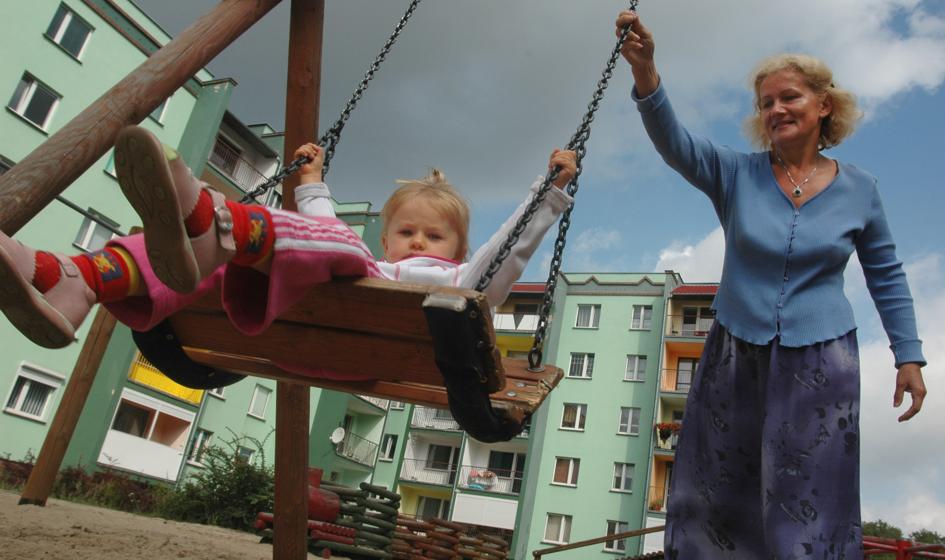
Already 2 million Polish children and teenagers are overweight or obese, while as many as 60 percent teenagers in Poland are overfed by their grandparents, and 41 percent parents believe that physical education classes are less important than other lessons, experts warn.
In their opinion, if we do not stop the wave of obesity cases, the number of obesity cases will increase by 400,000 each year. further cases of this disease.
Nutritional sins and the role of grandparents
To help parents and other guardians of children and adolescents cope with the epidemic of obesity in the young generation, the organizers of the “Let's talk honestly about obesity” campaign have developed a guide entitled: “HELP for parents and guardians. How to support young people who are overweight or obese?” It included research results, including public opinion surveys among over 1,000 parents and 1,000 teenagers.
They show that fast food and sweets are part of the regular menu of Polish teenagers – all young people eat them, and as many as 90 percent they do it several times a week, and almost every fifth (18%) does it every day. At the same time, 55 percent parents admit that their children's menu does not meet the recommendations regarding eating fresh vegetables and fruit every day. Another problem is the lack of agreement on building consistent healthy eating habits in the entire family – almost 60%. parents admit that when their children stay with their grandparents, they tend to eat more and less healthily than at home.
PE on censored
Additionally, caregivers of the young generation still underestimate the role of physical activity in preventing overweight and obesity – 41%. parents believe that physical education classes are less important than other lessons.
Research also shows that both generations are motivated to take up sport by something completely different: adults want to be healthier through activity (53 percent of respondents), and teenagers are most encouraged to exercise by spending time with their peers (38 percent of respondents).
Psychological effects of obesity: shame and hate
At the same time, parents feel lost and often helpless, and young people feel stigmatized and alone with their disease.
Parents of overweight teenagers admit that their children's reactions to hate are: embarrassment (34%), low self-esteem (33%), attempts to “hide” in oversized clothes (33%), as well as fear of places where the body must be exposed, such as a swimming pool, beach (32%), avoiding sports activities (24%), or being in photos/videos (19%). In turn, as many as 55 percent teenagers believe that overweight people are not liked by their peers.
Helpless parents and harmful myths
“There are currently 6.7 million young people aged 5-18 in Poland, of which 2 million are already overweight or obese. (…) When, after many independent attempts to help their child, parents finally see a doctor and hear: 'Your child is obese,' I see helplessness, fear, often embarrassment and guilt,” commented Dr. Hab. Paweł Matusik, president of the Childhood Obesity Society.
Parents also do not have sufficient knowledge about obesity and its treatment options. For example, as many as 38 percent of them wrongly believe that they grow out of obesity, 29%. do not know when to react to the child's increased body weight, and 18 percent doesn't know which doctor to go to. Every fifth parent cannot cope emotionally with starting a conversation with their child about being overweight.
“PoMOCnik” – comprehensive support
As Dr. Matusik noted, “PoMOCnik” was created to help parents – step by step through the process of learning about their child's disease, understanding its mechanisms and looking for solutions.
In the guide, as many as 12 experts from various health areas have prepared tips on the four pillars of comprehensive treatment of obesity among adolescents. These include recommendations on: nutrition (including sample menus), physical activity and physiotherapy (including obesity-safe training), emotions and psychological support (including maps of supportive messages and patterns of empathetic dialogues), and the first visit to a doctor's office.
The study is also complemented by knowledge about how other countries (USA, the Netherlands, France and Finland) deal with teenage obesity, video materials with expert advice and personal comments from campaign ambassadors and patients supporting the “Let's Talk Honestly About Obesity” campaign.
“The above research outlines a difficult situation at many levels: nutrition and exercise, perception of the disease itself among parents and young people, generationally different motivations for sports, and systemic barriers, such as not knowing which doctor to go to,” commented Dr. Hab. Lucyna Ostrowska, president of the Polish Society for the Treatment of Obesity.
She added that “however, stopping the epidemic of obesity among the young generation is absolutely possible and now we must do everything to prevent pediatric patients from becoming adult patients with obesity.”
The guide created as part of the campaign can be downloaded on the website: https://ootylosci.pl/pomocnik/.
The organizer of the campaign is Novo Nordisk. Its patrons are numerous scientific societies, including the Polish Society for the Treatment of Obesity, the Polish Society of Childhood Obesity, the Polish Society of Hypertension, and the Polish Neurological Society. The honorary patrons are: the Embassy of the Kingdom of Denmark in Poland, the Institute of Patient Rights and Health Education and other foundations and patient organizations.
As part of the campaign, a map of centers and doctors specializing in the treatment of obesity was also created: https://ootylosci.pl/specjalisci/. (PAP)
jjj/agt/